
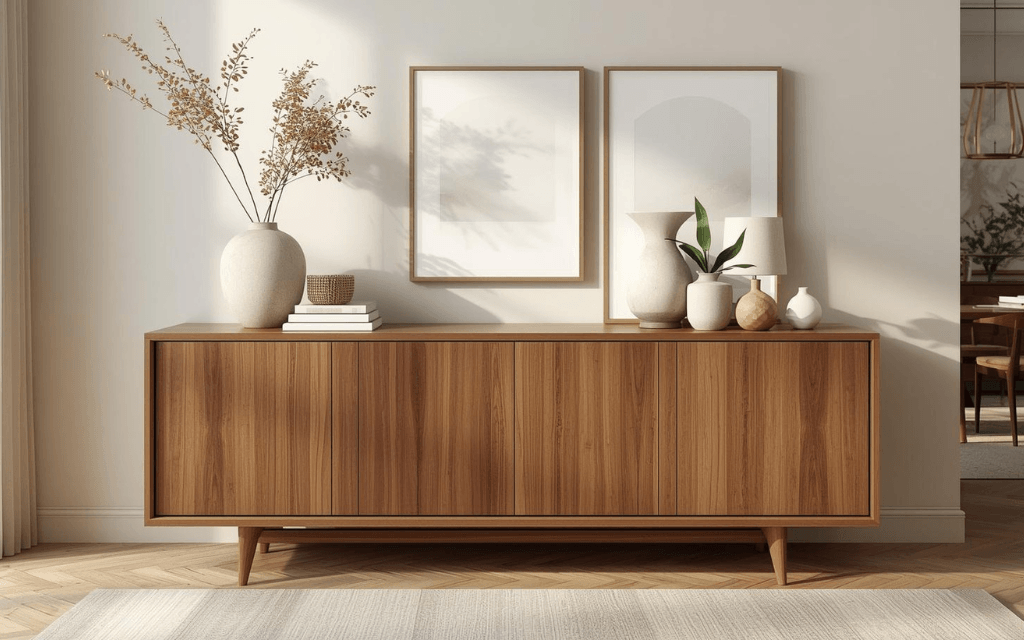
There's a certain kind of furniture that earns its place not just by being useful, but by being right — the piece that anchors the room, holds your life together behind closed doors, and looks better with every passing year. A solid wood sideboard is exactly that kind of piece.
Whether you're furnishing a formal dining room, refreshing a casual living space, or finally solving the clutter problem in your entryway, a well-chosen wooden sideboard does far more than store your extra dinnerware. It defines the room. It sets a tone. And if you choose correctly — the right size, the right wood, the right style — it becomes one of those purchases you never regret.
This guide walks you through everything you need to know before buying one.
What Is a Solid Wood Sideboard (and Why Does "Solid" Matter)?
A sideboard — sometimes called a buffet cabinet or credenza — is a low, wide piece of furniture typically used for storage and display. Historically found in dining rooms, today's sideboards show up in living rooms, hallways, home offices, and even bedrooms.
The word solid does a lot of work here. A solid wood sideboard is constructed from real, single-piece lumber — not MDF, particle board, or wood veneer wrapped around a hollow core. That distinction matters more than most people realize.
Solid wood construction means:
- Structural integrity that lasts decades, not years
- Natural grain patterns that make every piece genuinely unique
- The ability to be refinished or repaired if surface damage ever occurs
- A piece that develops character over time — a warm patina that engineered materials simply can't replicate
When you invest in a quality hardwood sideboard, you're not buying furniture that needs to be replaced in five years. You're buying something you might eventually pass down.
Choosing the Right Wood Species
Not all solid wood is created equal, and the species you choose affects both the look and the longevity of your sideboard.
Mango Wood
Mango wood has become one of the most sought-after materials in American furniture — and for good reason. It's a dense, sturdy hardwood with striking natural grain patterns that range from golden amber to deep chocolate brown. Because mango trees grow quickly and are often harvested after their fruit-bearing years, mango wood furniture carries a sustainability story that eco-conscious buyers appreciate. It holds finishes beautifully and handles daily use without complaint.
Acacia Wood
Acacia is prized for its exceptional hardness and natural moisture resistance — qualities that make it particularly well-suited to dining rooms where spills are part of daily life. Its rich tonal variation (think deep walnut-adjacent browns offset by lighter streaks) gives each acacia wood sideboard a visual depth that photographs can't fully capture. If you want a sideboard that performs as hard as it looks beautiful, acacia is a serious contender.
Pine
Pine tends to be lighter in color and weight, making it a natural fit for painted finishes, distressed farmhouse looks, or transitional spaces where you want warmth without heaviness. It's slightly softer than mango or acacia but remains a solid, honest material — particularly well-suited to rustic or cottage-style interiors.
Sideboard Styles: Finding Your Aesthetic Fit
One of the pleasures of shopping for a solid wood sideboard is the sheer variety of design directions available. Here's a breakdown of the most popular styles and where they shine.
Modern & Contemporary
Clean lines, minimal hardware, neutral finishes. A modern sideboard works beautifully in open-plan spaces and pairs naturally with glass-top dining tables and metal accents. If your home leans toward sleek and uncluttered, look for pieces with flat-front doors, brushed metal pulls, and a low-profile silhouette.
Rustic & Farmhouse
Distressed finishes, visible wood grain, wrought iron hardware. A rustic solid wood sideboard brings warmth and lived-in authenticity to dining rooms — especially powerful when paired with exposed wood ceiling beams, brick, or vintage lighting. The Orvencia Solid Rustic Wood Sideboard from Oak & Loom is a great example of how raw material beauty and functional design can coexist effortlessly.
Mid-Century Modern
Tapered legs, organic forms, warm walnut and teak-inspired tones. Mid-century sideboards have never really gone out of style, and for good reason — they're versatile enough to complement both retro-leaning and contemporary interiors. Look for pieces with splayed feet and minimal ornamentation.
Traditional & Carved
Raised panels, decorative molding, antique-style hardware. If your home has a more formal feel — crown molding, upholstered dining chairs, heirloom china — a traditional sideboard in a rich finish will feel completely at home. The Evorence Traditional Solid Wood Sideboard captures this spirit well, with clean proportions and a timeless presence.
Industrial
Dark finishes, metal accents, utilitarian silhouettes. Industrial sideboards work particularly well in urban apartments, lofts, or any space where the design brief is "character over polish."
How to Choose the Right Size
Sizing is where many buyers make their biggest mistake — either overwhelming a small room with a piece that's too large, or choosing something so compact it looks lost against a long wall.
The golden rule: your sideboard should be approximately 50% to 75% the length of your dining table. So if your table is 72 inches, a sideboard in the 48–60 inch range will look balanced. For tables over 84 inches, a 70 or 80-inch sideboard becomes more appropriate.
Height matters too. Most sideboards sit between 30 and 36 inches tall. This matters not just aesthetically, but functionally — the surface becomes a serving station during dinner parties, and that height puts food and plates at a comfortable reach. If you're placing the sideboard under a window, a lower-profile piece (30–32 inches) keeps the sightline clear.
Depth is often overlooked. Standard sideboard depth runs 14–18 inches. Anything shallower than 14 inches may feel unstable or limit interior storage; deeper than 18 inches starts to eat into walkway space, particularly in smaller dining rooms.
Always leave at least 36 inches of clearance in front of and around the piece for comfortable traffic flow.
Storage Features to Think Through Before You Buy
The inside of a sideboard matters just as much as the outside. Before you fall in love with a design, ask yourself what you're actually going to store.
Drawers are ideal for flatware, cloth napkins, candles, placemats, and smaller items you reach for often. Deeper drawers accommodate serving utensils and folded linens without cramming.
Cabinet sections handle the larger items — stacked dinner plates, serving platters, large bowls, extra glassware, wine bottles.
Adjustable shelves are worth looking for specifically. Your storage needs will change over time, and shelving that can be repositioned gives your sideboard long-term flexibility.
Soft-close hardware is a small detail that makes a real difference in day-to-day use — quieter operation, less wear on joints, and it just feels premium.
If you entertain regularly, prioritize surface area on top. That expanse of wood becomes a buffet station during holiday dinners, a bar cart setup for weekend gatherings, or a dedicated place for the charcuterie board that always ends up in someone's hands.
Where to Place a Sideboard in Your Home
Most people default to the dining room — which makes perfect sense — but a solid wood sideboard is genuinely one of the most versatile pieces of furniture you can own.
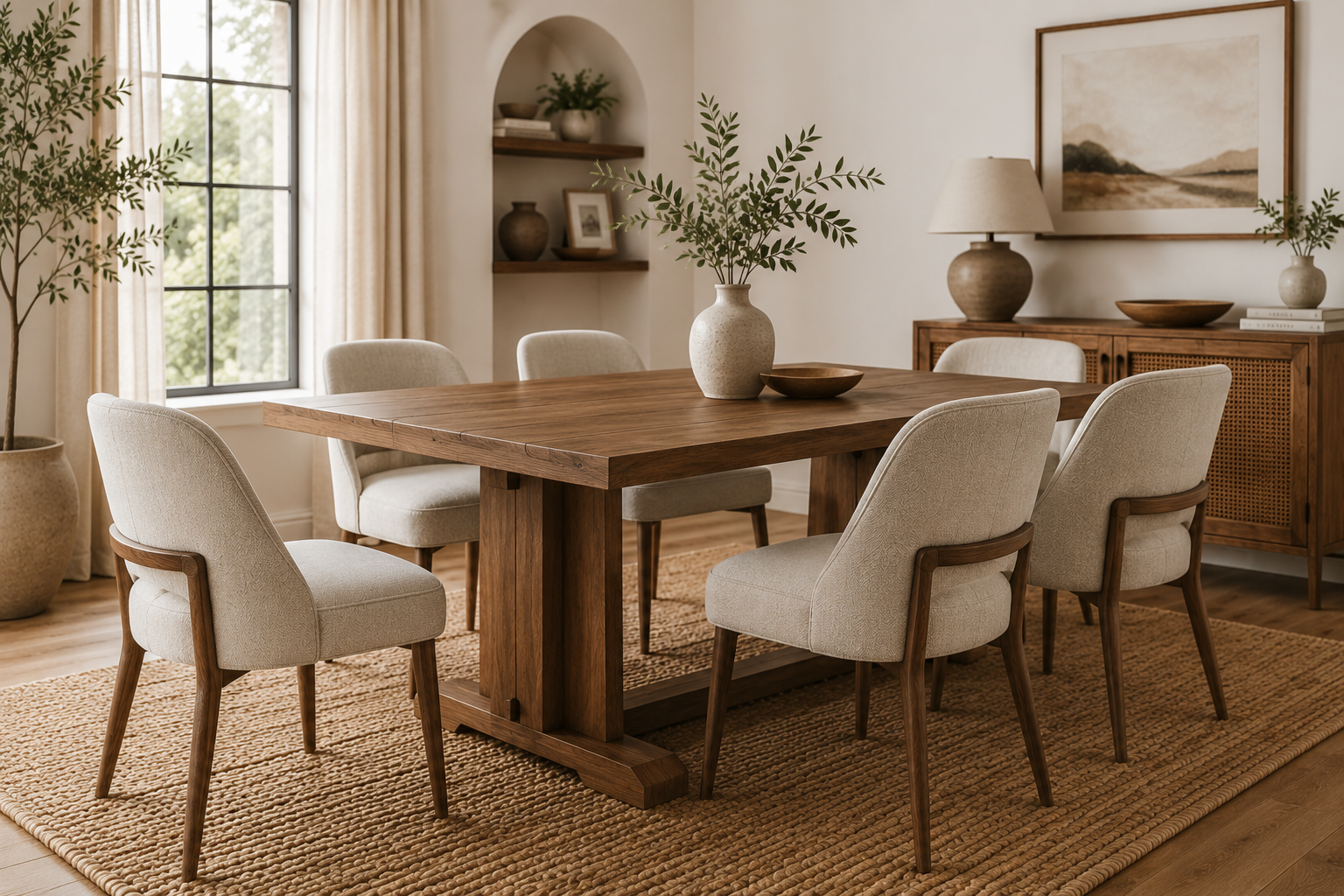
Dining Room: The classic placement. Position it along the wall opposite or adjacent to your dining table, keeping proportions in mind. Use the surface for a lamp, a bowl of fruit, or a curated collection of ceramics. The cabinets below handle everything from extra napkins to the wine you're saving for a special occasion.
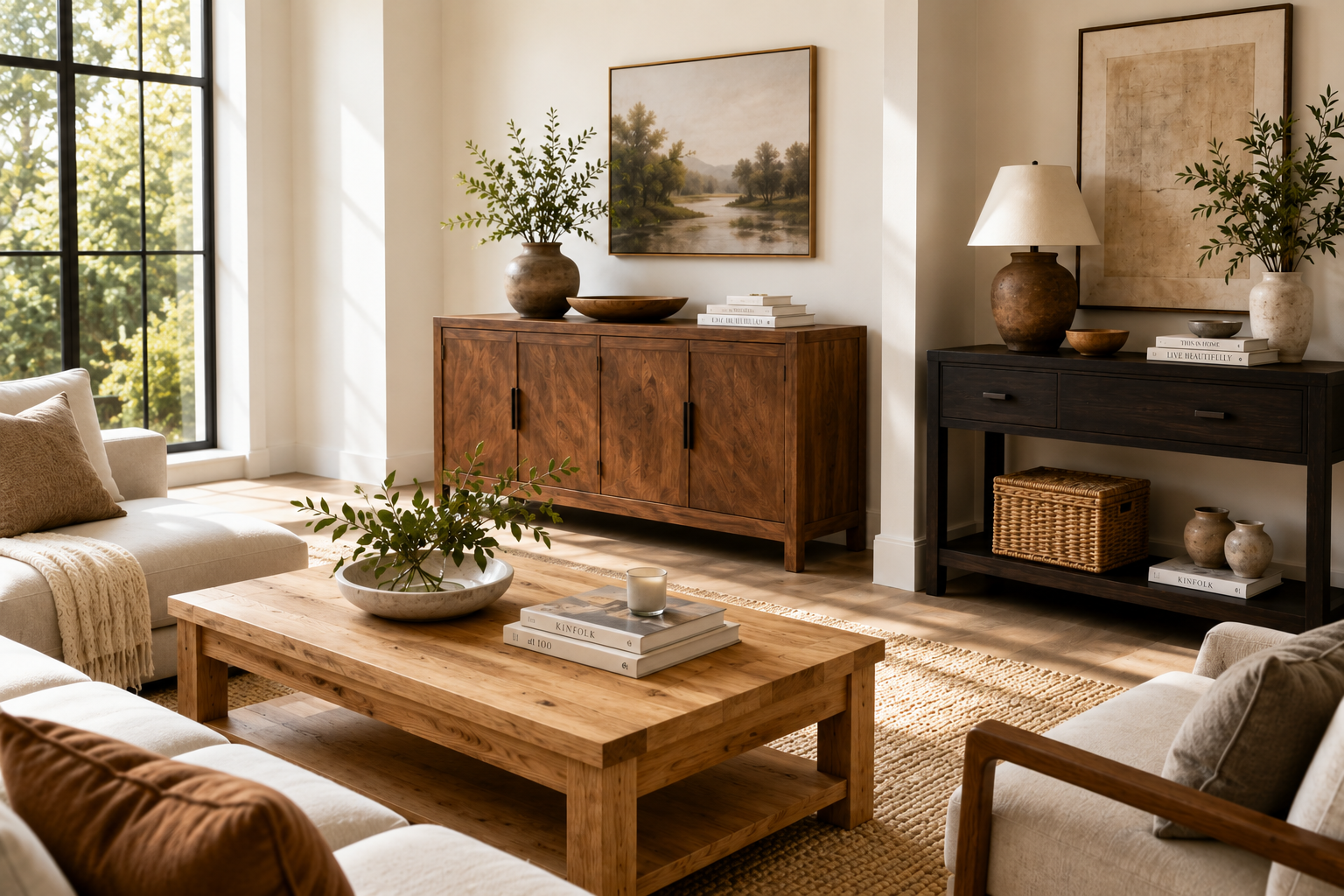
Living Room: A sideboard works beautifully as a media console, concealing cable boxes and electronics behind closed doors while the TV sits above. It also functions as a bar cabinet or as display storage for books, games, and collected objects.
Entryway: A narrower sideboard in the entryway creates instant organization — keys, mail, seasonal accessories all find a home — while offering a surface for a table lamp, a mirror above it, or a seasonal display that welcomes guests.
Home Office: A credenza-style sideboard behind a desk keeps files, supplies, and equipment accessible but contained. It adds visual weight and warmth to what can otherwise feel like a cold, utilitarian space.
For more ideas on placement and how to style solid wood pieces throughout your home, Oak & Loom's guide on styling wood furniture for different living room aesthetics is worth a read.
The Solid Wood Sideboard Buying Guide: What to Confirm Before You Purchase
Once you've narrowed down style, size, and wood species, here's what to verify before finalizing your decision:
- Construction method: Look for traditional joinery — dovetail joints, mortise-and-tenon connections, corner blocks. These structural details determine how well the piece holds up over years of use.
- Finish quality: A quality lacquer or stain should be UV-resistant, moisture-resistant, and smooth to the touch. Ask whether the finish can be touched up if needed.
- Hardware: Soft-close hinges and ball-bearing drawer glides are signs of quality craftsmanship. Flimsy hardware wears out fast.
- Warranty: A solid wood piece backed by a warranty reflects the manufacturer's confidence in their own craftsmanship.
- Delivery: White-glove delivery — where the piece is brought into your room, not just dropped at the door — is worth it for a piece this size and weight.
If you want to explore options across different styles and sizes, browse the premium sideboards collection at Oak & Loom — every piece is crafted from 100% solid wood, with handcrafted details and sustainable sourcing.
A Note on Solid Wood vs. Engineered Wood
This question comes up constantly, and it deserves a direct answer. Engineered wood (MDF, particle board, veneer) is less expensive and in some cases more dimensionally stable in high-humidity environments. But it doesn't age well — surfaces chip rather than patina, repairs are difficult, and the structural integrity degrades meaningfully over time.
Solid hardwood sideboards cost more upfront. But when you consider the lifespan — 20, 30, even 50+ years with proper care — the cost-per-year equation shifts dramatically in favor of solid wood. For a piece as central to your dining room as a sideboard, it's worth buying once and buying right.
Conclusion
A solid wood sideboard is one of those purchases that rewards careful thought. Get the size right, choose a wood species that suits both your taste and your lifestyle, match the style to your existing furniture, and pay attention to the storage configuration inside. Do all of that, and you'll end up with a piece that makes your home feel more considered, more organized, and genuinely more beautiful.
If you're ready to start comparing pieces, explore Oak & Loom's handcrafted sideboards collection — each piece is built from 100% solid wood and designed to last generations.
And if you're also considering how reclaimed and natural wood pieces fit into the bigger picture of your home's aesthetic, this piece on why imperfection is the new luxury in reclaimed wood furniture is a genuinely good read.
Share:
Rustic Sideboard with Drawers: What to Look For, Top Features & Our Best Picks
Rustic Side Boards: The Ultimate Style & Buying Guide for Living Rooms, Dining Rooms & Beyond