

There's a reason rustic side boards keep showing up in the most-pinned interiors on social media, the most-loved homes in design magazines, and the top picks of American interior stylists year after year. They're not just furniture — they're the kind of piece that makes a room feel lived in, layered, and unmistakably yours.
Whether you're styling a farmhouse dining room, refreshing a living room that needs a focal point, or hunting for something substantial and beautiful for your entryway, a rustic sideboard delivers on every front. It brings generous storage, tactile warmth from natural wood, and a visual anchor that holds a space together without trying too hard.
This guide covers everything: the different types of rustic side boards, how to choose the right size and finish, where to place them, how to style them, and what to look for when you're ready to buy. Let's dig in.
What Are Rustic Side Boards?
A sideboard — sometimes called a buffet, credenza, or sideboard cabinet — is a long, low piece of furniture typically featuring a combination of drawers, shelving, and cabinet doors. It sits against a wall and serves a dual purpose: serious storage and serious style.
Rustic side boards are defined by their use of natural, tactile materials — primarily solid or reclaimed wood — and finishes that celebrate the grain, knots, and imperfections of the timber rather than hiding them. The aesthetic is warm, honest, and grounded.
Within the rustic category, you'll come across a few variations worth knowing:
- Rustic buffet table — Taller and often more open in design, originally used in dining rooms for serving food. Today they're just as likely to appear in living rooms and entryways.
- Rustic sideboard cabinet — Features enclosed storage with doors, ideal for hiding clutter while maintaining a clean silhouette.
- Rustic console sideboard — Narrower in depth, designed for hallways, entryways, or behind sofas.
- Rustic credenza — Mid-century in origin but adapted beautifully into rustic styles, usually with tapered legs and a lower profile.
The terms often overlap in everyday use, but the defining thread is always the same: natural materials, honest craftsmanship, and a warmth you can feel the moment you walk into the room.
Why Rustic Sideboards Are Trending in 2026
Minimalism had its moment. Now, American homeowners are gravitating toward something warmer — spaces that feel intentional but not cold, curated but not sterile. That shift is exactly why rustic sideboards are having such a strong moment heading into 2026.
A few specific trends are driving the demand:
The "organic modern" aesthetic is everywhere. This design movement blends clean lines with raw, natural materials. A solid wood rustic sideboard sits perfectly at that intersection — structured enough for modern spaces, textured enough to add life.
Reclaimed and sustainably sourced wood is in high demand. Buyers are increasingly aware of where their furniture comes from. Rustic pieces — particularly those made from reclaimed timber — align with values around sustainability without sacrificing beauty.
People are investing in fewer, better pieces. Rather than filling a room with budget furniture that won't last, US homeowners are choosing heirloom-quality pieces. A solid wood sideboard is exactly that — something that ages gracefully and improves with time.
Multifunctional furniture is essential. Post-pandemic living spaces are doing more work than ever. A sideboard that stores, displays, and anchors a room? That's not a luxury — that's a smart buy.
Popular Types of Rustic Sideboards
Rustic Wood Sideboard
The classic. A rustic wood sideboard is typically crafted from solid hardwoods — oak, walnut, pine, or acacia — and finished to highlight the natural grain. These pieces age beautifully and develop a patina over time that only adds to their character.
Look for dovetail-joined drawers, solid wood backs (not MDF), and mortise-and-tenon joinery. These details separate heirloom furniture from furniture that looks the part but won't hold up.
Oak & Loom's Solid Wood Rustic Sideboards collection showcases handcrafted pieces built to last — each one a little different because real wood always is.
Farmhouse Sideboard
The farmhouse sideboard leans into a more casual, country-influenced aesthetic. Think shiplap-paneled doors, iron hardware, whitewashed or chalk-painted finishes, and generous proportions. These pieces feel at home in spaces with linen curtains, wicker baskets, and vintage ceramics.
A farmhouse sideboard pairs beautifully with exposed wooden beams, stone countertops, and neutral color palettes. It's the furniture equivalent of a deep breath.
Distressed Wood Sideboard
If you want character straight out of the box, a distressed wood sideboard delivers. The distressed finish — achieved through hand-scraping, wire-brushing, or antiquing techniques — gives the piece the appearance of age and use without waiting decades for it to develop naturally.
These sideboards work especially well in eclectic, bohemian, or heavily layered interiors. They're also incredibly forgiving: a ding or a scratch doesn't hurt them — it adds to the story.
Rustic Buffet Table
The rustic buffet table is the taller, more open cousin of the sideboard. Originally designed for dining rooms — a place to set out food during gatherings — the rustic buffet has evolved into a genuinely versatile piece.
In a dining room, it holds linens, serving pieces, and wine. In a living room, it becomes a media console or display surface. In an entryway, it anchors the space and provides a landing zone for bags, keys, and mail. Wherever you put it, it works.
Explore Oak & Loom's full Sideboards collection to see how these styles translate across different wood species and finishes.
How to Choose the Right Rustic Sideboard
Size Guide
Getting the dimensions right is critical. A sideboard that's too small will look lost; one that's too large will overwhelm the room.
General sizing rules:
| Room | Recommended Width | Height | Depth |
| Small dining room | 48–60 inches | 32–36 inches | 16–18 inches |
| Large dining room | 60–72 inches | 32–36 inches | 18–20 inches |
| Living room | 50–66 inches | 28–34 inches | 14–18 inches |
| Entryway / hallway | 36–48 inches | 30–34 inches | 12–16 inches |
| Bedroom | 48–60 inches | 28–32 inches | 16–18 inches |
Practical rule of thumb: The sideboard should take up roughly two-thirds of the wall it's on. Leave at least 36 inches of clearance in front for comfortable movement.
For hanging art or a mirror above: Leave 6–8 inches of space between the top of the sideboard and the bottom of whatever you're hanging.
Storage Needs
Think about what you're storing before you buy. If you need to stash table linens, serving ware, and wine bottles, prioritize cabinets with interior shelving. If it's more about organizing everyday items, a piece with a good balance of drawers and doors works better.
Not sure how to think about storage in your sideboard? Our guide to sideboard drawers breaks it down in detail.
Wood Type & Finish
Different woods behave differently — in how they look, how they feel underfoot when you pull open a drawer, and how they age.
- Oak — Open grain, strong visual texture, ages to a warm honey tone. Extremely durable.
- Walnut — Rich chocolate tones, tighter grain, more refined look. A premium choice.
- Pine — Lighter, knotty, characterful. Ideal for farmhouse and cottage styles.
- Acacia — Varied grain patterns, warm tones, sustainably harvested. Excellent value at a quality level.
- Reclaimed wood — Maximum character. Every piece is unique. Environmentally responsible.
For finish, darker stains deepen the rustic quality and hide wear well. Lighter, natural finishes show the wood's full character and work beautifully in bright, airy rooms.
Color Matching Tips
Rustic sideboards are more flexible than they look. A few guidelines:
- Warm neutrals (cream, beige, terracotta) → pair with honey oak or pine finishes
- Cool neutrals (white, grey, blue-grey) → pair with whitewashed, weathered grey, or dark walnut
- Bold accent walls (deep green, navy, burgundy) → let the sideboard be a natural counterpoint; choose warm wood tones to balance the saturation
- Mixed-material rooms → match the sideboard's hardware to other metal accents in the space (iron, brass, matte black)
Rustic Sideboard Placement Ideas
In the Living Room
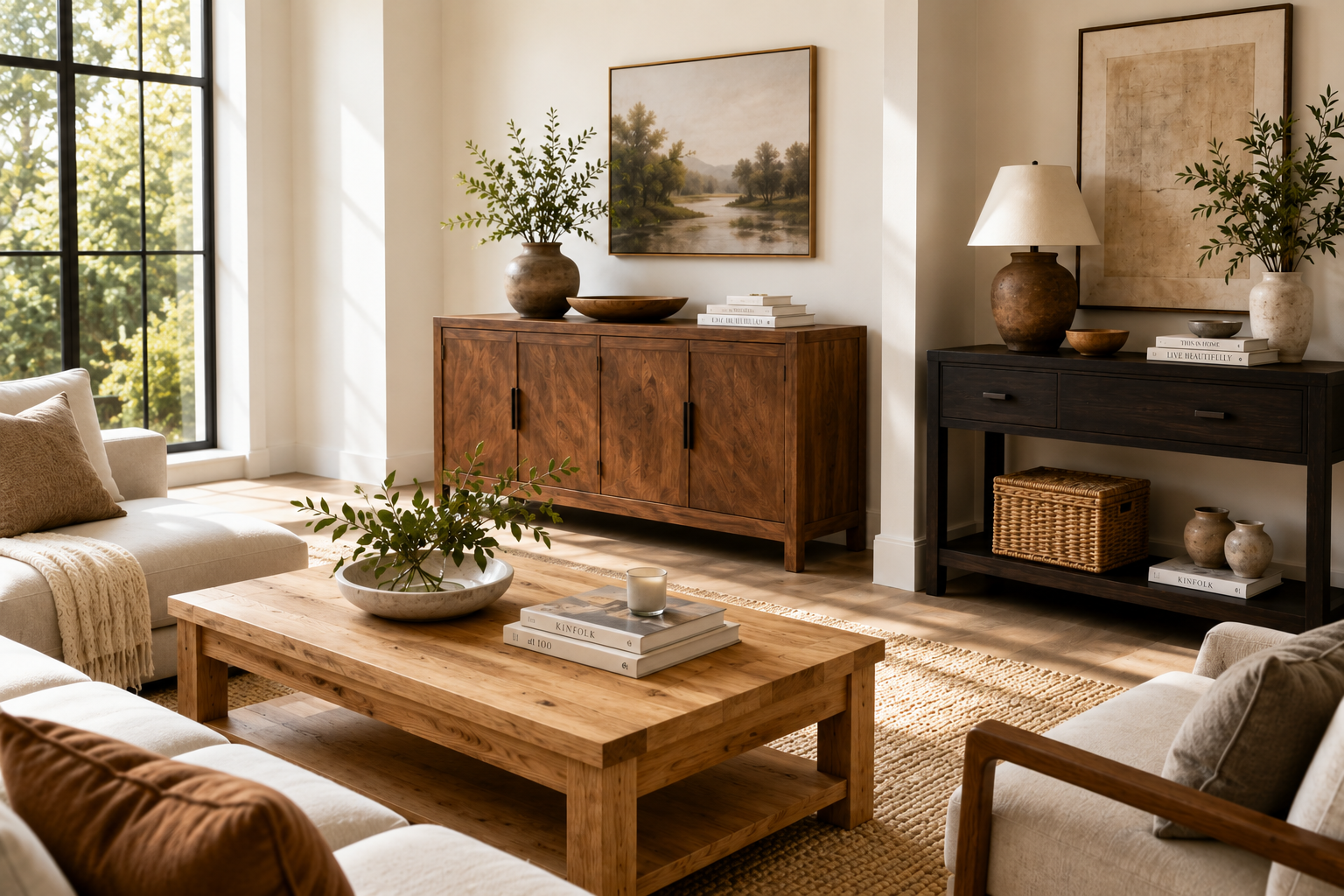
A rustic sideboard in the living room does a lot of heavy lifting. Use it as a media console (with cable management through the back panel), a drinks station, or a display surface for curated objects. It gives the room a grounded, layered quality that TV units and floating shelves rarely achieve.
Position it along the longest wall for maximum visual impact, or opposite the sofa to create a natural focal point across the room.
In the Dining Room
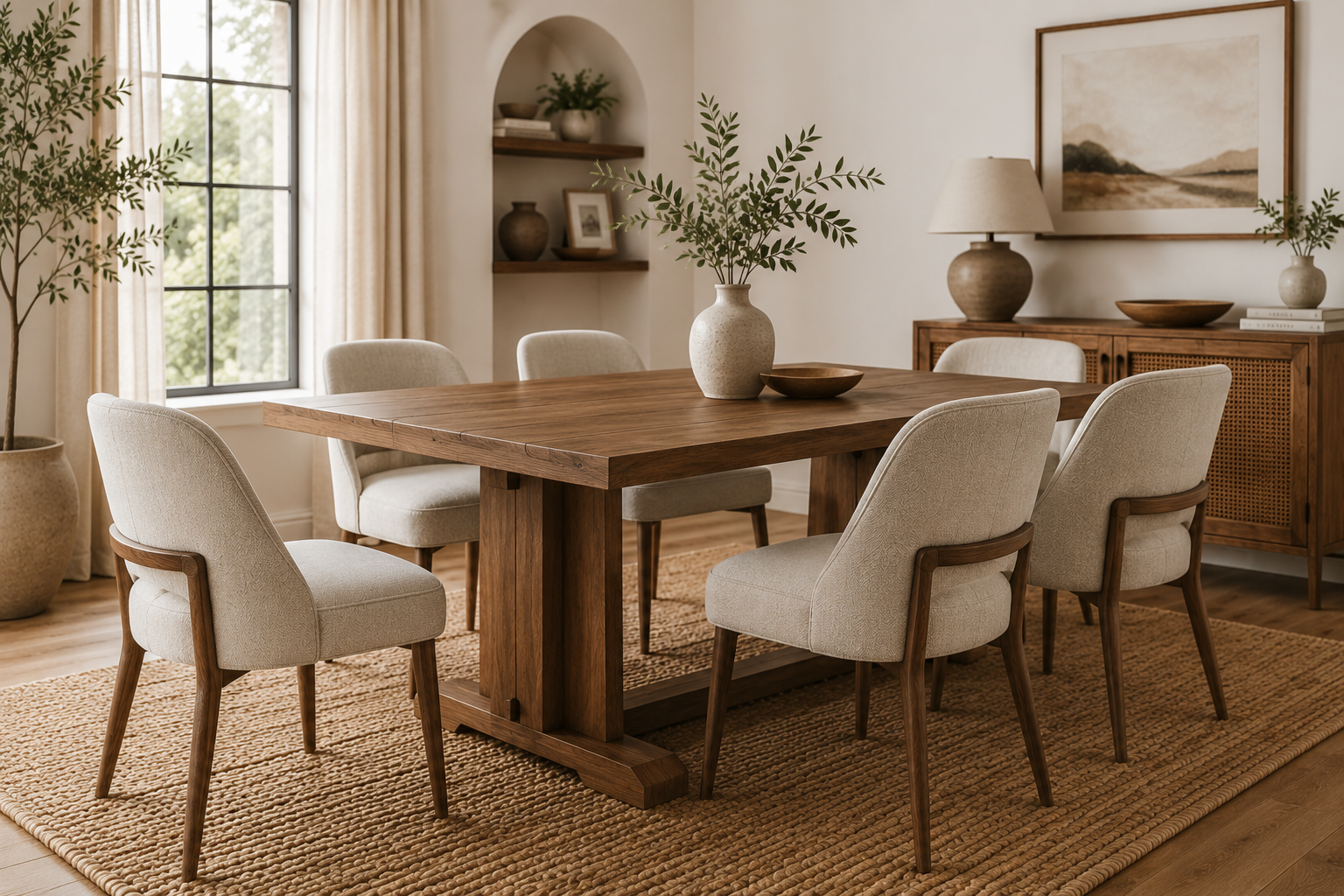
This is the sideboard's original home. In the dining room, it becomes a serving station during dinner parties and a storage solution for everything you don't want on the table. A rustic buffet table along the wall creates a warm, abundant feeling — like the room is always ready for guests.
In the Entryway
An entryway sideboard sets the tone for your entire home. Choose a narrower console-style piece (12–16 inches deep) so it doesn't eat into walkable space. Style the top with a mirror, a lamp, and a tray for everyday items. It makes an immediate impression.
In the Bedroom
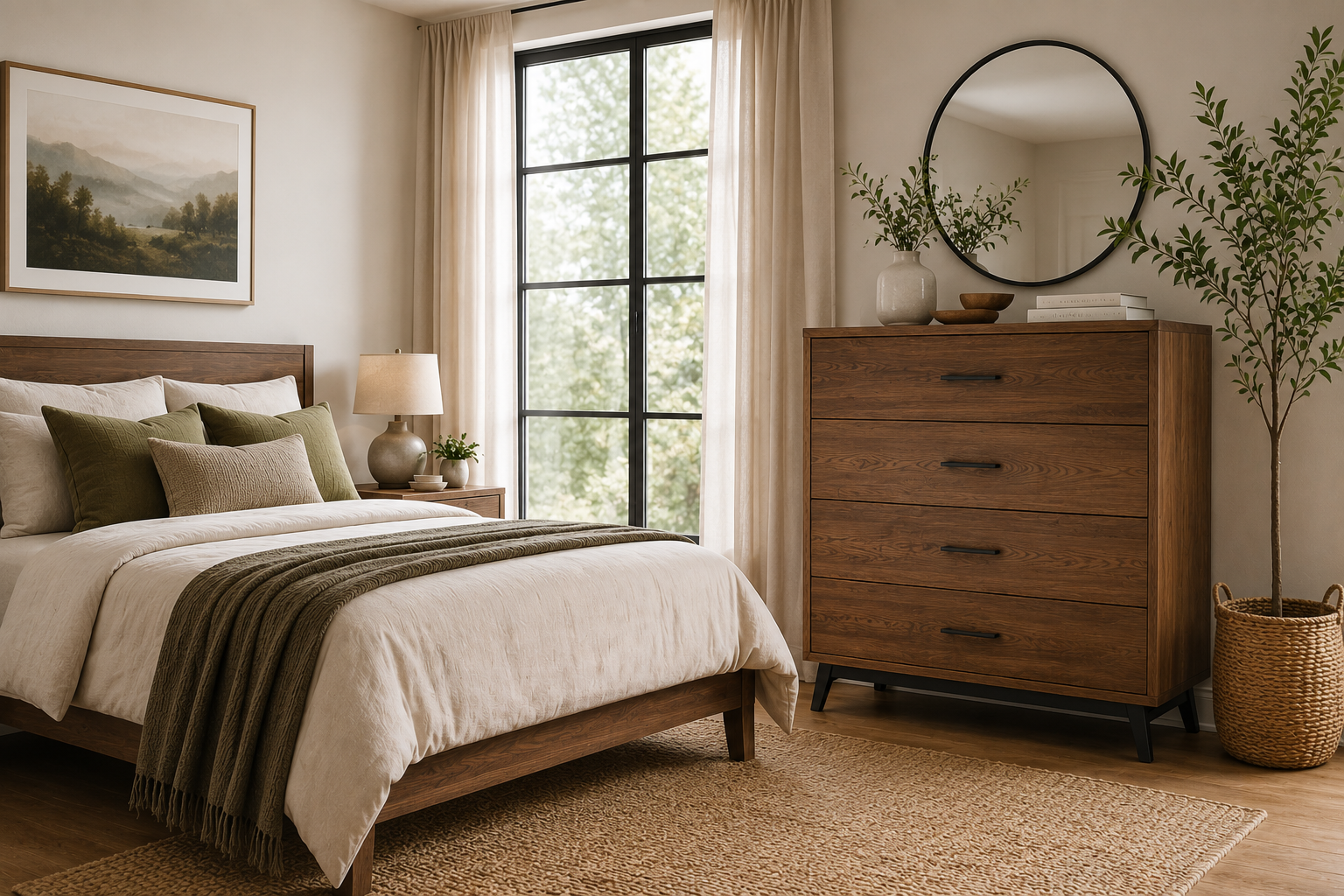
A sideboard in the bedroom is an underused idea that works brilliantly. Use it in place of a traditional dresser — the lower profile and longer silhouette feel more relaxed and contemporary. It also provides a generous surface for styling: a lamp, a stack of books, a small plant.
Styling Tips for Rustic Sideboards
The sideboard surface is one of the most enjoyable parts of decorating. Here's how to get it right without overthinking it.
Layer heights. Don't line up objects at the same height — vary tall, medium, and low pieces for visual rhythm. A floor lamp or tall vase at one end, mid-height ceramics in the center, and low candles or a small plant on the other end works beautifully.
Use a mirror or art above. A large mirror above a rustic sideboard amplifies natural light and makes the wall feel purposeful. Go for a leaner mirror (resting on the sideboard surface) for a relaxed look, or hang a piece of art that picks up warm tones from the wood.
Add texture through objects. Woven baskets on the floor beside the sideboard, a linen table runner across the top, a ceramic vase, a leather-bound book stack — these tactile layers are what make a styled sideboard feel lived-in rather than staged.
Don't overdo it. Rustic furniture is strongest when the styling is edited. Three to five objects on the surface is usually the sweet spot. Negative space is part of the composition.
Introduce lighting. A table lamp on one end of a sideboard immediately elevates the whole vignette. It adds warmth in the evening and gives the piece a more intentional, designed feel.
Best Rustic Sideboards for 2026
Choosing the best rustic sideboard comes down to three things: craftsmanship, proportion, and authenticity of materials. A piece that ticks all three will look better at year ten than it did on day one.
In our dedicated guide to the best rustic sideboards of 2026, we've walked through the standout options across different budgets, styles, and room types — from compact entry-level pieces to wide, statement-making dining room sideboards in solid reclaimed oak.
If you're ready to explore, Oak & Loom's Solid Wood Rustic Sideboards collection brings together handcrafted pieces that are built without compromise. Each one is made from responsibly sourced timber, designed to be a permanent part of your home rather than a placeholder.
For more guidance on what separates a good sideboard from a great one, our solid wood sideboard guide covers construction quality, wood species comparisons, and what to look for at different price points.
Care & Maintenance Tips
A solid wood rustic sideboard is built to last — but a little care goes a long way in keeping it looking its best.
Daily care:
- Wipe with a soft, dry or lightly damp cloth. Avoid soaking the surface.
- Use coasters or trivets under hot items and anything with moisture.
Monthly care:
- Apply a good quality furniture wax or natural oil (beeswax or linseed oil work well for rustic finishes) to nourish the wood and maintain its luster.
- Check hardware — drawer pulls and door hinges — and tighten if needed.
Seasonal care:
- Wood expands and contracts with humidity changes. In very dry winters, consider a humidifier in the room to prevent cracking.
- Keep the sideboard out of direct sunlight if possible. Prolonged UV exposure can fade and dry out even the most durable finishes.
For distressed finishes: These are the most forgiving — small scratches and dings actually enhance the character. A light wax application a couple of times a year is usually all they need.
Final Thoughts
A great rustic sideboard isn't just storage. It's the piece in a room that makes everything else make sense — the anchor, the warmth, the thing people notice and comment on when they walk through the door.
Whether you're drawn to the open-grained honesty of an oak farmhouse sideboard, the deep character of a distressed wood piece, or the clean lines of a solid walnut credenza with rustic detailing, the right choice is the one that feels like it belongs in your space — not a showroom floor.
Take your time with it. Measure twice, consider the light in the room, and think about what you'll store and display. A sideboard chosen thoughtfully will serve your home for decades.
Ready to find yours? Explore Oak & Loom's Sideboards collection — or browse our Solid Wood Rustic Sideboards for pieces built with the kind of care that shows in every detail.
Frequently Asked Questions
What is the standard size of a rustic sideboard?
Most rustic sideboards range from 48 to 72 inches wide, 30 to 36 inches tall, and 16 to 20 inches deep. For dining rooms, 60–72 inches is the most popular width. For living rooms and entryways, 48–60 inches tends to be the practical sweet spot. Always measure your wall space and leave at least 36 inches of clearance in front for comfortable access.
What's the difference between a rustic sideboard and a rustic buffet table?
The terms are often used interchangeably, but there's a subtle distinction: a buffet table is traditionally taller (often 36–40 inches) and may have a more open design with fewer enclosed cabinets — historically used as a serving station. A sideboard tends to be slightly lower (30–36 inches) and usually features a more balanced mix of drawers and cabinet doors. Both work brilliantly in dining rooms, living rooms, and entryways.
What wood is best for a rustic sideboard?
Oak and walnut are the top choices for longevity and visual character. Oak has a bold, open grain that reads as deeply rustic and ages to a warm honey tone. Walnut is denser, with a richer color and tighter grain — a more refined take on the rustic aesthetic. Reclaimed wood is the most distinctive option if you want maximum character and a sustainable choice. Pine is ideal for farmhouse-style pieces and typically comes in at a lower price point.
How do I style a rustic sideboard in a living room?
Layer heights (tall, medium, and low objects), use a large mirror or artwork above it, and add texture through woven, ceramic, and linen elements. A table lamp at one end brings warmth in the evening. Keep the surface edited — three to five objects tend to look more intentional than a crowded arrangement. Leave some visible wood surface as part of the composition.
Are rustic sideboards still in style in 2026?
Absolutely. The "organic modern" design movement — which blends clean structure with raw, natural materials — is one of the defining aesthetics of 2026, and rustic sideboards sit perfectly within it. Demand for solid wood furniture with visible grain, knots, and honest finishes continues to grow as homeowners move away from synthetic materials and flat-pack furniture toward heirloom-quality pieces. A well-chosen rustic sideboard is as relevant today as it will be ten years from now.
How do I care for a rustic wood sideboard?
Wipe regularly with a soft, dry cloth and avoid prolonged moisture on the surface. Apply a natural wood wax or oil (beeswax or linseed oil) every one to three months to nourish the timber. Keep it out of direct sunlight to prevent fading, and consider a room humidifier in dry climates to prevent cracking. Distressed finishes are the most forgiving — minor marks and scratches only add to the character over time.
Share:
Solid Wood Sideboard: How to Choose the Right One for Your Home
The 10 Signs It's Time to Replace Your Furniture