
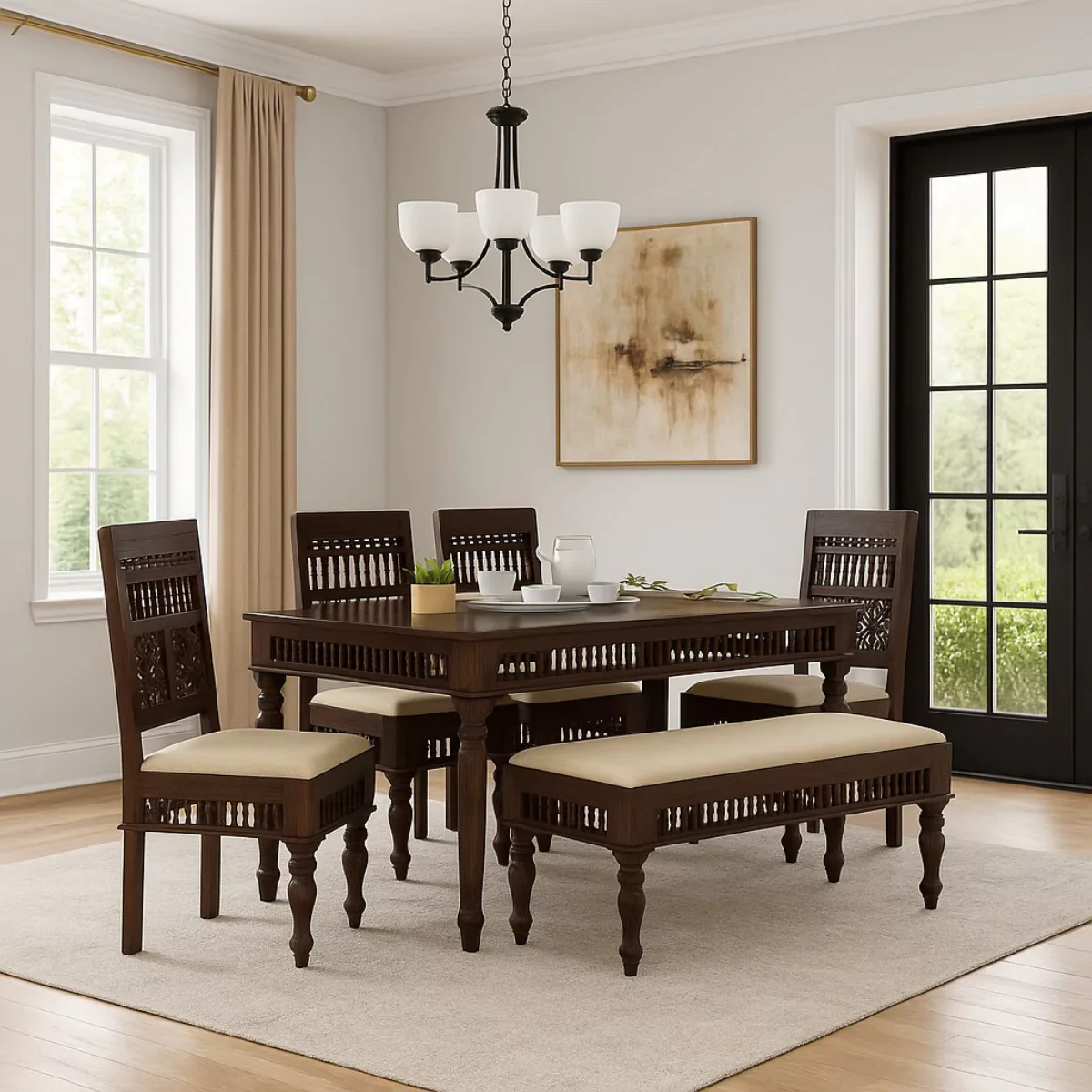
Sign 1 - Your Furniture Is Visibly Wearing Out in Ways That Can't Be Fixed
There's a critical difference between furniture that ages beautifully and furniture that simply deteriorates.
Solid wood furniture develops texture, richness, and patina over time - a surface that gets more interesting with every year of use. Furniture made from MDF or particleboard chips at the corners, peels at the edges, swells with moisture, and develops a worn quality that no amount of furniture polish reverses.
If you're looking at surfaces that have started to peel, chip, or show white composite material beneath a thin veneer - this is one of the clearest signs it's time to replace your furniture. These are not cosmetic issues that touch-up markers fix. They are the visible evidence of a material that was never built to last.
Across US homes, this deterioration appears first at dining table edges, dresser drawer fronts, and the corners of bed frames - the points that receive the most daily contact and stress.

Sign 2 - You've Already Replaced This Same Piece Before
If you've bought the same category of furniture - the same dining table, the same chest of drawers, the same bed frame - more than once, the replacement cycle itself is telling you something important.
Run the math US homeowners rarely calculate: two cheap dressers at $350 each, replaced over eight years, equals $700 spent - and you still own furniture that will need replacing again.
A solid wood dresser purchased once for $1,400 costs less per year over 20 years — and looks better at year fifteen than a replacement cycle of cheap alternatives ever could.
When you've replaced a piece more than once, you've already spent enough to have bought the right thing. This is one of the clearest financial signs it's time to replace furniture permanently - not temporarily.
Sign 3 - Your Home Feels Temporary Instead of Personal
A home furnished with mass-produced pieces can sometimes feel generic, even when everything is functional. It may look well put together, but it lacks the warmth and character that make a space feel truly personal.
If your furniture no longer reflects your style, lifestyle, or the atmosphere you want to create, it may be a sign that you're ready for an upgrade. Well-crafted solid wood furniture often adds a sense of permanence, character, and individuality that helps a house feel more like home.
Sign 4 - You Notice Quality Furniture Everywhere Else
You start paying attention to dining tables in restaurants, to the weight of a well-made chair in someone else's home, to the grain patterns in hotel rooms. You save photos of rooms that feel right and realize you can't quite replicate that feeling in your own space.
This shift in awareness is a reliable sign it's time to upgrade. Your aesthetic instincts have moved beyond what your current furniture reflects - and that gap has started to feel uncomfortable.
Sign 5 - Your Furniture Makes Noise or Feels Unstable
A dining chair that creaks every time someone sits in it. A bed frame that announces every movement. A drawer that sticks and then opens with a jolt.
These may seem like minor annoyances, but they are often signs that furniture is beginning to lose its stability and durability over time.
High-quality solid wood furniture built with strong joinery methods is generally more stable and durable over time.
Over time, repeated wobbling, squeaking, or sticking drawers can indicate that a piece is nearing the end of its useful life.
Sign 6 - Your Home Has Evolved but Your Furniture Hasn't
You've repainted. You've upgraded the lighting. You've invested in better bedding, a new rug, and improved kitchen equipment. The overall quality and intentionality of your home has moved significantly - but certain furniture pieces are still reflecting an earlier version of your aesthetic and your priorities.
This mismatch is a specific sign it's time to replace furniture - not because the old pieces are broken, but because they no longer belong in the home you're building.
Sign 7 - Sustainability Matters More to You Now
Many homeowners today are becoming more conscious of buying fewer, higher-quality products that last longer. Furniture is one area where durability can make a meaningful difference.
Choosing well-made furniture that remains functional and attractive for decades can reduce the need for frequent replacements. Solid wood furniture is often valued for its longevity, repairability, and timeless appeal, making it a practical option for those looking to create a more sustainable home.
Sign 8 - You Value Quality More Than You Used To
Think about the other areas of your life where you've made a deliberate shift from cheap to quality - kitchen tools, clothing, cookware. You've learned in each of these areas that quality costs more upfront and costs less over time.
Furniture is one of the areas where people often delay applying this lesson. The same principle that guides other quality purchases - buy well once rather than replace repeatedly - applies just as strongly to furniture.
Sign 9 - A Major Life Change Is Creating a Natural Transition Point
Moving to a new home. Renovating a room. Children leaving for college. A newly combined household. These transitions are the natural moments when the signs it's time to replace furniture become actionable.
Transitions create the opportunity to start correctly - to bring in furniture that was chosen for the next chapter rather than carried over from the last one.
Sign 10 - The Small Frustrations Have Become Impossible to Ignore
You've learned to live with them. The wobble. The stuck drawer. The edge that catches your hand. The surface that looks clean but never quite looks right.
You notice them every day, briefly dismiss them, and move on - until the day you don't.
This is the final and most honest sign it's time to replace your furniture: the small frustrations have accumulated into a persistent background dissatisfaction that your home deserves better than. Not a dramatic failure. Just an accumulated weight of evidence that the furniture was never built for the life you're actually living.
Why US Homeowners Wait - And Why It Costs More When They Do
The most common reason US homeowners delay replacing furniture is the upfront cost comparison. The cheap replacement is $300. The solid wood alternative is $1,800. The decision looks obvious until you calculate the real cost over time.
|
Option |
Cost |
Lifespan |
20-Year Total |
|
Cheap furniture replaced 3× |
$300 × 3 |
6–7 years each |
$900+ |
|
Solid wood furniture once |
$1,800 |
20–50 years |
$1,800 total |
While solid wood furniture usually costs more upfront, many homeowners choose it for its durability, repairability, and long-term value. When furniture is already showing multiple signs of wear, continuing to repair or replace lower-quality pieces can become more expensive and frustrating over time.
How to Start - You Don't Need to Replace Everything at Once
The most effective approach is to start with the anchor piece in the room that bothers you most.
In a dining room, that's almost always the dining table. In a bedroom, it's the bed frame. In a living room, it's the coffee table or sideboard.
 Replace the anchor piece with solid wood. Everything else in the room will immediately look more intentional around it - because it now has something worth relating to.
To understand what separates solid wood from the alternatives you're replacing, read: Hardwood vs. Engineered Wood - What Every Homeowner Should Know.
Conclusion
The signs it's time to replace your furniture rarely appear all at once. More often, they show up gradually through worn surfaces, recurring repairs, daily frustrations, or the feeling that a piece no longer fits your home or lifestyle.
If several of the signs in this guide sound familiar, it may be time to start thinking about an upgrade. You don't need to replace everything at once-focusing on one important piece at a time can make a noticeable difference in both comfort and appearance.
For many homeowners, solid wood furniture remains a popular choice because of its durability, timeless design, and ability to last for decades with proper care. Investing in quality furniture can help create a home that feels more functional, personal, and built to last.
→ Browse solid wood furniture - free US shipping
→ Questions? Our team is here.
Frequently Asked Questions
Q1. What are the signs it's time to replace furniture?
The clearest signs it's time to replace furniture are: visible peeling or chipping that can't be repaired; furniture you've already replaced once before; persistent noise or wobbling under normal use; pieces that make your home feel temporary rather than personal; and furniture that no longer matches the quality level of the rest of your US home. If three or more of these apply to the same piece, replacement is more cost-effective than continued repair.
Q2. Is solid wood furniture worth the investment for US homeowners?
While solid wood furniture often costs more upfront, its durability and long lifespan can provide better long-term value than frequently replacing lower-quality alternatives. Beyond the financial aspect, solid wood furniture offers natural character, durability, and craftsmanship that many homeowners appreciate.
Q3. How can I tell if furniture is made from real solid wood?
Check five things: lift a corner - solid wood is significantly heavier than engineered alternatives; look at the edges - solid wood grain runs through the edge, MDF shows a flat uniform color; pull out a drawer and look at the corner joinery; ask specifically about the wood species; and check whether the piece can be refinished if the surface is damaged. These checks can help you distinguish genuine solid wood furniture from engineered wood alternatives.
Q4. How long does solid wood furniture last in a US home?
Quality solid wood furniture built from furniture-grade hardwood with mortise-and-tenon joinery lasts 20 to 50 years under normal US home conditions. With appropriate care - annual oiling and humidity management between 40–60% relative humidity - solid wood furniture can last generations. MDF and particleboard furniture typically deteriorates visibly within 5 to 10 years and cannot be refinished when it does.
Q5. What solid wood furniture should I replace first?
Replace the anchor piece in the room that bothers you most. In a dining room, that's the dining table. In a bedroom, it's the bed frame. In a living room, it's the coffee table or sideboard. The anchor piece sets the visual standard for everything around it - replace it with solid wood and every other element in the room immediately looks more intentional.
Q6. Does Oak & Loom ship solid wood furniture free across the United States?
Yes - Oak & Loom offers free shipping across the contiguous United States on every piece in the collection. Every piece is 100% solid hardwood - kiln-dried acacia, mango, or teak, with no MDF or particleboard in any structural component.
Related Reading
-
Custom vs Ready-Made Furniture: What Should You Choose?
-
Solid Wood vs Engineered Wood: What’s Actually Worth Your Money?
Share:
Rustic Side Boards: The Ultimate Style & Buying Guide for Living Rooms, Dining Rooms & Beyond
Hardwood vs Engineered Wood Furniture: The Truth That Could Save You Thousands