

To protect a wooden dining table, use trivets or heat-resistant pads under hot dishes, coasters under glasses and placemats under plates. Wipe spills promptly, clean with a soft, slightly damp cloth, and avoid harsh cleaners. Oil or wax the surface only if your table's finish and its care instructions call for it.
Wooden dining tables are more than just furniture. They often become the heart of a home, hosting conversations, meals and homework sessions for years. Whether it's an oak centerpiece or a rustic mango wood table, though, wood is a natural material, and everyday life can leave scratches, water rings, heat marks and faded patches. With the right habits and the right care for your table's finish, you can keep it looking good for many years.
This guide covers how to prevent the most common kinds of damage, what to do if damage has already happened, and how to match your care routine to the finish on your table.
Start With Your Table's Finish
The best way to protect a wooden dining table depends on what's on its surface. Two tables made from the same wood can need very different care if one is oiled and the other has a film finish. If your table came with care instructions, follow them first. If you're not sure what finish you have, check the maker's documentation or ask the seller.
|
Finish |
General characteristics |
Maintenance considerations |
|
Oil |
Natural, low-sheen look that lets the grain show. Behavior varies with the specific oil and wood. |
Re-oil only according to the manufacturer's guidance. Over-oiling can leave a sticky or uneven surface. |
|
Wax |
Soft sheen and a light layer of surface protection. |
May need periodic re-waxing depending on use and the product. Use a wax that is compatible with the existing finish. |
|
Polyurethane (film finish) |
Forms a protective layer on top of the wood. Available in matte to glossy sheens. |
Clean with gentle products. Avoid abrasive pads and unsuitable cleaners, which can dull or scratch the film. Do not oil or wax it as if it were an oiled finish. |
|
Varnish |
A general term for a clear, film-forming finish. Polyurethane is one common type, though the terms are not always interchangeable. |
Check the label or maker's instructions to see exactly what you have, then follow the care guidance for that product. |
No finish makes a table immune to heat, water or scratches. A film finish can resist everyday spills better than a bare or lightly oiled surface, but it still has limits, and prolonged exposure to heat or liquid can damage any of them.
Everyday Cleaning and Care
A steady routine does more to protect a wooden dining table than any single product.
Dust and wipe regularly. Use a soft, dry or slightly damp microfiber cloth to remove dust and crumbs. Grit left on the surface can scratch it when plates or mats slide across.
Keep the cloth only slightly damp. Wring it out well, wipe in the direction of the grain, and then dry the surface. Do not leave water standing on the wood.
Use mild soap only if needed. For sticky spots, a small amount of mild dish soap in water, applied with a barely damp cloth, is often enough on a sealed finish. Test it on an inconspicuous area first, rinse the cloth, and dry the surface right away. Check your table's care instructions, because oiled and waxed surfaces can react differently.
Avoid shortcuts that suit one finish but not another. Vinegar solutions, baking soda and abrasive scrubbers are sometimes recommended online. They can dull or scratch some finishes, so avoid them unless the maker recommends them for your table.
Protect Against Heat Marks
Hot dishes, pots, mugs and serving platters are a common cause of marks on dining tables. Heat can leave white or cloudy patches or darken the surface, depending on the finish and how long and how hot the item was.
How to prevent it
-
Put trivets or heat-resistant pads under hot cookware and serving dishes.
-
Use coasters for hot mugs and cups when the table's finish could be affected.
-
Avoid placing very hot cookware directly on the table, even briefly. A thin placemat or tablecloth is not always enough insulation for a very hot dish.
-
Let hot dishes cool slightly before setting them on the surface, and use a pad beneath them.
If a heat mark has already appeared. Whether a mark can be reduced depends on the finish and how deep the damage goes. Light white marks sometimes fade as moisture evaporates, but others stay. Avoid applying heat or solvents without knowing your finish, since that can make the damage worse. Our guide to white heat marks on wood tables explains the causes and your options, and a furniture refinisher can assess deeper marks.
Protect Against Spills, Moisture and Water Rings
Condensation from cold glasses and spilled drinks are the usual causes of water rings and dark patches. Moisture that sits on the surface can seep into the wood or finish.
How to prevent it
-
Use coasters under all glasses and mugs. Felt- or cork-backed coasters add a little grip as well.
-
Blot spills immediately with a clean, absorbent cloth. Blot rather than rub, because rubbing can spread the liquid.
-
Dry the area afterward. Do not let wet cloths, plant pots, vases or serving bowls sit on the table.
-
Use a tablecloth or placemats for messy meals or when serving cold drinks and ice.
If a ring or stain has already appeared. Fresh moisture on a sealed finish often wipes away. White, cloudy rings or dark stains that have reached the wood are harder to treat, and the right method depends on the finish. Avoid trying several home remedies in a row, because they can add to the damage. If a mark does not respond to gentle cleaning, contact the maker or a furniture refinisher.
Prevent Scratches
Plates, cutlery, keys, laptops, toys, school supplies and dragged centerpieces can all leave surface scratches.
How to prevent it
-
Use placemats under plates and cutlery, and a table pad or runner under a laptop or craft project.
-
Add felt pads under vases, candle holders and other decor so they don't scratch the surface when moved.
-
Lift items rather than sliding them across the table.
-
Keep the surface free of grit, which acts like sandpaper under a moving object.
If a scratch has already appeared: Light surface scratches in a film finish may be less visible with a touch-up product matched to your table's color and finish. Test any product on a hidden spot first. Deep scratches or gouges may require a finish-appropriate repair, wood filler or professional refinishing, depending on the extent of the damage. Our guide to removing scratches from wood explains how to match the repair to the depth of the scratch.
Sunlight, UV and Room Conditions
Direct sunlight can fade or darken some wood finishes over time, and strong sun combined with dry air can contribute to changes in the wood's condition.
-
Position the table away from direct sun where possible, or use curtains or blinds to filter the light during the brightest hours.
-
Wood expands and contracts as humidity changes. Maintaining relatively stable indoor humidity and avoiding extreme or rapid fluctuations can help reduce seasonal movement. A humidifier or dehumidifier may help in climates with significant humidity changes.
-
Keep the table away from radiators, heating vents and fireplaces, which can dry the wood out quickly.
See our guide to protecting solid wood furniture in summer heat and humidity for seasonal tips.
Children and Everyday Use
A dining table is rarely just for dining. It becomes a homework desk, craft station and play surface, and that makes the surface work harder.
-
Use a washable table pad, large placemats or a protective mat for crafts, painting and homework.
-
Encourage children to lift rather than drag toys and bags across the surface.
-
Keep markers, paint and glue off bare wood and wipe up spills quickly.
-
Wipe sticky food off promptly, using a barely damp cloth, and dry the surface afterward.
Cleaning Products and Chemicals
The wrong product can dull a finish or cause damage that a spill never would.
-
Avoid abrasive pads, powders and scouring creams.
-
Avoid harsh, ammonia- or bleach-based cleaners, and multipurpose sprays that are not made for wood.
-
Be careful with silicone-based polishes and aerosol sprays. They can leave a film that is hard to remove before refinishing, and not every finish suits them. Check the care instructions first.
-
Keep nail polish remover, hand sanitizer, perfume and similar liquids away from the table. Solvents can mark or soften some finishes.
-
Test any product on a hidden area first and follow the maker's instructions.
Handling and Placement
How a table is moved and placed affects how it ages.
-
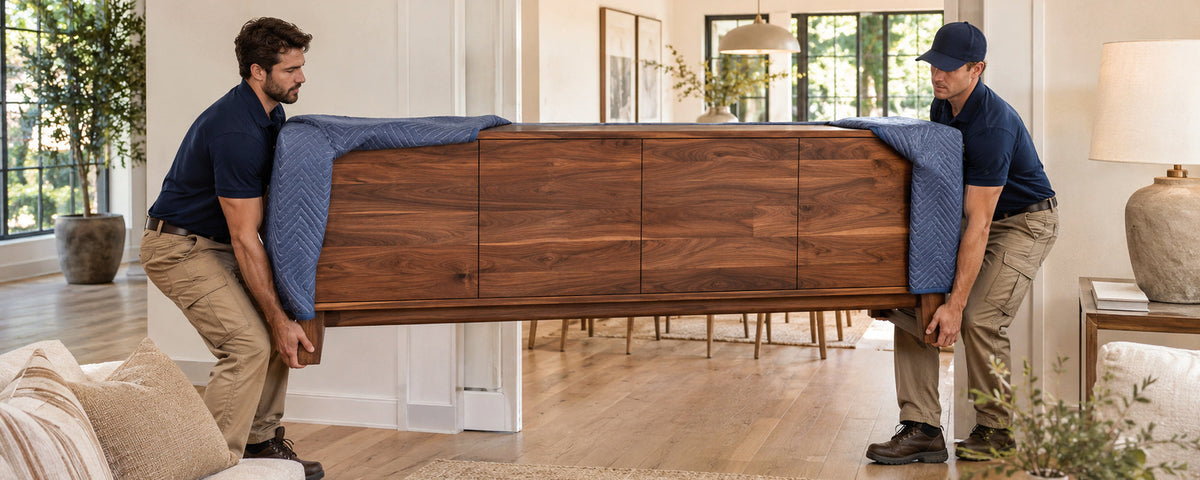
Lift instead of dragging. Dragging stresses the joints and can scratch the surface and the floor. Ask for help to carry a heavy table.
-
Check the legs and feet. Use felt pads or floor protectors under the legs so the table does not scratch the floor, and check them periodically for wear.
-
Keep it level. If a table rocks, adjust it or add a thin shim under the leg. An uneven table puts extra stress on the joints.
-
Choose the right rug and placement. A rug that is the right size helps protect the floor and keeps chairs from scraping. See our rug size guide for dining tables.
Periodic Care: Oiling, Waxing and Polishing
How often a table needs deeper care depends on its finish, how much it is used, and the products involved. There is no single schedule that suits every table.
-
Oiled tables may benefit from re-oiling when the surface starts to look dry or uneven, using the oil the maker recommends. Apply thin coats and wipe off any excess.
-
Waxed tables may need re-waxing when the surface looks dull or water no longer beads off. Use a compatible wax.
-
Film finishes such as polyurethane do not generally need oiling or waxing. Routine cleaning is usually enough, and a damaged film may need refinishing instead.
Whichever product you use, test it on a small, hidden area first. Do not mix products or apply oil over a wax or film finish unless the maker says it is suitable.
Check your table every few months for signs of wear such as dull patches, cracks, loose joints or deep scratches, and deal with small problems before they grow. For a wider routine, see our furniture maintenance tips.
Extra Protection: Tablecloths, Placemats and Glass Tops
-
Tablecloths and runners protect against spills and scratches and add character. Choose machine-washable fabric and a pad underneath if you want more cushioning.
-
Placemats and table pads give heat and scratch protection for everyday meals. Pick pads with a soft, non-staining backing, and lift them occasionally so moisture does not collect underneath.
-
Glass tops can protect the surface but hide some of the wood's character. If you add one, use manufacturer-recommended bumpers or pads between the glass and the wood, and check that the pads will not mark your finish.
Choosing a dining table that suits your household can also help. If you are shopping, see our guide to choosing the right dining table, or compare solid wood and engineered wood for repair and refinishing options.
Frequently Asked Questions
Can I put hot dishes on a wooden dining table?
It's best not to. Even finishes that resist heat can mark if a dish is hot enough or left too long. Use trivets or heat-resistant pads for hot cookware.
How do I prevent water rings on a wood table?
Use coasters, blot spills right away and dry the surface. Do not leave wet items on the wood.
Is it safe to clean a wooden table with vinegar?
Not as a general rule. The safest cleaner depends on the finish. A soft, slightly damp cloth is usually appropriate for routine cleaning, and you should follow the maker's instructions for anything stronger.
How often should I oil a wooden dining table?
It depends on the finish and how the table is used. Oiled tables may need occasional re-oiling, while tables with a film finish usually do not. Follow the maker's guidance.
Conclusion
Protecting a wooden dining table comes down to a few consistent habits: protect the surface from heat, moisture and scratches, clean it gently, and care for it in the way its finish requires. If damage does happen, a careful, finish-appropriate repair is usually better than a quick home fix.
Looking for a table that will stand up to daily use? Browse Oak & Loom's solid wood dining tables.
Share:
Best Solid Wood Dining Tables for Every Home in 2025
Solid Wood vs. Engineered Wood Dining Tables