
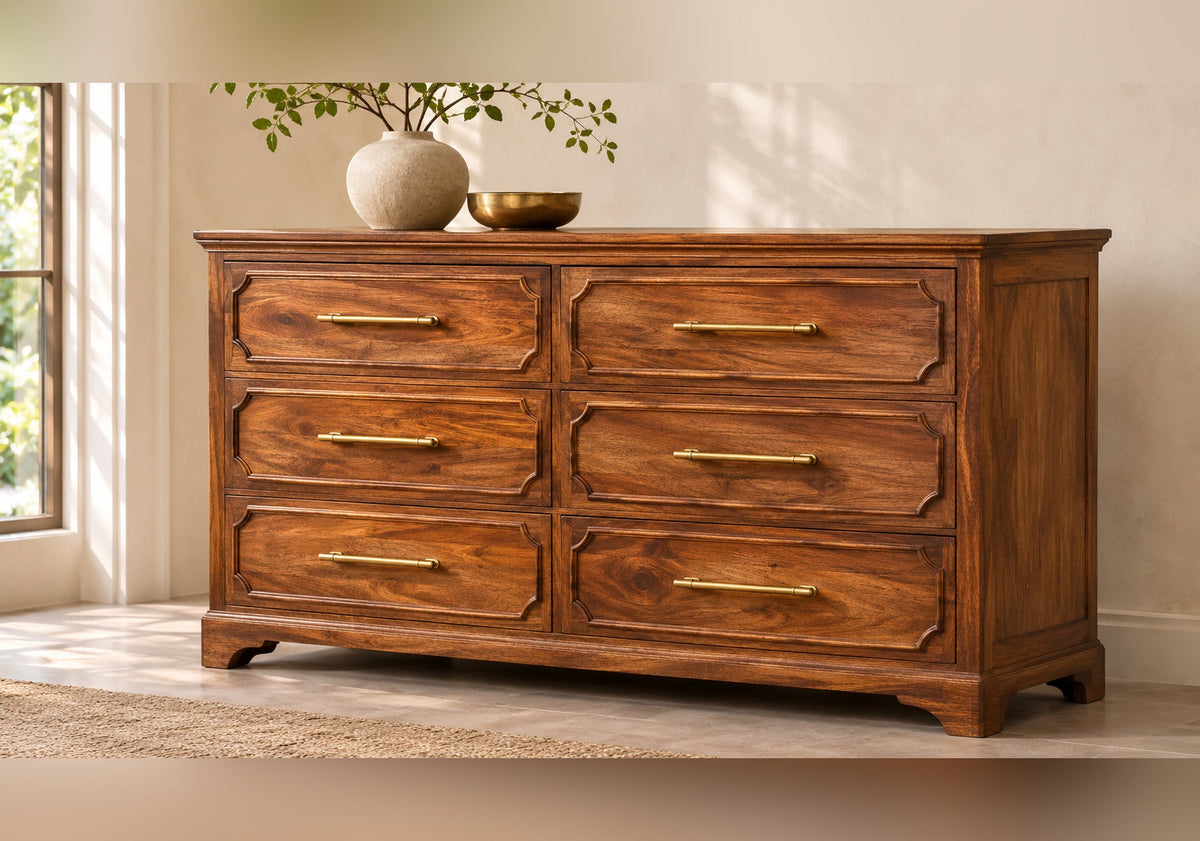
Quick answer: To choose drawer pulls and knobs, match the style to how the drawer is used, choose a pull size that suits the drawer front, and pick a finish that complements the wood and the other metals in the room. If you're replacing existing hardware, measure the center-to-center distance between the screw holes first so the new pulls fit without drilling additional holes.
Hardware is small, but it's the part of a dresser, nightstand or sideboard that your hand touches every day. It also changes the look of a piece more than most people expect. Brass bar pulls on a carved teak-finish dresser read as traditional. Matte black pulls on the same drawers read as more modern.
This guide covers how to choose the type, size, finish and placement of drawer pulls and knobs for solid wood furniture.
Pull or Knob? How to Decide
|
Where it goes |
Usually works best |
Why |
|
Wide or deep drawers (dressers, sideboards) |
Pulls, often one or two per drawer |
Two fingers or a full hand can grip, and the drawer opens evenly. |
|
Small or narrow drawers (nightstands) |
Knobs or a short pull |
A large pull can look oversized on a small front. |
|
Cabinet doors |
Knobs or short pulls near the opening edge |
Easy to grip without catching on clothing or bags. |
|
Heavy or frequently used drawers |
Pulls |
A longer grip can make heavier drawers more comfortable to open than a small knob. |
There's no single right answer. Think about who uses the piece, how heavy the drawers are, and how much visual weight the hardware should carry.
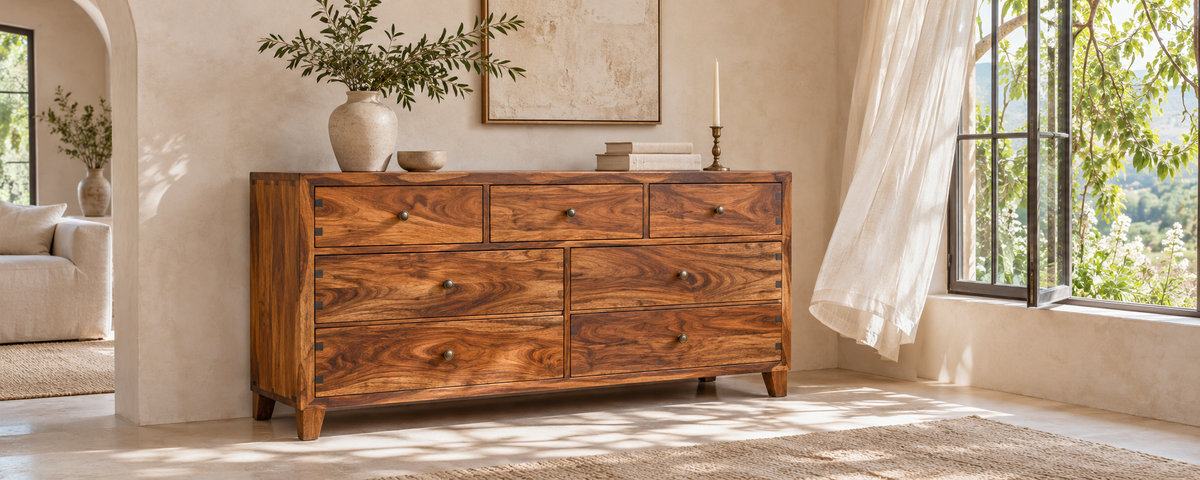
On Oak & Loom's own pieces, you can see both approaches: the Winnetka 6-drawer dresser uses brass bar pulls, while the Winnetka nightstand uses round brass knobs. The Vexlore bedside table skips traditional hardware altogether with cut-out handles.
How to Size Drawer Pulls and Knobs

Step 1: Measure center-to-center (for pulls)
Pulls attach with two screws. The distance between the centers of those two screw holes is called the center-to-center measurement. If you're replacing a pull and want to avoid drilling new holes, the new pull must match this measurement.
-
Remove the existing pull.
-
Measure from the center of one screw hole to the center of the other, not from the outer edges.
-
Note the measurement in inches or millimeters, and check the screw thread type if possible.
Step 2: Choose the overall length
The overall length of a pull is its full end-to-end measurement, which is usually longer than the center-to-center distance. A commonly used design guideline is to choose a pull with an overall length of roughly one-third the width of the drawer front. This is a starting point rather than a fixed rule, as the drawer's proportions and hardware style also influence the right size.
Step 3: Check the knob size and projection
Knobs attach with a single screw, so there's no center-to-center measurement to match, but the screw thread and length still matter. Consider both the knob's diameter (its width) and projection (how far it extends from the drawer front). Choose a diameter that suits the drawer size: a very small knob on a tall drawer can look undersized, while a very large one on a narrow drawer can look visually heavy.
Step 4: Check screw length
Drawer fronts and cabinet doors vary in thickness. Screws that are too short won't hold securely, while screws that are too long can push through the wood. Measure the thickness of the drawer front and choose screws accordingly. Also check that the screw thread is compatible with the hardware, or buy hardware that includes screws in multiple lengths.
Choosing a Finish That Suits Wood
Finish is mostly a style choice, but a few pairings come up often.

|
Finish |
Often pairs with |
Notes |
|
Brass or aged brass |
Warm woods, teak and walnut-toned finishes, traditional and carved pieces |
Adds warmth and a classic feel. |
|
Matte black |
Natural, lighter or rustic finishes, modern and farmhouse styles |
Adds contrast and a cleaner look. |
|
Oil-rubbed bronze |
Dark and medium finishes, vintage and rustic styles |
Softer than black, with a warm tone. |
|
Brushed nickel or steel |
Modern and transitional pieces, lighter or grey-toned woods |
Cooler and understated. |
Before choosing a finish, consider the wood's undertone, existing metal accents and the overall style of the room. The goal is to complement the furniture rather than make every metal finish match exactly.
Our vintage small buffet cabinet guide suggests bin pulls, cup pulls or small knobs in aged brass, matte black or oil-rubbed bronze for an antique look.
Match the room, not just the piece. If the room already has black light fixtures or brass lamps, repeating one of those metals on the furniture makes the room feel cohesive. Our rustic sideboards guide makes the same point: match the hardware to other metal accents in the space, such as iron, brass or matte black.
Mixing metals is fine, within reason. A common approach is to pick one main metal and one accent, and repeat each a few times across the room.
Match the Hardware to the Style of the Piece
-
Carved and traditional pieces: Brass bar pulls or round knobs echo the detail without competing with it.
-
Modern and minimalist pieces: Slim pulls, flat bars or cut-out handles keep the lines clean.
-
Rustic and farmhouse pieces: Iron, matte black or aged finishes suit chunky wood and visible grain.
-
Mid-century pieces: Simple knobs or slim pulls in brass or dark metal.
If the wood itself is heavily carved or patterned, simpler hardware often looks better, because the carving does the talking.
Where to Place Pulls and Knobs

-
Center single pulls and knobs on the drawer front, side to side and top to bottom, unless the design calls for something else.
-
On wide drawers, consider using two knobs or two pulls spaced evenly across the drawer front. A single longer pull can also work when it suits the design and proportions.
-
On doors, place the hardware near the edge that opens, at a comfortable reach, and keep placement consistent across matching doors.
-
Keep spacing consistent across a set of drawers so the piece looks balanced.
-
Use a paper or cardboard template to mark hole positions before you drill. This applies to new furniture builds or approved modifications only.
Comfort and Practicality
-
Test the grip. You should be able to grip and pull the hardware comfortably, with enough clearance for your fingers and knuckles.
-
Check clearance. Pulls that stand far from the surface can snag sleeves and bags. The Vexlore bedside table's wave cut-out handles avoid this by eliminating protruding hardware.
-
Think about small children and sharp edges. Rounded edges are friendlier in a child's room.
-
Consider drawer weight. Heavy drawers are often easier to open with a pull than with a small knob.
Replacing Hardware on Solid Wood Furniture
The safest swap is like-for-like: new pulls with the same center-to-center measurement, using the existing holes.
-
Remove the old hardware.
-
Clean around the holes with a soft, dry cloth.
-
Fit the new pull or knob using screws of the correct length and thread type.
-
Tighten until snug, but don't overtighten, as this can crack or dent the wood.
Before drilling new holes or changing the hardware layout, contact our team. Unauthorized alterations may affect warranty coverage, and additional holes can permanently change the drawer or cabinet front. [CONFIRM - Oak & Loom: current warranty wording and whether hardware changes are available on custom orders.]
Caring for Drawer Hardware
-
Wipe metal hardware with a soft, dry or barely damp cloth.
-
Keep metal polish and cleaners off the wood finish. Remove the hardware before polishing if you can.
-
Check the hardware periodically to make sure the screws remain secure. Regularly checking and tightening hardware is a simple part of furniture maintenance. For more care and maintenance advice, read our guide on [How Long Does Solid Wood Furniture Last].
Common Mistakes
-
Buying pulls without measuring center-to-center.
-
Choosing hardware that is too small or too large for the drawer.
-
Using screws that are too short or too long.
-
Mixing too many finishes in one room.
-
Drilling extra holes in a finished solid wood piece without checking the warranty.
-
Skipping a test grip before buying a full set.
Quick Checklist
|
Check |
Done |
|
Measured center-to-center on existing holes |
|
|
Chose pull or knob based on drawer size and use |
|
|
Checked the pull's overall length and projection |
|
|
Picked a finish that suits the wood and the room |
|
|
Checked screw length and thread compatibility |
|
|
Tested the grip and clearance |
|
|
Confirmed any layout change with the maker first |
If you're choosing a new piece, browse our sideboards and bedroom furniture, and read our solid wood sideboard guide, which covers soft-close hinges and drawer glides.
Frequently Asked Questions
What size drawer pulls should I use?
It depends on the drawer's width and design. A commonly used guideline is to choose a pull with an overall length of approximately one-third of the drawer front's width, although this is not a fixed rule. If you're replacing an existing pull, match the center-to-center measurement of the screw holes.
What is center-to-center on a drawer pull?
It's the distance between the centers of the two screw holes. Measure it before buying a replacement so the new pull fits the existing holes.
Should I use knobs or pulls on a dresser?
Many people prefer pulls on larger or heavier drawers and knobs on smaller drawers and doors. It's a style and comfort choice.
What hardware finish goes with wood furniture?
Brass suits warm and traditional pieces, matte black suits lighter or rustic ones, oil-rubbed bronze suits darker finishes, and nickel suits modern ones. Matching other metals in the room helps.
Can I change the hardware on my Oak & Loom furniture?
A like-for-like swap using existing holes is generally the simplest option. Contact our team before drilling new holes or changing the hardware layout. [CONFIRM - Oak & Loom warranty and hardware modification policy.]
How do I clean drawer hardware without harming the wood?
Use a soft cloth and keep polish or cleaner off the wood. Removing the hardware first is the safest way.
Share:
New Furniture Smell and Off-Gassing: What's Normal and How to Air It Out