
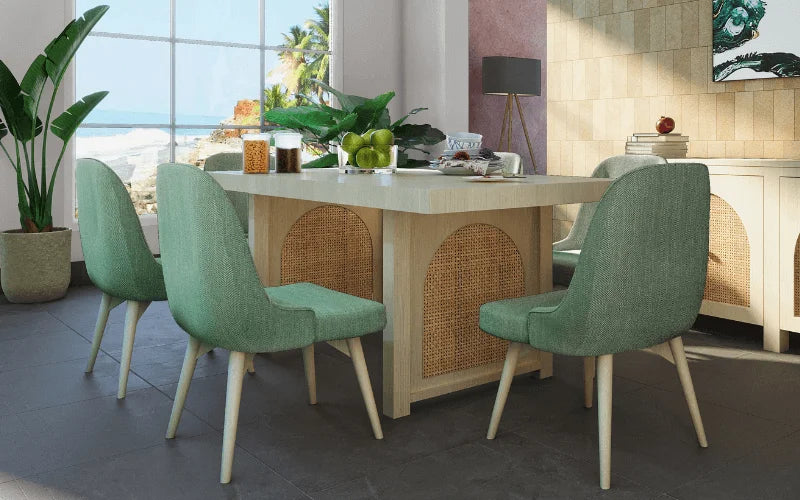
The dining table is one of the most used pieces of furniture in your home — and one of the most scrutinized purchases you'll make. Unlike a sofa or a rug, a dining table must earn its place every single day: through family dinners, homework sessions, birthday celebrations, and everything in between.
Yet most buyers make the same three mistakes: they choose by looks first, measure the room second, and realize the table doesn't work for their life last. This guide is designed to help you avoid all three.
Whether you're furnishing a new home or upgrading an outdated set, here's everything you need to know before buying a dining table - backed by industry standards, size data, and real-world guidance.
Why the Right Dining Table Is Worth Getting Right
The global dining table market is projected to grow from USD 8.68 billion in 2025 to USD 11.82 billion by 2030 - driven largely by buyers who want furniture that is multifunctional, durable, and design-forward. This growth tells us something important: people are investing more carefully in dining furniture, not less.
A poorly chosen table creates friction every day - it's too big to move around, too small to seat guests, or clashes with every room refresh you attempt. A well-chosen table does the opposite: it anchors your dining room, adapts to your life, and holds its value visually and functionally for years.
Step 1: Measure Your Dining Space (Before You Do Anything Else)
This step is non-negotiable, yet it's where most buyers skip ahead. Grab a measuring tape and note down your room's exact dimensions before shortlisting any table.
The Clearance Rule: Interior design standards consistently recommend a minimum of 36 inches of clearance between the edge of the table and any wall or furniture. For households where people regularly walk behind seated guests, 42–48 inches is the more comfortable target.
Doorway Check: Also measure your doorways. A 96-inch dining table that can't make the turn into your dining room is an expensive mistake.
Pro Tip: Use painter's tape to mark the footprint of the table on your floor before purchasing. It takes five minutes and eliminates guesswork entirely.
Step 2: Choose the Right Dining Table Size
Sizing a dining table is a calculation, not a guess. Use these industry-standard benchmarks:
Seating Allowance Per Person:
- Minimum: 22 inches per person
- Comfortable: 24 inches per person
- Generous (armchairs or formal dining): 28–30 inches per person
Standard Dining Table Size Chart:
| Number of People | Rectangular (Length) | Round (Diameter) | Square |
| 2–4 | 36–48 inches | 36–44 inches | 36–44 inches |
| 4–6 | 60–72 inches | 44–54 inches | - |
| 6–8 | 72–96 inches | 54–72 inches | - |
| 8–10 | 96–110 inches | 72+ inches | - |
| 10–12 | 110–120 inches | Oval recommended | - |
Standard Height: Most dining tables stand at 28–30 inches, the standard that pairs with most dining chairs. Counter-height tables (34–36 inches) and bar-height tables (40–42 inches) require matching stools and are better suited to kitchen islands and casual dining setups rather than formal dining rooms.
A Note on Extendable Tables: If you host occasionally but don't need a large table every day, an extendable dining table is one of the most practical investments you can make. Search data shows "extendable dining table" is consistently the highest-volume dining table query - peaking during holiday seasons - because buyers have realized the value of flexible seating.
Step 3: Select the Right Shape for Your Room and Lifestyle
Shape is not purely aesthetic - it directly affects traffic flow, conversation, and how many people you can seat comfortably.
Rectangular Dining Tables
The most popular and versatile shape. Works in both large and long rooms. Best for families who need to seat 6+ people regularly. Pairs well with benches on one or both sides to increase capacity without adding chair width.
Round Dining Tables
Best for small to medium-sized rooms and households of 2–4 people. Round tables eliminate dead corner space and naturally encourage eye contact and conversation - no one sits at a "head." A 48-inch round table comfortably seats four; a 60-inch seats six. Note: round tables become impractical above 72 inches in diameter because centerpieces become unreachable.
Oval Dining Tables
Combines the length of a rectangular table with the soft edges of a round - ideal for narrow rooms where you need seating for 6–8 but can't accommodate a full rectangular table. Also safer in households with young children.
Square Dining Tables
Best for intimate households of 2–4 people in square-shaped rooms. Can feel cramped at larger sizes; a square table for 8 occupies significantly more floor space than a rectangular equivalent.
Step 4: Choose Your Dining Table Material Wisely
Material is where you're making a long-term decision about durability, maintenance, and style alignment. Here's an honest breakdown:
Solid Wood
- Best for: Traditional, rustic, Scandinavian, and transitional interiors.
- Durability: Excellent - solid hardwoods like oak, walnut, and teak can last decades.
- Maintenance: Requires occasional oiling or waxing; sensitive to humidity fluctuations that can cause warping.
- Price range: Mid to premium (typically the most expensive material).
- 2025 trend note: Sustainably sourced and FSC-certified wood is increasingly a buyer purchase criterion - brands like IKEA have reported that 97% of their wood is now FSC-certified or recycled, setting expectations consumers now bring to other furniture brands
Engineered Wood / Veneer
- Best for: Budget-conscious buyers who want the look of solid wood
- Durability: Moderate - susceptible to moisture damage at edges and corners; difficult to refinish
- Maintenance: Easy daily cleaning, but cannot be sanded or refinished if damaged
- Price range: Budget to mid-range
- Honest assessment: A good veneer table can last 8–12 years with care, but it will not outlast solid wood
Glass
- Best for: Modern, minimalist, and small-space interiors (glass creates visual space)
- Durability: Tempered glass is scratch-resistant but not scratch-proof; it chips and shatters if impacted sharply
- Maintenance: Requires frequent wiping - fingerprints and smudges are highly visible
- Price range: Mid-range
- Best avoided: Households with young children or high-traffic dining rooms
Marble and Stone
- Best for: Luxury, Mediterranean, and contemporary interiors
- Durability: Excellent structural strength but porous - must be sealed annually to resist staining
- Maintenance: Avoid acidic foods and harsh cleaners; professional sealing recommended
- Price range: Premium to luxury
Metal (Powder-Coated Steel, Aluminum)
- Best for: Industrial, contemporary, and commercial-inspired spaces
- Durability: Excellent; resistant to most daily wear
- Maintenance: Minimal — wipe clean; check for rust in humid environments
- Price range: Budget to mid-range
- Common use: Usually paired with wood or glass tops rather than used alone
Step 5: Match Your Dining Table Style to Your Interior
Your dining table should not work against your home's existing aesthetic. Here's a practical style-matching reference:
- Minimalist/Scandinavian interiors: Light oak or ash wood with clean lines and a pedestal or tapered leg base
- Industrial or loft spaces: Dark walnut or reclaimed wood paired with a black metal frame
- Modern/contemporary: Glass or marble top with brushed metal legs; monochromatic palette
- Traditional or classic: Solid wood with carved details, turned legs, and warm stains like mahogany or cherry
- Eclectic or maximalist: A statement piece with a bold shape (oval, sculptural base) or mixed materials (wood top, stone inlay)
Share:
Bedroom Furniture Ideas to Maximize Storage
Modern Furniture Trends 2026: Must-Have Styles for a Trendy Home