
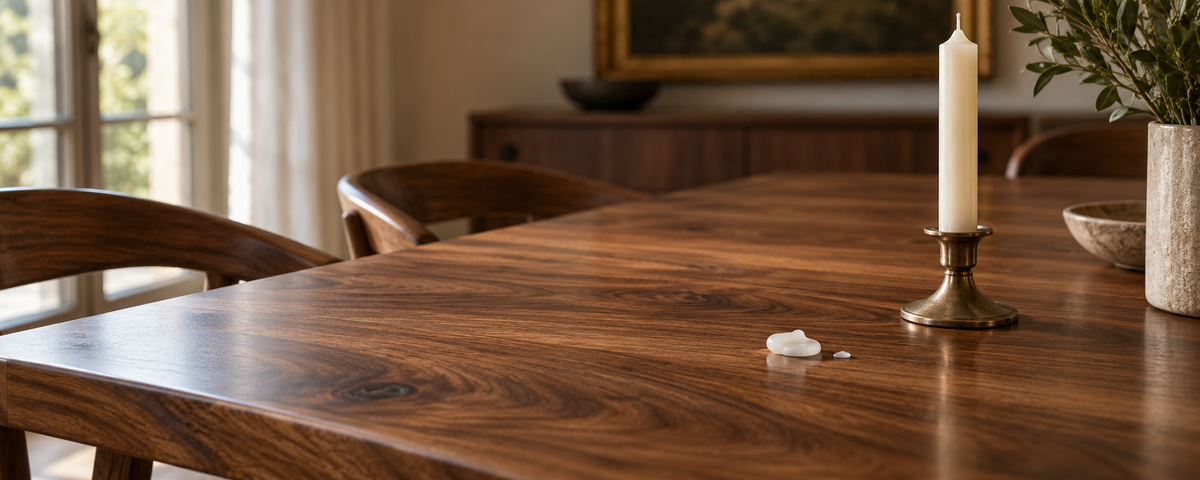
A dinner-table candle tips, or wax drips down a taper onto a sideboard, and by the time you notice it has set into a hard white patch. The impulse is to scrape hard or reach for a strong cleaner. Both can do more harm than the wax. The safest approach starts gentle and escalates only if it needs to.
Quick Answer
Let the wax harden, then gently lift it with a plastic card, keeping the edge flat against the surface. Wipe away any remaining residue with a soft cloth. If the wax persists, check the furniture manufacturer's care instructions before trying gentle heat or a solvent, as either can damage some finishes. Test any recommended method on a hidden spot first, and restore the surface only as directed for its finish.
Why This Matters
A wax spill is easy to fix; a scratched or clouded finish is not. Knowing the right removal method for your furniture's finish can prevent a small mess from becoming a refinishing job.
Identify Your Wood Furniture's Finish
Before you begin, ask: What finish is on this piece? Hard film finishes, such as polyurethane or varnish, may tolerate more than waxed or oiled surfaces, which can be softened or dulled by heat and solvents. However, no finish is guaranteed to withstand every removal method. If you are unsure, start with the gentlest approach and avoid heat or solvents until you have checked the manufacturer's care instructions.
Step-by-Step Candle Wax Removal
Step 1: Let It Harden, Then Lift It
Wait until the wax is fully set. If it is still soft, hold an ice cube in a sealed plastic bag against it briefly to help it harden, taking care to prevent moisture from reaching the wood. Dry any condensation immediately. University of Georgia Extension's candle wax stain guide recommends hardening the wax before scraping it off. Use a plastic card or another suitable non-metal tool, keeping it flat and working from the edge of the wax toward the middle to reduce the risk of scratching the surface.
Common Mistake: Using a metal scraper or a sharp knife. One slip can leave a scratch that is harder to fix than the wax.
Step 2: Consider Heat Only If the Finish Allows It
Gentle heat may soften candle wax, but it can also damage some wood finishes. Do not use a hair dryer unless the furniture manufacturer's care instructions confirm that heat is suitable. If the instructions are unavailable, skip this step.
Step 3: Wipe Away Any Remaining Residue
Once the loosened wax has been removed, gently wipe the area with a clean, soft cloth, following the direction of the wood grain. Avoid aggressive rubbing or applying furniture polish before checking whether it is suitable for the existing finish.
Step 4: Consider a Solvent Only as a Last Resort
If a stubborn film remains, consult the furniture manufacturer's care instructions or a furniture-care professional before using a solvent. University of Georgia Extension lists mineral spirits or naphtha for wax removal from wood, but these solvents can affect some finishes, particularly waxed surfaces. If a compatible solvent is recommended, use a small amount on a cloth, test an inconspicuous area first, ventilate the room, and follow the product label. Keep solvents away from flames and heat sources. Never pour solvent directly onto the wood or use steel wool or abrasive pads.
These solvents are not suitable for every wood finish, so use them only if the furniture manufacturer's care instructions permit them and the product label confirms suitability.
Step 5: Check and Restore the Surface
Once the wax is gone, inspect the area for dullness, discoloration or other changes. Buff gently with a soft cloth if appropriate for the finish. For waxed or oiled wood, use only a compatible maintenance product recommended by the manufacturer. Do not automatically apply furniture wax or oil to every surface.

What to Know About Your Finish
|
Finish |
Likely tolerance |
Take extra care with |
|
Hard film (polyurethane, varnish, lacquer) |
May tolerate gentle removal with a plastic card |
Heat and solvents can still cloud, soften or dull the finish |
|
Wax or oil |
May be more easily softened or dulled |
Heat and solvents; use compatible care products for restoration |
|
Unfinished or very porous wood |
Wax may penetrate the surface |
Avoid aggressive scraping and unapproved treatments; consider professional advice |
|
Distressed or painted |
Varies by coating and condition |
Scraping may lift paint or damage the surface |
These are general guidelines, not guarantees. If you are unsure of the finish, check the manufacturer's care instructions before trying heat or solvents, and test any suitable method on an inconspicuous spot first.
A Note on Colored Wax
Dyed candle wax can leave a stain, especially on porous or unfinished wood or worn finishes. If discoloration remains after the wax is removed, stop rather than scrubbing harder. A stain that has penetrated the wood may require professional advice.
Preventing the Next Spill
Use a candleholder with a wide base or a tray, keep candles away from edges, and consider a protective mat suitable for the furniture's finish. Oak & Loom's furniture maintenance guide and guide to protecting a wooden dining table cover everyday protection and finish care.
Common Mistakes
-
Scraping with metal. It can scratch the finish.
-
Pouring solvent directly onto the wood. Never apply it directly; consult the manufacturer's care instructions first.
-
Holding heat in one place. It can cloud, soften or mark the finish.
-
Using steel wool or abrasive pads. They can scuff or damage furniture surfaces.
-
Skipping the hidden-spot test. Finishes vary, and testing does not guarantee that a method is safe.
-
Rubbing aggressively against the grain. Wipe gently along the grain.
Practical Checklist
-
Identify the finish if possible; treat unknown finishes as delicate.
-
Let the wax harden fully. If needed, use ice in a sealed plastic bag, keeping moisture away from the wood.
-
Lift the wax gently with a plastic card, keeping it flat against the surface.
-
Check the manufacturer's care instructions before trying gentle heat.
-
Wipe remaining residue with a soft cloth along the grain.
-
Consider a solvent only as a last resort and only if it is suitable for the finish.
-
Inspect the surface and restore it only with a compatible product recommended for that finish.
Conclusion
Candle wax is a nuisance, but careful removal can help prevent damage to the furniture's finish. Let the wax harden, lift it gently, and remove any remaining residue with a soft cloth. Use heat or solvents only when the finish and manufacturer's care instructions allow them. If a stain or damaged finish remains, consult a furniture restorer rather than trying a stronger chemical. For scratches left behind, see Oak & Loom's guide to fixing scratched wood furniture.
Frequently Asked Questions
Does an ice cube really help remove candle wax from wood?
Cooling can harden wax so it is easier to lift without smearing. If you use ice, seal it in a plastic bag and keep moisture away from the wood. University of Georgia Extension describes hardening wax before removal.
Can I use a hair dryer on a wood table?
A hair dryer may soften wax, but heat can also damage some furniture finishes. Check the manufacturer's care instructions first and use gentle heat only if it is suitable for the finish.
Is mineral spirits safe on wood furniture?
Mineral spirits and naphtha are listed by University of Georgia Extension for wax removal from wood, but they can affect some finishes. Check the manufacturer's guidance before using a solvent, and follow all product-label precautions.
What if a white mark remains after the wax is gone?
A white mark may indicate a change in the finish rather than leftover wax. Avoid further scrubbing or applying stronger cleaners. If the mark persists, consult a furniture-care professional.

Share:
What Wall Colors Go With Solid Wood Furniture? A Guide to Wood Undertones