

A chair that used to be easy to get out of. A drawer that's always been a slight reach. A rug edge that never mattered until it did. Most people don't think about their furniture until a small physical change makes something ordinary feel inconvenient. Furnishing for aging in place means making those choices earlier and more deliberately - not because something is wrong, but because good furniture should keep working for you as life changes.
This isn't a medical guide or an accessibility checklist. It's a practical look at the furniture decisions that can make a home easier to live in for decades, without making it feel like a different kind of space.
Quick Answer
Furniture for aging in place prioritizes comfortable seat and bed heights, storage within easy reach, clear paths around each piece, and stable construction that doesn't wobble or shift under normal use. Flexible, adjustable, or customizable pieces adapt better over time than fixed ones. None of this requires sacrificing style - it's a set of practical selection criteria, not a different design language.
Why This Matters
Furniture decisions are usually made for how a room looks today. But a home is lived in for years, sometimes decades, and physical comfort and ease of use can become more important over time - not just for older adults, but for anyone recovering from an injury, managing a temporary limitation, or simply finding a too-low chair harder to get out of than it used to be. Choosing furniture with this in mind now can reduce the need for a disruptive, costly re-furnishing project later.
The Key Question
Before choosing a piece, it's worth asking: will this still be easy to use if getting up, bending down, or reaching becomes even slightly harder than it is today? This isn't about predicting decline - it's about not designing a home that only works under ideal physical conditions. A chair, bed, or storage piece that already meets this standard can also be more comfortable and practical to use every day.
What Actually Matters
Seating: Getting In and Out Comfortably
Seat height affects how much effort it takes to sit down and stand up - a seat that's very low relative to a person's height and leg length generally asks the knees and hips to do more work on the way up. There's no single "correct" seat height that suits everyone; it depends on the person's height and the chair's design, so treat any specific number as a general starting point to test in person, not a rule.
A few features can make seating easier to use, regardless of exact measurements: firmer cushions that don't allow the body to sink deeply, armrests positioned to push up from, and a seat that doesn't tip or slide when weight is shifted onto the front edge while standing.
For dining areas, senior-friendly dining chairs can be evaluated using the same principles: a comfortable seat height, supportive armrests where appropriate, a stable base, and enough clearance to sit down and stand up without obstruction. For more dining-specific guidance, see our guide to [choosing dining chairs for a solid wood table].
Worth Considering: Armrests provide a stable point to push from, making them a useful feature when getting in and out of a chair.
Bed Height and Everyday Ease
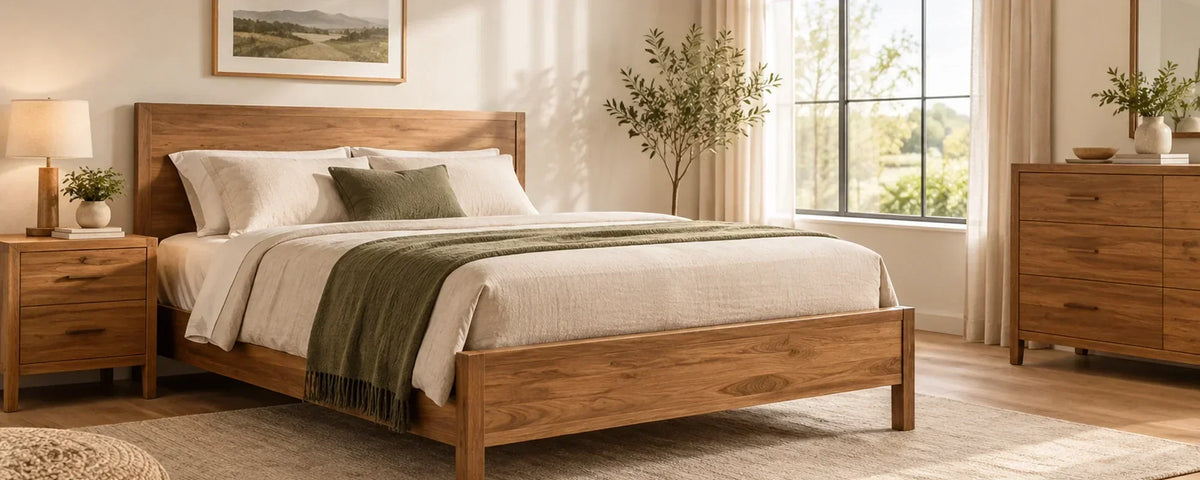
Like seating, bed height is a matter of personal fit rather than a fixed standard. A comfortable height depends on the person's height, mattress thickness, and personal preference. As a general starting point, many people find a bed easier to use when sitting on the edge allows their feet to rest flat on the floor with knees at roughly a right angle, but this is a comfort guideline to test rather than a measurement to follow precisely.
Because platform and frame heights vary by design and mattress combination, testing the complete setup - or requesting a specific height through a customization option - is more useful than relying on a general rule of thumb.
Storage You Can Actually Reach
Storage is one of the most overlooked aging-in-place decisions, because it's rarely about the furniture piece itself - it's about where things end up being stored in it. Frequently used items stored in very low drawers or very high upper shelving both require more bending, stretching, or step-stool use than storage at a comfortable mid-height range.
When choosing dressers, sideboards, or storage pieces, think about what will actually go in each section. A piece with several mid-height drawers is often more practical for daily use than one with a single deep, low drawer - even if the deep drawer looks more striking in a showroom.
Walking Paths and Furniture Placement
How furniture is arranged matters as much as the furniture itself. A room with adequate clearance between pieces is easier and more comfortable to move through than one where seating, tables, or storage narrow the path. For a deeper look at room clearance and furniture placement, see [How Much Furniture Should You Put in a Room?] alongside your furniture selection rather than planning clearance as an afterthought.

Stability You Can Rely On
A piece of furniture that wobbles, shifts, or rocks during normal use can be difficult to use confidently, regardless of what it's made of or how old the person using it is. This comes down to construction quality and joinery - solid, well-fitted joints and a stable base - rather than material alone. For more detail on what to look for in furniture construction, see our guide to [identifying genuine solid wood furniture from engineered wood]. Solid wood furniture is not automatically more stable than any well-built alternative; what matters is how the piece is actually constructed, so it's worth checking joinery quality and base stability rather than assuming wood type settles the question.
It's also worth being clear-eyed about what furniture can and can't do: no furniture piece, however sturdy, is designed to be used as a mobility support the way a grab bar or handrail is. If a piece is being leaned on heavily and repeatedly for support, that's a situation to address with a proper mobility aid rather than a furniture upgrade.
Flexible and Adjustable Choices
Needs change gradually, and furniture that can adapt tends to age better with a household than furniture that can't. A bench or ottoman that can be repositioned as extra seating, storage pieces with adjustable shelving, or a bed frame ordered at a specific height rather than a fixed standard size all offer more flexibility than furniture that only works one way.
Oak & Loom's Personalize Your Furniture program allows pieces to be built to exact specified dimensions - including height - through a design consultation, which is worth considering for beds, seating, or storage where a specific measurement matters more than what's available off the shelf.
Style Doesn't Have to Be Sacrificed
None of this requires furniture to look institutional. A well-proportioned chair with armrests, a bed frame at a comfortable height, or a dresser with accessible drawer heights can look like any other well-designed piece - because these are largely dimensional and construction choices, not aesthetic ones. Practical furniture doesn't have to follow a separate design style; thoughtful dimensions, construction, and placement can support everyday usability without changing the overall character of a room.

Comparing Furniture Features Worth Prioritizing
|
Feature |
Worth Prioritizing |
Often Causes Problems Later |
|
Seating |
Firm cushion, armrests, stable base |
Very low or deep-sink seating, no arms |
|
Bed |
Height tested in person or customized |
Fixed height that doesn't suit the user |
|
Storage |
Mid-height, frequently used drawers |
Very low or very high storage for daily items |
|
Construction |
Solid joinery, stable base, no wobble |
Loose joints, unstable base, poorly fitted parts |
|
Layout |
Clear paths between pieces |
Furniture narrowing walkways |
|
Adaptability |
Customizable or repositionable pieces |
Fixed pieces that only work one way |
Common Mistakes
-
Assuming a lower seat or bed is automatically more comfortable. Comfort depends on the individual's height and the piece's proportions - test in person rather than assuming a number.
-
Treating armrests as purely decorative. They can provide a stable point to push from when getting in and out of a chair.
-
Storing everyday items in the hardest-to-reach spots. A beautiful low drawer or top shelf still requires bending or reaching - plan storage around what's actually used daily.
-
Confusing sturdy furniture with a mobility aid. Furniture isn't a substitute for a grab bar or handrail, and if a piece is being relied on for support, a proper mobility aid may be more appropriate.
-
Assuming solid wood alone guarantees stability. Construction quality and joinery matter more than material - check both.
Practical Checklist
-
Test seat and bed heights in person rather than relying on a general number
-
Prioritize seating with armrests, firm supportive cushions, and a stable base
-
Plan storage so daily-use items sit at a comfortable mid-height
-
Confirm walking paths around each piece stay clear once furniture is placed
-
Check joinery and base stability - don't assume material alone determines it
-
Consider customizable dimensions for beds, seating, or storage where a specific height matters
-
Choose pieces that can adapt or be repositioned as needs change
Conclusion
Furnishing for aging in place doesn't mean choosing different-looking furniture - it means paying closer attention to height, reach, stability, and layout in pieces you'd want in your home anyway. These are practical, testable decisions, not medical ones, and getting them right now can reduce the need for disruptive changes later. If a specific height or dimension matters more than what's available off the shelf, Oak & Loom's Personalize Your Furniture program allows beds, seating, and storage to be built to exact specifications through a free design consultation.
Frequently Asked Questions
What furniture height is best for aging in place?
There's no single correct height - it depends on the individual's proportions and the specific piece. As a general comfort guideline, many people find seating and beds easiest to use when they allow feet to rest flat on the floor with knees at roughly a right angle, but this should be tested in person rather than treated as a fixed rule.
Is solid wood furniture safer for aging in place?
Not automatically. Stability comes from construction quality - joinery, base stability, and how well a piece is built - rather than material type. A well-built piece in any material can be stable; a poorly built solid wood piece can still wobble.
Should I look for furniture with rounded edges?
Corner shape is a matter of personal preference and room layout rather than a universal requirement. If tight walking paths are a concern, addressing furniture placement and clearance generally matters more than corner shape alone.
Can furniture be used for support when standing up?
Ordinary furniture, even well-built pieces, isn't designed as a substitute for a grab bar or handrail. If a person needs substantial or repeated support when standing, a proper mobility aid is more appropriate than relying on furniture alone.
Share:
How to Choose Furniture for a Home Library