
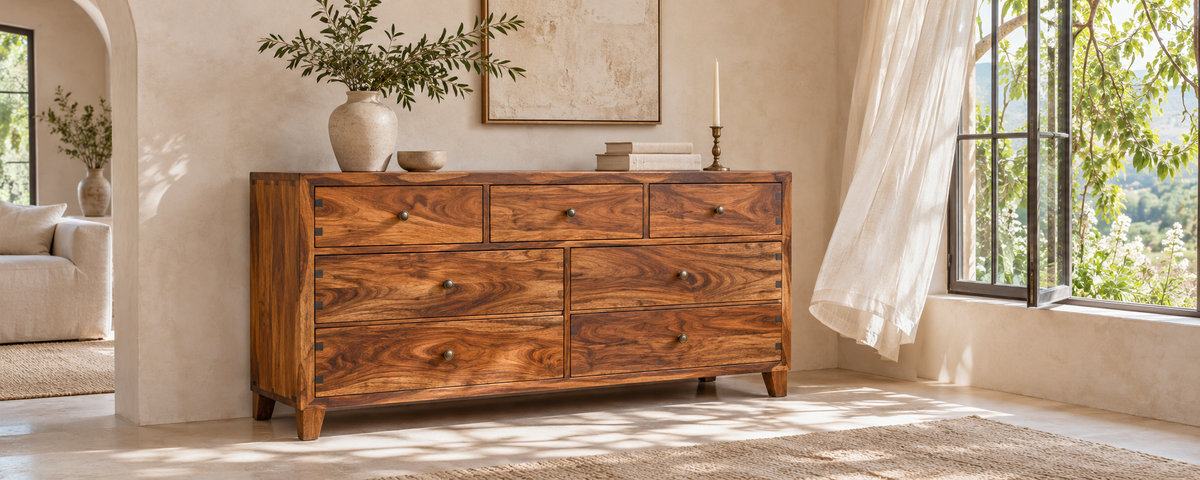
Quick answer: A mild smell from new furniture is common and usually fades as the piece airs out. It can come from finishes, glues, the wood itself and packaging. Unpack the piece, ventilate the room, and give it time. If a strong smell doesn't fade, or anyone feels unwell, move the piece out of the room and contact the seller.
You unwrap a new table or bed frame, and there's a smell. It might be faintly sweet, woody, sharp or "new." It's a common experience after a furniture delivery, and in most cases, the smell is normal.
This guide explains where the smell comes from, how to air it out, what not to do and when it's worth contacting the seller.
What "Off-Gassing" Means
Off-gassing refers to the release of gases from materials into the surrounding air. This can happen with everyday materials such as paints, finishes, adhesives, plastics and some fabrics. In furniture, these emissions may be more noticeable when a piece is new, particularly after unpacking, and can gradually decrease as the piece airs out.
Smell does not tell you exactly what is in the air, and a strong smell doesn't automatically mean there's a problem. Some emissions may have little or no noticeable smell, while others produce a distinct scent. Opening windows and allowing fresh air to circulate can help ventilate the room.
Where a New Furniture Smell Comes From
|
Source |
What you may notice |
Notes |
|
Finishes (oil, wax, lacquer, polyurethane, stain) |
A sharp, oily or sweet smell, strongest on freshly finished surfaces |
Different finishes smell different and fade at different speeds. |
|
Adhesives and engineered wood (MDF, particleboard, plywood) |
A sharper, "glue-like" smell, especially in enclosed spaces |
Some engineered wood products use adhesives that may release gases, including formaldehyde, depending on their composition and manufacturing standards. |
|
The wood itself |
A natural, woody or earthy scent |
Some woods have a stronger natural scent than others. |
|
Packaging, foam and plastic wrap |
A plastic or chemical smell that stays in the box |
Often fades quickly once the packaging is removed. |
|
Storage and transport |
A stale or closed-in smell |
Usually clears with airflow. |

What's Normal, and What Isn't
Usually normal
-
A mild smell that is strongest when you first unwrap the piece.
-
A smell that gradually gets weaker with proper ventilation.
-
A natural woody scent from solid wood.
Worth acting on
-
A strong, sharp or chemical-like smell that doesn't noticeably weaken with proper ventilation.
-
A damp, sour or musty smell. That points to moisture, not a typical new-furniture smell. See our guide on [removing a musty smell from wood furniture — VERIFY URL].
-
A finish that feels sticky or tacky long after delivery.
-
Anyone in the home feeling unwell around the piece, such as experiencing a headache, irritated eyes or throat, or breathing discomfort.
If you notice symptoms, move the piece to a well-ventilated space, keep the room aired, and talk to a doctor if the symptoms persist. Individual sensitivity varies from person to person.
How to Air Out New Furniture
-
Unpack it where you can. If possible, unwrap the piece in a garage, porch or well-ventilated room before moving it into the room where you'll use it.
-
Remove all packaging. Take off the plastic, foam, paper and corner guards. Smells can stay trapped in wrapping.
-
Open windows and improve airflow. Open two windows or a window and a door to create a cross-breeze. A fan pointed toward a window helps move indoor air outside. Even short, frequent periods of fresh air help in cold weather.
-
Open drawers and doors. Smells can collect inside drawers and cabinets, so leave them open while the piece airs.
-
Air it before sleeping nearby. For a bed frame, dresser or nightstand, air the piece before placing it in a closed bedroom, and keep the room ventilated during the first few days.
-
Give it time. How quickly a smell fades depends on the furniture, finish, room size and airflow. Don't expect it to disappear within a fixed number of days.

What Not to Do
-
Don't mask the smell with candles, plug-in fresheners or heavy sprays. They add fragrance on top and make it harder to tell whether the original smell is fading. If you light candles around wood.
-
Don't apply polish, wax or oil immediately to mask the smell. These products may introduce additional scents or interfere with the existing finish. Follow the manufacturer's care instructions before applying anything.
-
Don't cover the piece with plastic, tight blankets or sheets while it's airing.
-
Don't use strong cleaners on a new finish unless the care instructions say you can.
-
Don't place it right next to a heater or radiator to speed things up. Heat and dry air can affect wood and contribute to changes in its moisture content.
Does Solid Wood Furniture Smell?
It can. Solid wood furniture doesn't rely on an engineered wood core, but adhesives may still be used in certain joints or construction details. It can also carry a scent from the wood itself, the finish and the packaging. Solid wood tends to have a natural, woody smell, which many people find pleasant and which usually softens over time.
Engineered wood is a different case. Some engineered wood products use adhesives that may release gases over time, depending on their composition and manufacturing standards, as we explain in our guide to hardwood vs engineered wood. If you want help telling the two apart, see how to identify solid wood furniture.
If you're choosing furniture with scent or sensitivity in mind covers what to look for before you buy.
Bedrooms, Nurseries and Small Rooms
Smell is more noticeable in a small or closed room, so air the piece longer before using it there. For a nursery or a child's room, air the piece in a ventilated space first, keep the room ventilated, and ask the seller for finish information if you have questions.
Winter: Airing Furniture When It's Cold
Many deliveries arrive when windows stay shut. Short periods of ventilation can still help improve airflow, even when it's cold outside. Open a window or two for a while, let the air move through, then close up. Avoid leaving a window open so long that the room gets very cold or very dry, since big swings in temperature and humidity can also affect wood.
When to Contact the Seller
Contact the seller if:
-
A strong smell doesn't fade after you've aired the piece properly.
-
The finish stays sticky.
-
You notice a damp or musty smell.
-
Someone in the home reacts to the piece.
Before you reach out, take clear photos, note when the piece arrived, and keep any packaging labels. Oak & Loom customers can contact support@oakandloom.com with the order number, a description of the issue and photographs. Our warranty policy explains what is covered, so check it for details.
Quick Reference
|
Do |
Don't |
|
Unpack and remove all packaging |
Leave the piece wrapped |
|
Ventilate with open windows and a fan |
Keep the room closed |
|
Open drawers and doors |
Cover the piece |
|
Allow adequate ventilation time |
Apply new polish to mask the smell |
|
Contact the seller if the smell persists |
Mask it with strong fragrances |
If you're shopping for a new piece, browse our dining tables and wooden beds.

Frequently Asked Questions
How long does new furniture smell last?
It varies with the piece, the finish, the room and how much fresh air it gets. A mild smell often weakens during the first few days of ventilation, but there is no single timeline. If a strong smell doesn't weaken, contact the seller.
Is new furniture smell harmful?
A mild smell from new furniture is common, but its source and intensity can vary. Some people may be more sensitive to certain emissions. If the smell is strong or anyone feels unwell, move the piece to a well-ventilated space, air the room, and speak to a doctor if symptoms continue.
Does solid wood furniture have a smell?
Often a faint, natural woody scent, plus any scent from the finish and packaging. It usually softens as the piece airs out.
How can I get rid of new furniture smell faster?
Remove all packaging, ventilate the room, use a fan to move air out, and leave drawers and doors open. Avoid masking the smell with strong fragrance.
Can I put new furniture in a bedroom or nursery right away?
It's better to air the piece first in a ventilated space, then keep the room ventilated for the first few days. For a nursery, ask the seller about the finish if you have questions.
Why does my new furniture smell musty instead?
A damp or musty smell points to moisture, not a typical new-furniture smell. See our guide on removing a musty smell from wood furniture.
Share:
Decorating Around Wood Furniture for the Holidays: Tree Placement, Lights, Candles and Greenery