
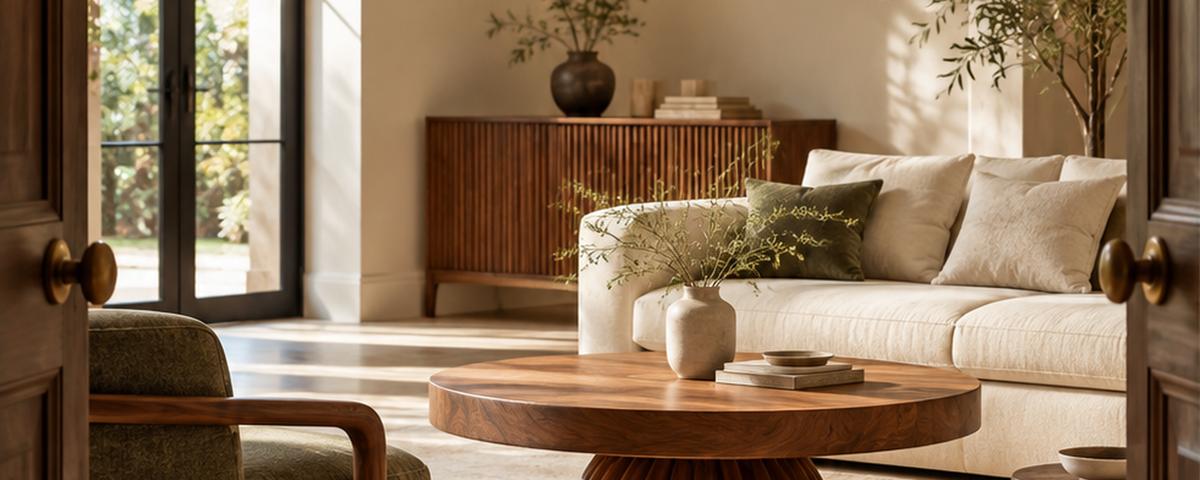
Every item in a furnished room is technically "furniture," but not every piece needs to attract the same level of attention. When the sofa, coffee table, rug, and wall art all compete equally for attention, the room can feel busy rather than layered, because the eye has no clear place to land.
Deciding which piece deserves the most attention isn't simply a stylistic choice. It helps determine whether a room feels considered and intentional or simply filled with furniture.
The Key Question
If someone stood in the doorway of this room, what's the one thing you'd want their eye to land on first - and does the room's current arrangement actually support that, or quietly fight it?
What Actually Matters
Not Every Piece Needs Equal Attention
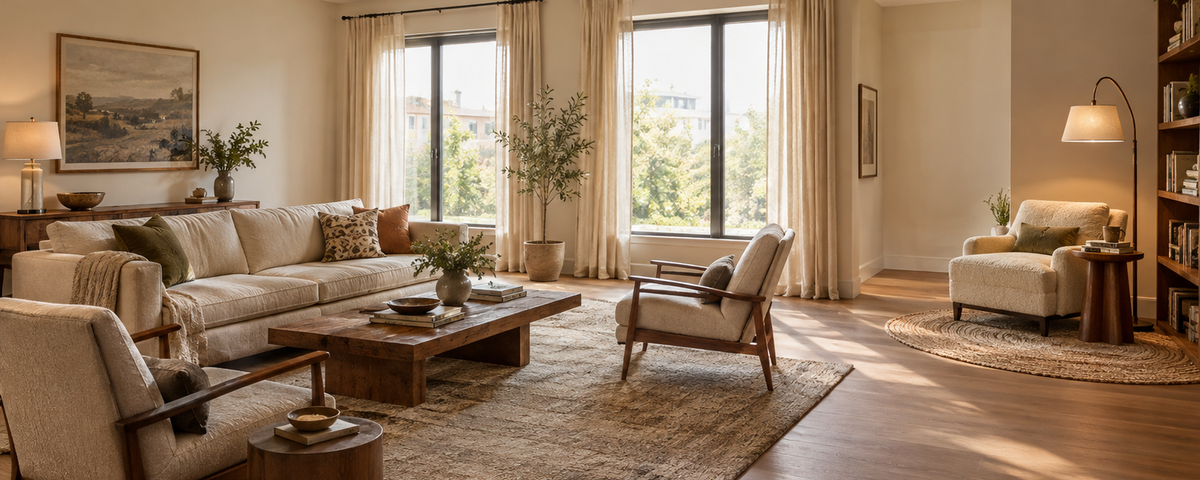
A room works better with a rough three-tier hierarchy than with everything competing on equal terms. A hero piece carries the most visual weight and detail - the piece the room is essentially built around. Supporting pieces are well-chosen but deliberately quieter, adding function without pulling focus. Background pieces - such as a side table or simple lamp - do their job without demanding attention. When three or four pieces compete for hero-level attention, the room can quickly feel visually crowded rather than intentionally layered.
Let the Room's Architecture Decide First
Before assigning hero status to a piece of furniture, check whether the room already has a natural focal point: a fireplace, a large window with a view, or an architectural alcove. When a room has a strong existing architectural focal point, furniture often works better when it supports that feature rather than competes with it. When a room has no obvious architectural focal point - such as an open-plan living area or a boxy bedroom - a piece of furniture can deliberately take on that role instead of leaving the focal point to chance.

Attention and Budget Usually Belong Together
Once a hero piece is identified, it can make sense to give it a larger share of the room's furniture budget, particularly if it's a piece you plan to keep for years. Supporting pieces can then be chosen for proportion, function, and compatibility rather than for equal visual impact. The goal isn't to spend the most on every detail, but to concentrate investment where it contributes most to the room's overall character.
Function and Attention Aren't Always the Same Thing
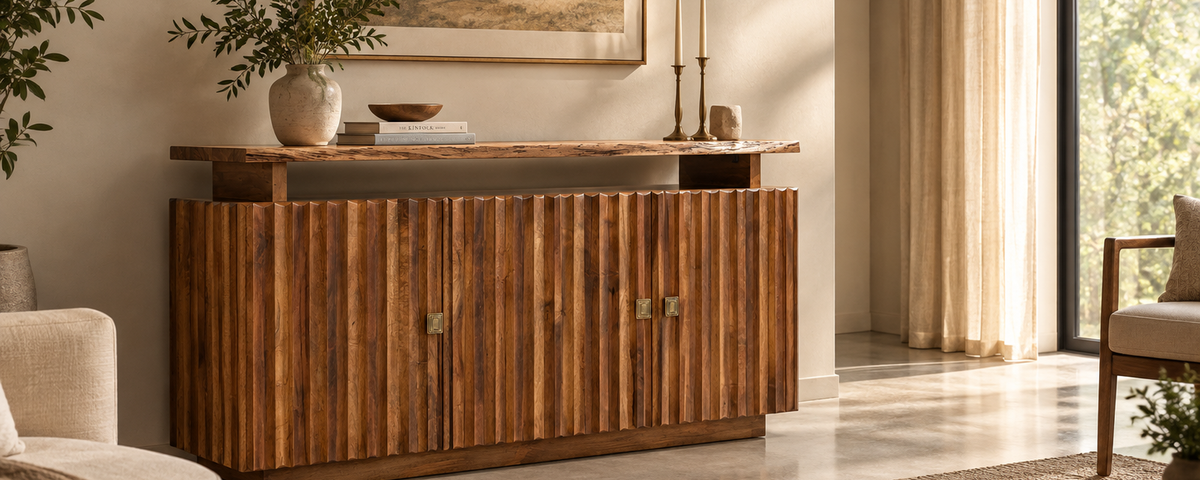
The piece used most often in a room isn't automatically the piece that should carry the most visual weight. A sofa may be the most frequently used piece without necessarily being the visual focal point, while a sideboard, console, or coffee table can carry more visual detail despite being used less often. Separating "what do I use most" from "what should I look at most" helps prevent function alone from determining the room's visual hierarchy.
Choosing Your Hero Piece: A Scorecard
When more than one piece in a room could plausibly be the hero, these questions usually settle it.
|
Question |
What It Tells You |
|
Is it the largest piece in the room? |
Larger scale can give a piece visual weight, but size alone doesn't determine the focal point. |
|
Is it the first thing visible from the room's main entry point? |
Position affects what actually gets noticed first, regardless of size. |
|
Does it carry the most visible craftsmanship or detail? |
Detail can draw the eye more than size or cost alone. |
|
Is it the piece you plan to keep the longest? |
A long-term piece may justify greater design and budget commitment. |
|
Would the room feel noticeably different without it? |
A strong hero candidate is often a piece the room feels built around. |

Sightlines matter as much as the piece itself. A hero piece positioned outside the natural sightline from the room's main entry may have less visual impact than a more modest piece placed where the eye naturally lands first.

Signs You've Gotten the Hierarchy Wrong
-
More than one piece in the room reads as a "statement" - the eye doesn't have a clear place to settle.
-
The most expensive piece in the room isn't getting the visual attention you intended it to have.
-
Every piece received roughly the same budget and design attention, so nothing clearly stands out.
-
The room's hero piece sits outside the natural sightline from the entry, reducing its visual impact.
-
A background piece - such as a side table or simple lamp - is drawing more attention than the pieces meant to lead.
Practical Checklist
-
Identify whether the room already has an architectural focal point before assigning one to furniture
-
Choose one hero piece using the scorecard questions above, not by price alone
-
Confirm the hero piece sits within the natural sightline from the room's main entry
-
Consider giving the hero piece a larger share of the budget, particularly if it's intended as a long-term investment
-
Separate "what I use most" from "what should draw the eye" when assigning roles
-
Recheck the room for competing focal points once it's fully furnished
A room doesn't need every piece to compete for attention. It needs a clear visual hierarchy: one piece that leads, supporting pieces that reinforce it, and background pieces that quietly complete the room. Once that hierarchy is established, decisions about scale, placement, craftsmanship, and budget become easier to make.
For more on combining different furniture styles without creating visual clutter, see Oak & Loom's guide to mixing furniture styles without clutter. If a sideboard is the right fit for your room's focal point, explore the sideboard collection. For guidance on a specific room or furniture selection, visit conact us.
Frequently Asked Questions
How many "statement" pieces should one room have?
Generally, one clear focal piece works well. When multiple pieces compete for hero-level attention, the room can feel visually busy because the eye has no clear place to settle first.
What if my room doesn't have any obvious architecture to build a focal point around?
That's an opportunity to deliberately choose and position a piece of furniture to take on that role. An open-plan or boxy room without a fireplace, notable window, or other architectural feature can benefit from having its focal point established through furniture and placement.
Should I spend the most on the piece I use the most, or the piece that gets seen the most?
Frequency of use and visual importance aren't always the same. Consider which piece has the greatest visual impact and which pieces you plan to keep longest, while still prioritizing comfort and function where they matter most.
Can a piece serve as a room's focal point without being the most expensive item in it?
Yes. Position, scale, craftsmanship, detail, and visibility can all make a piece read as the room's focal point. Cost is one factor in the hierarchy, but it doesn't determine visual importance on its own.
Share:
How to Make One Room Work for More Than One Purpose