
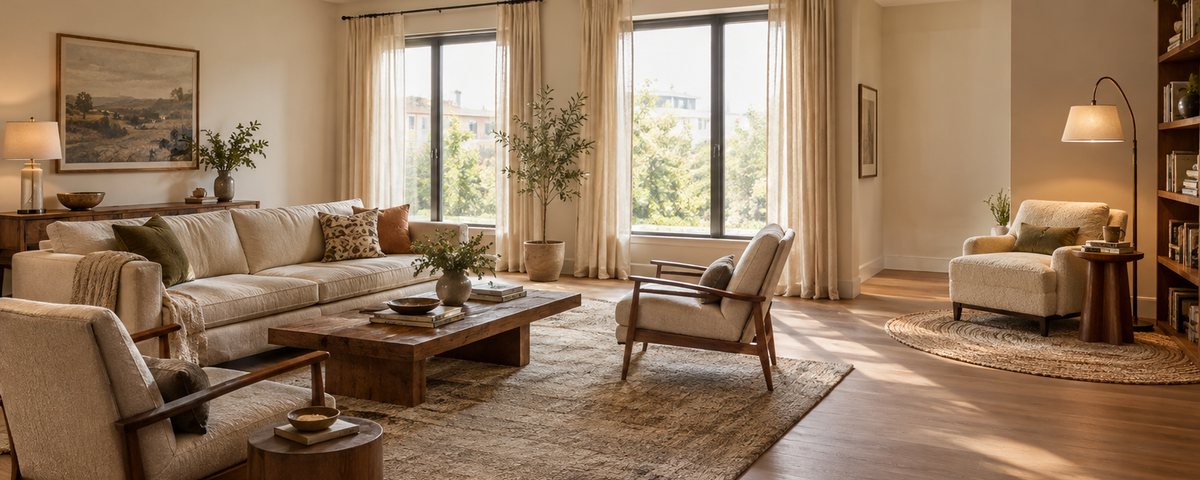
A guest room that's also a home office works fine right up until a guest actually arrives - and then it becomes obvious that the desk was never really designed to disappear, and the room was never designed to switch smoothly between two functions. A room can serve two purposes in theory and still fail at both in practice, because the plan stopped at “fit a desk and a bed in here” instead of asking how the room needs to work when each function takes over.

The Key Question
Before choosing furniture, decide which of the room's two functions is primary and how the room needs to reset when it switches to the other. Most dual-purpose rooms that don't work well skip straight to furniture shopping without answering either question first.
What Actually Matters
Decide Which Function Is Primary
A room rarely serves two purposes with perfectly equal weight, even if that's how it's described. A guest room used for sleepovers twice a year but worked in every weekday is functionally a home office with an occasional bed, not the other way around - and it should be designed and furnished accordingly. Naming the primary function first makes every other decision easier because the secondary function doesn't necessarily need equal space or priority.
Zone the Room, Even Without Walls
A room doesn't need a physical divider to read as two distinct areas. A rug under one furniture grouping, furniture oriented toward a different direction, or lighting specific to one corner can all define a zone without adding a wall. The goal is for someone standing in the doorway to immediately understand that two different functions happen in the room, in clearly defined areas, rather than one function visually bleeding into the other.
For a deeper look at how furniture quantity affects circulation and visual breathing space, see How Much Furniture Should You Put in a Room?.

Plan for the Reset, Not Just the Steady State
The furniture arrangement that looks right on an ordinary Tuesday isn't the only version of the room that matters. The setup that needs to appear when the secondary function takes over is just as important, and it's the part most plans skip entirely. If a desk needs to disappear when guests arrive, ask exactly how that will happen and how long the reset will take. A desk covered with an open laptop and loose papers isn't a five-minute reset; a closed laptop and a designated drawer for work items usually is. Plan the reset before you buy the furniture, not when you're standing in the room the night before guests arrive.
Match Furniture to Both Jobs, Not Just One
The furniture itself needs to work well for both functions, not just the primary one. A desk chair that's genuinely uncomfortable for a full workday because it was chosen to “look right” in a guest room isn't serving the room's main purpose well. For pieces that need to physically change roles - such as a bed that needs to provide both sleeping space and storage, or storage that needs to keep work materials out of sight during guest visits - furniture designed for that specific purpose can be more practical than adapting a piece that wasn't built to do double duty.
Which Combinations Require More Planning?
Not every pair of functions is equally easy to combine. The amount of planning depends on how often each function is used, how much space it needs, and how easily the room can transition between them.
|
Combination |
Planning Effort |
Why |
|
Guest room + home office |
Lower |
Both are typically quiet, low-traffic functions, and the room can often switch between them with relatively little disruption. |
|
Living room + reading or hobby corner |
Lower |
The functions can share the same casual environment without requiring a major change in noise level or layout. |
|
Dining room + workspace |
Moderate |
The room needs a reliable daily reset when the dining table also serves as a work surface. |
|
Living room + playroom |
Higher |
Different needs for noise, mess, storage, and visual order can make the two functions harder to balance. |
|
Formal dining room + everyday family space |
Higher |
The room may need to shift between occasional formal use and frequent everyday activity, creating different expectations for layout and appearance. |

Common Mistakes
-
Furnishing for the primary function and hoping the secondary one fits around it. Both functions need a basic plan, even if one gets more space and attention.
-
Skipping the reset plan. If switching between functions requires too many steps, the room may work well in one configuration but become frustrating when it needs to change.
-
Choosing furniture that compromises both functions. A desk chair that's neither comfortable enough for a workday nor appropriate for the guest room isn't serving either purpose particularly well.
-
Using every available inch of floor space. Fitting two functions into one room shouldn't mean eliminating clear paths for movement. Both configurations need enough circulation space to remain comfortable and practical.
-
Assuming every function pairing requires the same approach. Some combinations need more deliberate zoning, storage, or reset planning than others, depending on how often each function is used.
Practical Checklist
-
Name the room's primary function before choosing furniture
-
Define at least one visual zoning element - a rug, an orientation change, or a lighting choice - for each function
-
Write out exactly what the “reset” between functions involves
-
Time how long that reset realistically takes, and simplify it if it takes more than a few minutes
-
Choose furniture that performs its job well in both of the room's functions, not just one
-
Check that both room configurations leave enough clear space for comfortable movement
-
Consider how much planning your specific combination requires based on how often each function is used and how easily the room can transition between them.
Conclusion
A room becomes genuinely dual-purpose when it has a clear primary function, a visible way to separate its two roles, and a realistic way to switch between them - not simply because two different kinds of furniture fit inside it. Plan the zoning and the reset before shopping for furniture, and the room will work when both functions are actually needed, not just in the photos taken right after it was set up.
For furniture designed to serve more than one purpose in the same footprint - such as a bed that also provides hidden storage in a guest room - see Oak & Loom's guide to small-space bedroom ideas and solid wood storage beds. If you're planning a specific dual-purpose room, you can also contact us.
Frequently Asked Questions
How do I zone a room into two functions without adding a wall?
A rug, a change in furniture orientation, or lighting specific to one area can visually separate a room's two functions without a physical divider. The goal is for each zone to read clearly as its own space from the doorway.
What's the most common reason a dual-purpose room stops working?
Usually, it's a missing or unrealistic reset plan. Furniture that seems like it should clear away or switch roles quickly often doesn't in practice. Planning and timing the actual reset before buying furniture can help reveal problems before they become part of the room's daily routine.
Do some room-purpose combinations require more planning than others?
Yes. Combinations with similar noise levels, mess tolerance, and usage patterns - such as a guest room and home office - can generally transition more easily than co
Share:
What to Consider Before Buying a Heavy Solid Wood Furniture Piece