

Walk into a room before the furniture arrives, and it sounds like a different place. Footsteps ring out, voices carry sharply, and even a quiet conversation can feel oddly loud. Move the same furniture in, and the space soon feels calmer - not just because it looks more finished, but because it sounds different too.
This isn't a coincidence. It's acoustics. Furniture changes how sound moves through a room, and understanding why can help homeowners make sense of a space that feels harsh, echoey, or strangely muffled - before they even recognize it as an acoustics problem.

Why an Empty Room Sounds So Different
An empty room is, acoustically speaking, a box of hard, flat surfaces: drywall, glass, flooring, and ceiling. Sound travels between these surfaces with little to interrupt it, creating the sharp, "live" quality many people notice in unfurnished rooms. Technically, much of this effect comes from excessive reverberation - sound lingering in a space longer than it would in a room with more varied surfaces.
Flat, parallel walls can make the effect stronger because sound bounces repeatedly between them. That's why unfurnished rooms, stairwells, and hard-surfaced hallways often sound sharper, while furnished rooms tend to sound more settled.
Furniture doesn't eliminate this effect, but it interrupts it in three main ways: reflection, scattering, and absorption. How much furniture a room actually needs also affects how open or crowded the space feels.
Furniture doesn't eliminate this effect, but it interrupts it in three main ways: reflection, scattering, and absorption.
Three Ways Furniture Interacts With Sound
Furniture can interact with sound through reflection, scattering, and absorption, although not every piece contributes to each in the same way.
Reflection
Reflection occurs when sound bounces off a hard, smooth surface. Wood tabletops, glass cabinet fronts, and hard headboards all reflect sound. Some reflection helps a room feel lively, but too much can contribute to noticeable echo and excessive reverberation.
Scattering
Scattering occurs when sound hits an irregular or angled surface and is redirected in different directions. Bookcases, paneled cabinetry, and furniture with varied heights and depths can scatter sound, breaking up direct reflections without removing much sound energy from the room.
Absorption
Absorption occurs when a material takes in sound energy rather than reflecting it back into the room. Soft, porous materials such as upholstery, cushions, rugs, and drapery generally absorb more sound than hard materials like wood, glass, or stone.
A solid wood dresser therefore absorbs little sound, while an upholstered sofa with cushions can absorb considerably more.

What Large Furniture Pieces Actually Do to Sound
Large furniture pieces affect acoustics mainly by interrupting straight sound paths and adding surface irregularity, rather than by absorbing large amounts of sound. A cabinet, sideboard, or bookcase can interrupt a flat wall surface, causing sound to scatter in different directions instead of reflecting directly back. For homeowners considering [large or heavy solid wood furniture pieces], factors such as placement and floor capacity also matter.
This is primarily a scattering effect. A large wood piece is still a hard, reflective surface, but its varied shapes and depths can break up direct reflections. Its acoustic contribution comes more from changing how sound moves through the room than from any special sound-dampening property of the material itself.
Hard Surfaces vs. Soft Furnishings
The clearest acoustic distinction in a furnished room is between hard and soft surfaces, rather than between different types of furniture.
|
Surface type |
Typical examples |
Primary acoustic role |
|
Hard, smooth surfaces |
Solid wood tabletops, wood flooring, glass, stone, metal |
Reflection; some scattering if irregularly shaped |
|
Hard, irregular surfaces |
Bookcases, paneled cabinetry, open shelving with varied contents |
Scattering, with continued reflection |
|
Soft, porous surfaces |
Upholstered sofas and chairs, cushions, drapery, rugs |
Absorption, with less reflection |

Wood furniture remains a hard surface acoustically, regardless of its quality or construction. Craftsmanship affects [durability and longevity], but doesn't fundamentally change how the surface interacts with sound.
Soft furnishings provide the absorption that wood furniture largely can't. Cushions, upholstered headboards, rugs, and drapery can absorb more sound, helping a room feel quieter and more contained than one dominated by hard, exposed surfaces.
Why Furniture Alone Can't Solve an Acoustic Problem
Furniture is only one contributor to a room's acoustic character, and often not the largest one. Room dimensions, wall and ceiling materials, flooring, and window area can have a greater effect. A room with hard flooring, bare drywall, and large uncovered windows can still sound reflective even when reasonably furnished.
Soft elements such as rugs, curtains, cushions, and upholstered seating can often make a bigger difference than furniture alone. This is why two rooms with similar furniture can sound very different depending on how much soft material they contain. Rugs and other textiles can also help soften the visual and material balance of a room.
To meaningfully change how a room sounds, homeowners should consider the entire surface environment - walls, floors, windows, textiles, and furniture - rather than relying on furniture alone to fix an echoey or overly reflective space.
How Acoustics Differ by Room Type
The same acoustic principles apply across a home, but each room's function and furnishings change how sound behaves.
Living Rooms
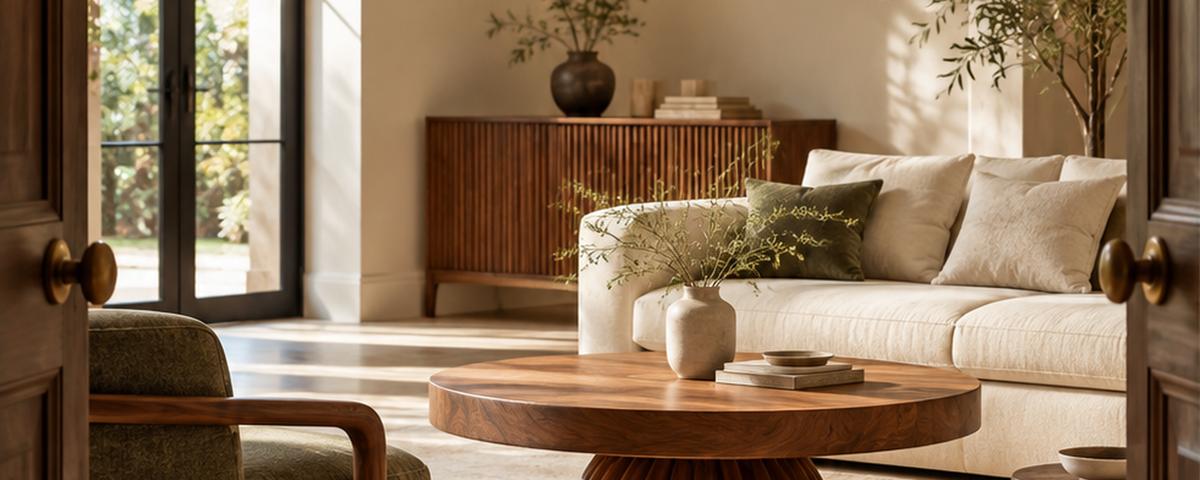
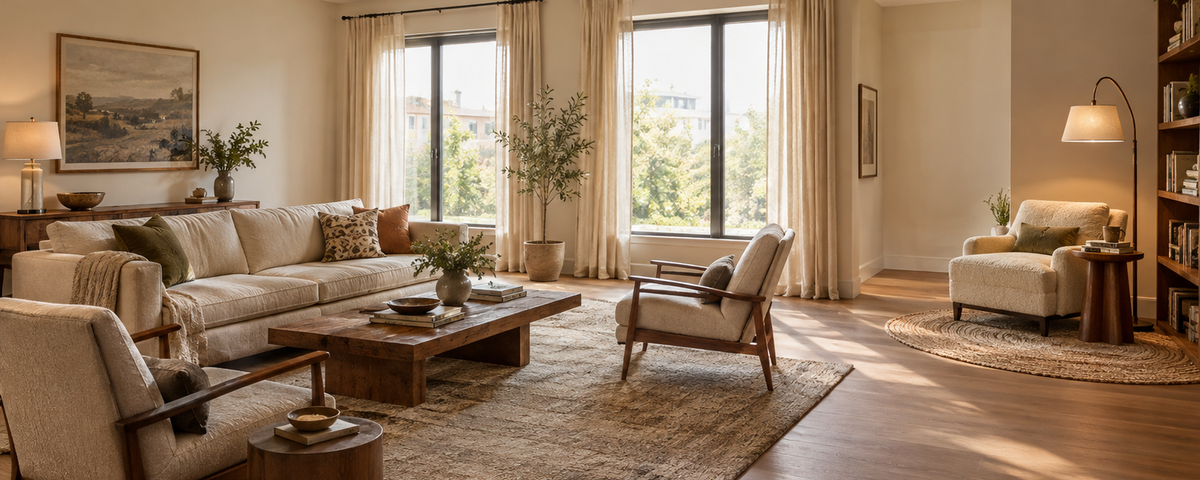
Living rooms often have a good mix of soft and hard surfaces. Sofas, cushions, rugs, and drapery provide absorption, while coffee tables and media consoles add reflection and scattering. This balance generally creates a comfortable environment for conversation.
Dining Rooms
Dining rooms can be more reflective because they often combine a large hard table, hard chairs, and hard flooring with fewer soft furnishings. This can make conversations sound livelier or more echoey, especially when several people are talking.
Home Offices
Home offices with hard desks, hard flooring, and minimal soft furnishings can sound noticeably reflective. The effect may be especially noticeable during video calls, when microphones pick up room reflections.
Media and Entertainment Rooms
Media rooms benefit from a deliberate balance of hard and soft surfaces. Upholstered seating, rugs, and drapery can help control reflections and create a more acoustically comfortable space.
Common Misconceptions About Furniture and Sound
"Solid wood furniture absorbs sound." Solid wood is dense and generally reflective, not absorptive. Its shape can scatter sound, but soft, porous materials do more to absorb sound energy.
"More furniture always means a quieter room." The mix of hard and soft surfaces matters more than the amount of furniture. A room full of hard furniture can still sound sharp, while textiles can make a lightly furnished room feel calmer.
"Only foam panels or acoustic treatments affect sound." Purpose-built treatments provide targeted absorption, but everyday furnishings such as rugs, drapery, and upholstery also meaningfully affect a room's acoustic feel.
"An echoey room means something is wrong." Some reflection is normal and can make a room feel lively. For most homes, the goal isn't to eliminate reflection but to create a comfortable balance.

An Acoustic Awareness Checklist for Homeowners
-
Look for a balance of hard and soft surfaces, not just different furniture styles.
-
Pay attention to flooring, since hard flooring increases the need for other sound-softening elements.
-
Consider whether large windows are bare, as glass is highly reflective.
-
Distribute soft furnishings such as rugs, drapery, and upholstered seating throughout the room.
-
Remember that a bookcase or cabinet affects acoustics mainly through its shape and irregularity, not its type of wood.
-
Aim for acoustic balance rather than maximum absorption.
Conclusion
Furniture plays a real role in how a room sounds, but not always in the way homeowners expect. Hard furniture, including solid wood pieces, mainly reflects and scatters sound, while soft furnishings provide more meaningful absorption.
The most comfortable rooms usually balance hard and soft surfaces thoughtfully. Furniture can help shape that balance, but it can't do the job alone.
Frequently Asked Questions
Does solid wood furniture affect room acoustics?
Yes, mainly through reflection and scattering rather than absorption. Its shape can help scatter sound, but solid wood itself is not highly absorptive.
Can furniture reduce echo in a room?
Furniture can help by breaking up flat, reflective surfaces and adding some scattering and absorption. However, it usually can't solve echo caused by hard flooring, bare windows, or room dimensions on its own.
Does wood furniture absorb sound?
Not meaningfully. Wood is hard and dense, so it reflects more sound than it absorbs. Soft materials such as upholstery, cushions, rugs, and drapery provide more absorption.
Do bookcases affect room acoustics?
Yes, mainly through scattering. Shelves, books, and objects at different depths redirect sound instead of allowing it to reflect cleanly back into the room.
What types of furnishings help reduce sound reflection the most?
Soft, porous furnishings such as upholstered seating, cushions, rugs, and heavier drapery generally provide the most absorption and help reduce sound reflection.
Share:
How to Decide Which Furniture Pieces Deserve the Most Attention in a Room