
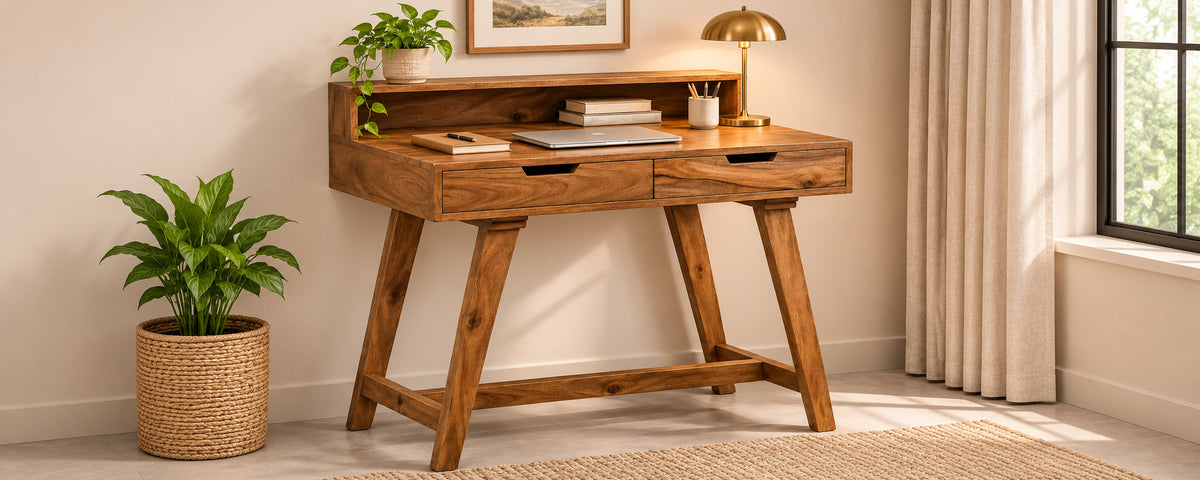
Quick answer
Choose a solid wood writing desk based on your available space and daily work needs. A desk around 40 to 60 inches wide, 24 to 30 inches deep, and 28 to 30 inches high is a practical starting point. Check chair clearance, knee space, storage requirements, and cable placement before buying.
A desk is one of the few pieces of furniture you use for hours every day. It holds your laptop, your notes, your coffee and, often, your focus. A desk that is too small feels cramped, and one that is too big can swallow a room.
A solid wood writing desk is a good long-term choice for a home office. It is sturdy, it looks warm in a room, and with simple care it can serve you for years. The trick is choosing the right size and layout for how you actually work.
This guide walks you through measuring your space, choosing the right desk dimensions, planning chair and knee clearance, selecting storage and wood finishes, and caring for your desk once it arrives.
Step 1: Decide how you will use the desk
Before you measure anything, think about what the desk needs to do. How you use it will determine the size you need.
-
Laptop and notebook: A smaller writing desk is often enough.
-
Laptop with an external monitor: You may need more width and depth so the screen sits at a comfortable distance.
-
Paperwork, sewing, drawing or crafts: Extra surface area and a few drawers help a lot.
-
Shared space: If the desk sits in a bedroom or living room, appearance and tidy storage matter as much as size.
Write down your setup in one line, for example, "laptop, monitor, notebook, and lamp." It will make every choice below easier.
Step 2: Measure the space before you choose a size
Measure the wall or corner where the desk will go, and note what is around it.
-
Measure the width of the wall space available.
-
Measure how far the desk can extend into the room.
-
Note nearby windows, heaters, air vents, and electrical outlets.
-
Allow around 36 inches between the seating edge of the desk and the nearest wall or piece of furniture as a practical planning guideline. Leave additional space if people need to walk behind your chair.
If you are placing the desk in a bedroom, also check the door swing and how close it will sit to the bed, wardrobe, or dresser.
Before ordering, measure your doorways, hallways, and staircases to ensure the desk can reach its intended location. Our guide to measuring doorways and stairs before ordering furniture explains how to do this.

Step 3: Choose the width, depth, and height
These three measurements help determine how comfortable and functional your desk will be.
|
Measurement |
Suggested range |
What it affects |
|
Width |
40 to 60 inches |
How much room you have for a laptop, monitor, and notebook |
|
Depth |
24 to 30 inches |
How far your screen sits from your eyes and how much workspace you have |
|
Height |
28 to 30 inches |
Whether your arms rest comfortably at the keyboard |
These dimensions are practical starting points. The ideal desk size depends on your height, available space, and daily work setup.
-
Width: A desk around 40 to 48 inches suits a laptop and notebook. A width of 55 to 60 inches provides more room for a monitor and paperwork.
-
Depth: A depth of at least 24 inches is a useful starting point if you use a monitor. A shallower desk can work for a laptop.
-
Height: Most standard writing desks are close to dining table height. Choose a desk height that works comfortably with your chair and sitting posture.

Step 4: Check the chair and knee clearance
A desk can look right and still feel wrong when you sit at it.
-
Knee space: If the desk has drawers underneath, check that there is room for your knees and thighs. Some desks have a drawer directly above your lap, while others have a storage pedestal on one side.
-
Chair height: Choose a chair that allows your feet to rest flat on the floor or a footrest, with relaxed shoulders and elbows comfortably positioned near keyboard height.
-
Armrest clearance: If your office chair has armrests, check whether they fit underneath the desk without hitting the drawers or desktop frame.
-
Pushing back: Make sure you can pull the chair back without hitting a wall, heater, or bed frame.
If you can, sit at a desk of similar height at a friend's home or in a furniture store before you decide.
Step 5: Choose drawers and storage that fit your habits
The right storage layout keeps your workspace organized without compromising comfort or available legroom.
-
No drawers: A clean, minimalist look, but you may need additional storage nearby.
-
One or two drawers: Convenient storage for stationery, chargers, and notebooks.
-
More drawers or a side pedestal: Helpful for organizing paperwork and office essentials, but may reduce knee room on that side.
If you are choosing drawer pulls or thinking about hardware, our guide to drawer pulls and knobs for wood furniture covers size, finish, and placement.

Step 6: Think about cables and the way you work
Cables are an easy thing to forget until the desk is in place.
-
Check how close the desk will be to an electrical outlet.
-
Plan where the cables will run so they do not stretch across the room or get pinched against the wall.
-
Use cable clips, reusable cable ties, or an under-desk cable organizer to keep cords tidy and away from your feet.
Step 7: Place the desk with light and comfort in mind
Where the desk sits matters as much as what it is made of.
-
Natural light: A spot near a window helps with daylight, but check for glare on your screen.
-
Direct sunlight: Prolonged exposure to direct sunlight can gradually change the color of natural wood. Use curtains or blinds to reduce excessive exposure.
-
Heat sources: Keep the desk away from heaters and heating vents to avoid prolonged exposure to direct heat.
-
Lighting: Use an adjustable desk lamp to illuminate your workspace without creating screen glare or exposing the wood surface to excessive heat.
Step 8: Why solid wood suits a home office
A writing desk gets used every day. You lean on it, rest your arms on it, and move things across it.
A well-constructed solid wood writing desk offers durability, stability, and natural character. Its distinctive grain patterns, knots, and subtle color variations make each piece unique. With proper care, a solid wood desk can remain functional and attractive for many years.
Step 9: Choose a wood finish that complements your home office
The finish of your writing desk influences the overall appearance of your workspace. Choose a tone that complements your flooring, walls, office chair, and surrounding furniture.
-
Light wood finishes: Create a bright, relaxed appearance and work well in smaller home offices.
-
Medium wood finishes: Offer warmth and versatility, complementing both traditional and modern interiors.
-
Dark wood finishes: Create a sophisticated appearance suitable for home offices, studies, and libraries.
Consider the amount of natural light in your room and whether you prefer your desk to blend with existing furniture or stand out as a statement piece.
If you are matching other furniture, see our guide to blending traditional and modern furniture.
Step 10: Care for your desk
A little regular care keeps a desk looking good.
-
Dust regularly with a soft, dry cloth.
-
Wipe spills quickly so liquids do not sit on the wood.
-
Use coasters and mats. Hot mugs can leave marks. Our guide to white heat marks on wood tables explains why they happen and what to do.
-
Avoid harsh cleaners. Use only cleaning products suitable for your wood finish, limit exposure to water, and follow the manufacturer's care instructions.
-
Protect your floor. Use felt pads on the legs and lift the desk instead of dragging it. Our guide to protecting hardwood floors from heavy wood furniture has more detail.
-
Moving to a new home? Our guide to moving solid wood furniture without damage covers wrapping and lifting.
Quick checklist before you buy
-
I know how I will use the desk: laptop only, monitor, paperwork, or crafts.
-
I measured the available wall space and the area needed for my chair.
-
I checked width, depth, and height against my setup.
-
I checked knee, chair, and armrest clearance.
-
I chose a drawer layout that suits my storage needs.
-
I selected a wood finish that complements my home office.
-
I know where the electrical outlet and cables will go.
-
I checked that the desk will fit through my doorways, hallways, and stairs.
-
I planned felt pads and a spot away from direct sunlight and heat.
Create a home office that balances comfort, functionality, and timeless design. Explore Oak & Loom's collection of solid wood writing desks to find a piece that complements your space and everyday work routine.
Frequently Asked Questions
What size writing desk do I need for a home office?
A desk around 40 to 48 inches wide suits a laptop and notebook, while 55 to 60 inches provides more room for a monitor and paperwork. A depth of at least 24 inches is a useful starting point for a monitor setup.
What is the standard height for a writing desk?
A typical writing desk is around 28 to 30 inches high. The ideal height depends on your chair and body height, allowing your shoulders to remain relaxed and your elbows comfortably positioned near keyboard height.
Is a solid wood desk good for a home office?
Yes. A well-constructed solid wood desk offers durability, stability, and timeless appeal. With regular care, such as using coasters and wiping spills quickly, it can last for many years.
How much space should I allow for my desk chair?
Keep the existing answer unchanged. This question more accurately reflects the measurement explained in the answer.
Do I need a desk with drawers?
Not always. Drawers help keep stationery, chargers, and paperwork out of sight, but a desk without drawers can look cleaner and give more knee room. Choose based on how much you need to store.
How do I protect a wood desk from heat and scratches?
Use coasters and a desk mat, avoid placing hot items directly on the surface, and lift items instead of dragging them. Keep the desk away from direct heat and prolonged exposure to sunlight.
What is the difference between a writing desk and a computer desk?
A writing desk typically features a simpler design with an open work surface and minimal storage. A computer desk often provides additional space or cable management features for monitors and other equipment.
Is a writing desk suitable for a small home office?
Yes. A compact writing desk with a slim profile, open legroom, and minimal drawers can provide a functional workspace without overcrowding a small room.
Share:
How to Choose Bar Stool Height: Counter vs Bar Stools