
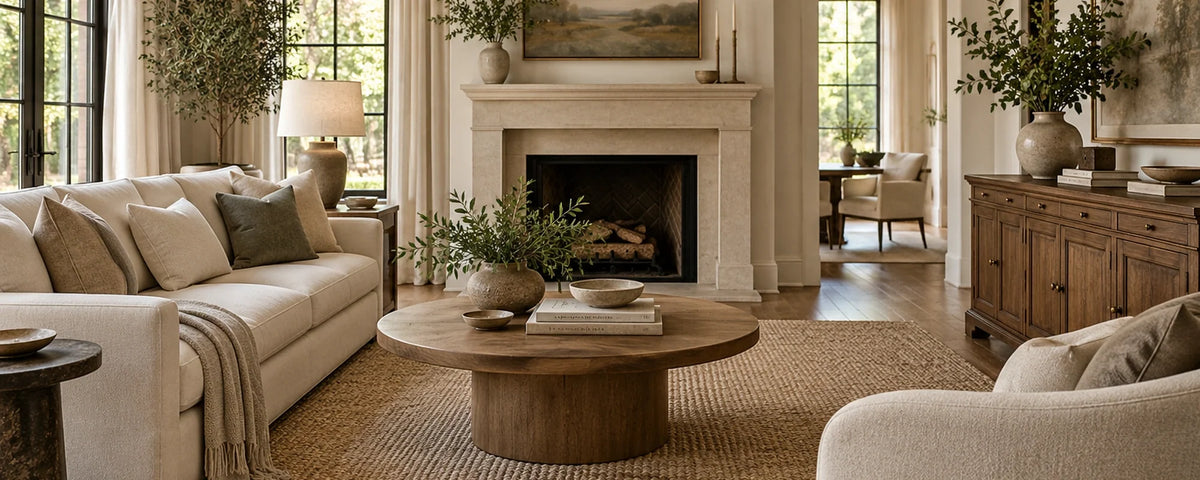
Some people love the warmth of classic furniture but find a fully traditional room heavy. Others prefer clean contemporary lines but miss the character. Transitional style is the middle ground: a room that feels settled and comfortable without being ornate or stark. It is less a rulebook than a balance.
Quick Answer
Transitional style blends traditional and modern design, combining classic furniture shapes with clean lines, neutral colors, and a balance of warmth and simplicity. In practice, this means familiar forms with fewer decorative details, mostly straight lines with a few soft curves, warm wood tones, textured fabrics, and restrained ornament.
Why This Matters
Furniture is expensive and lasts a long time, so a style that bridges eras gives you more flexibility. Understanding what defines it lets you mix pieces you already own with new ones, instead of starting over.
The Key Question
Ask "what should I keep from traditional, and what should I simplify?" Transitional rooms keep the proportions, craftsmanship and warmth of classic pieces and drop most of the ornament.
What Actually Matters
What Transitional Style Is, and Isn't
There is no single formal definition of transitional style, but it generally combines traditional and modern elements, balancing clean lines with comfort and occasional curves with simpler forms. Furniture tends to have moderate proportions and restrained detailing rather than heavy ornamentation.
It is not the same as mixing any styles you like. Oak & Loom's guide to mixing furniture styles covers combining several styles with one dominant style. Transitional style is one specific blend: traditional and modern design in balance.
Keep the Form, Soften the Detail
A transitional room often uses traditional shapes with less decoration. Think of a sideboard with classic proportions but plain doors, a bed with a paneled headboard rather than heavy carving, or a dining table with a simple profile and turned legs. Oak & Loom's Lancaster Traditional Wooden Console Table, for example, has classic proportions, curved legs, and a diamond-pattern carved apron that give it a distinctly traditional character. Used as an accent alongside simpler furniture and understated accessories, a piece like this can add character without making the entire room feel ornate.

Balance Curves and Straight Lines
Transitional furniture typically features mostly straight lines with occasional soft curves. Pair a curved-leg console with a clean-lined bookcase, such as Oak & Loom's Mirevana Modern Solid Wood Bookcase. This contrast creates visual interest while helping balance traditional character with modern simplicity.
Use a Calm, Warm Palette
Transitional palettes often feature neutral shades such as white, cream and gray, complemented by ivory, beige, tan and warm brown wood tones. Color can be introduced through artwork and accessories. These tones work well with solid wood furniture, while Oak & Loom's wood tones guide offers further guidance on coordinating wood undertones.
Choose Texture over Pattern
Transitional rooms gain depth from texture: wool, linen, sisal or jute rugs, woven shades, and textured upholstery. Subtle patterns can also work when used sparingly, but texture helps maintain a calm, cohesive look while adding warmth and visual depth, even when the furniture comes from different eras.
Repeat Metals Rather Than Matching Everything
Mixing metals can work in a transitional room, but repeating one or two finishes helps the space feel intentional. For example, brushed nickel hardware can complement silver-toned fixtures. Choose a dominant finish and repeat it in drawer pulls, lamp bases, and frames, using other finishes selectively for contrast.
Match Scale and Edit
Furniture should feel proportionate to the room and to the pieces around it. Oak & Loom's mixing guide recommends balancing the visual weight of different pieces and editing the room down to a few well-chosen items. These principles help create a transitional interior that feels cohesive rather than overcrowded.
What to Keep and What to Simplify
|
Element |
Keep from traditional |
Simplify or modernize |
|
Wood |
Warm tones and visible craftsmanship |
Restrained finishes and detailing |
|
Silhouette |
Familiar classic proportions |
Fewer ornate flourishes |
|
Lines |
A few soft curves |
Mostly straight lines |
|
Fabrics |
Comfortable, soft textures |
Understated colours and patterns |
|
Colour |
Warm wood tones |
Neutral walls and restrained accents |
|
Accessories |
A few meaningful pieces |
Fewer, less ornate objects |
Room by Room
Living room: Choose a simple, comfortable sofa in a neutral fabric, then pair it with a traditional console or sideboard and a modern bookcase. Add a textured rug to bring warmth and connect the different furniture styles. Oak & Loom's console table guide offers more placement ideas.

Dining room: Pair a solid wood dining table with a simple profile and upholstered chairs in a neutral fabric. A carved or classically styled sideboard can add traditional character, while understated accessories help maintain a balanced look.
Bedroom: Choose a paneled or lightly detailed bed in a warm wood tone, paired with simple linen bedding, understated nightstands, and a clean-lined dresser. Oak & Loom's sleigh bed vs panel bed guide compares two classic bed shapes and helps readers understand their differences.
Common Mistakes
-
Treating it as "beige everything." The palette is calm, but texture and wood keep it warm.
-
Using too many ornate pieces. One or two traditional accents are enough.
-
Mismatched scale. Delicate pieces next to heavy ones throw off balance.
-
Mixing too many metals. Repeat one or two finishes.
-
Skipping texture. Without it the room feels flat.
-
Assuming there is one right recipe. Transitional style allows room for personal preference as long as the overall balance stays consistent.
Practical Checklist
-
Pick one or two classic pieces to keep as accents
-
Choose simple, moderately scaled companions
-
Balance soft curves with straight lines
-
Use a neutral wall color and warm wood tones
-
Add texture through rugs, throws and shades
-
Repeat one or two metal finishes
-
Edit to the pieces that earn their place
Conclusion
Transitional style works because it asks you to keep what you love about classic furniture and let the rest be simple. Start with one traditional piece, surround it with calm, well-scaled companions, and let texture do the work. If you're looking for pieces that can work across traditional and transitional spaces, explore Oak & Loom's sideboards and bed frames.
Frequently Asked Questions
What is transitional style in simple terms?
A blend of traditional and modern design with simple lines, neutral colors, warm materials, and restrained detail.
How is transitional different from modern?
Modern leans on straight lines and minimal detail. Transitional keeps some classic forms and warmth, with a few soft curves.
Can I mix carved furniture with modern furniture?
Yes, in moderation. One carved accent among simpler, similarly scaled pieces keeps the balance.
What colors suit transitional rooms?
Neutrals such as white, cream, beige and gray, with warm brown wood tones and color in small accents.
Share:
Boho Bedroom Ideas: How to Style a Carved Solid Wood Bed
White Heat Marks on Wood Tables: Why They Happen and What to Do