
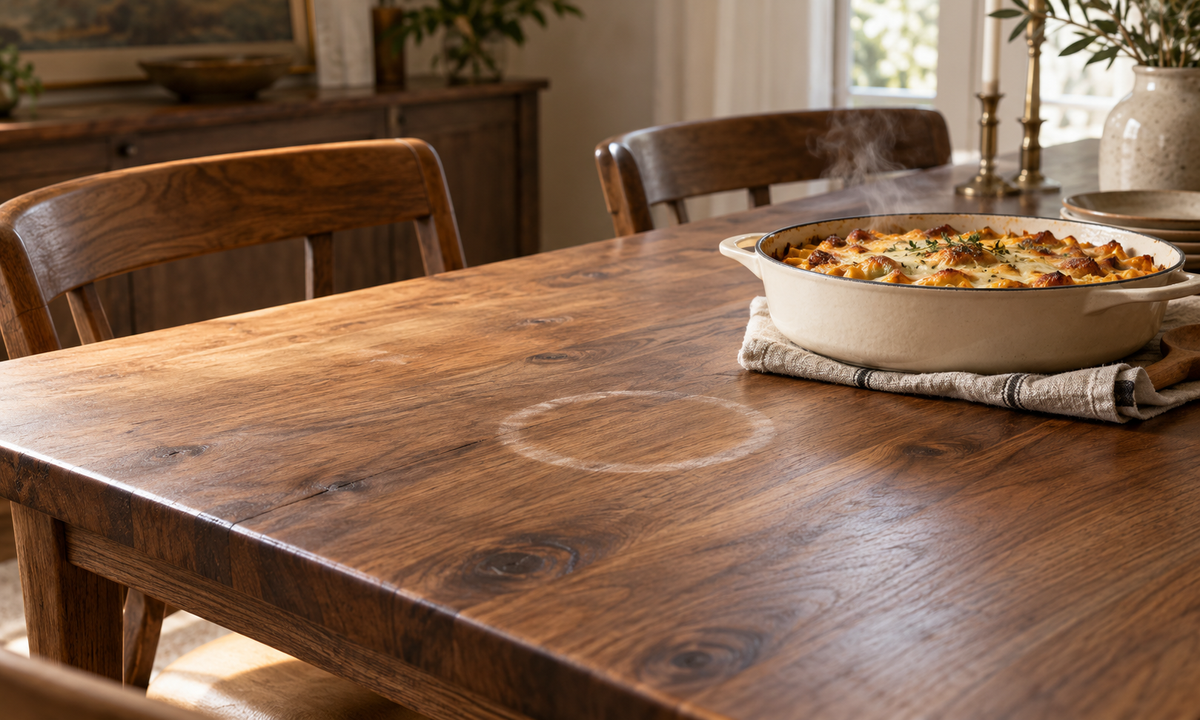
You lift the serving dish and there it is: a pale, cloudy ring on the table where it sat. It looks like damage to the wood, and it can feel like the end of a good table. In many cases it is something more limited, and often something you can reduce yourself. The key is knowing what you are looking at before you reach for a fix.
Quick Answer
White or cloudy heat and water marks often indicate that moisture or heat has affected the table's finish rather than the wood itself. Start with the gentlest approach: wipe the area clean, then, after testing a hidden spot, try brief, moving heat from a hair dryer. Avoid abrasives, ironing, or solvents unless you know the finish and have confirmed that the method is suitable. If the mark remains or the finish starts to soften, become tacky, or look damaged, stop and ask a furniture restorer.
Why This Matters
A white mark is easy to make worse. Too much heat can soften or damage a finish, while abrasives can remove it. Starting gently and stopping early helps protect a surface that might otherwise need refinishing.
The Key Question
Ask "is the mark in the finish, or has it gone through to the wood?" A white or cloudy mark on the surface often indicates a finish problem. A dark stain, scorch, dent, or burn is different and may require a different approach.
What Actually Matters
What a White Mark Actually Is
Home-Ec 101 explains that the white appearance can result from moisture trapped in the table's finish. Woodworking advisor Tim Inman, quoted by Woodworkers Journal, similarly notes that the affected area is often limited to the upper part of the finish coating, which helps explain why some surface treatments can work. Finishing.com describes another possible explanation: water interacting with the finish can create a cloudy appearance, and gentle warming may help restore the original color. Because sources describe the mechanism in slightly different ways, these should be treated as possible explanations rather than a single settled rule.
Why Heat and Cold Drinks Both Do It
A hot dish can expose the finish to heat and moisture, while a cold glass can leave condensation sitting on the surface. Either can contribute to a pale or cloudy mark. Oak & Loom's guide to protecting a wooden dining table notes that hot pots, mugs, and kettles can cause white marks and that condensation from glasses can leave watermarks and discoloration.
Which Finish Do You Have?
The finish affects which treatments are safe. Woodworkers Journal notes that some finishes, including lacquer and shellac, can be affected or re-dissolved by solvents, while varnishes generally resist them. If you do not know what finish is on your table, take the more cautious approach: test any treatment on a hidden spot first, or skip solvent-based treatments altogether. Oiled and waxed finishes can also behave differently from hard film finishes.

The Repair Ladder: Start Gentle
Work from the least aggressive option to the more involved ones, and stop as soon as the mark begins to fade. The methods below come from home-care and woodworking sources, but results vary by finish and the depth of the mark. When in doubt, choose the gentlest option or consult a furniture professional.
Step 1. Clean and test. Wipe the area gently with a clean, soft cloth to remove surface dirt. Before trying any treatment, test it on a hidden area, such as the underside of the table edge, to make sure it does not change the finish.
Step 2. Gentle, brief heat. Home-Ec 101 describes using a hair dryer as a lower-risk alternative to ironing. Keep the dryer moving and use gentle heat rather than concentrating it on one spot. Some Finishing.com readers report that repeated, patient attempts can help with shallow marks. Too much heat can soften or damage the finish, so stop if the surface begins to change.
Step 3. Be cautious with an iron. Some home-care and woodworking sources describe using a smooth, lint-free cloth between the surface and a cool, dry iron, using only very brief passes with the steam off. However, an iron concentrates heat directly on the finish and can cause additional damage. If you do not know the finish or are concerned about the table's value, it is safer to skip this method and consult a professional.
Step 4. Solvent treatment - only for a known, suitable finish. Some woodworking sources discuss denatured alcohol for certain finishes, but it can dissolve or alter the finish itself. Do not use it simply because a white mark remains. If you do not know the finish, skip solvent-based treatment rather than experimenting on the visible surface.
Step 5. Avoid aggressive home remedies. Toothpaste, baking soda, mayonnaise, steel wool, and similar remedies are sometimes recommended for shallow white rings, but their results are inconsistent and some can alter or remove the finish. They are not a good first choice for a valuable or professionally finished table. If gentler methods do not work, professional advice is safer than escalating to an abrasive treatment.
Step 6. Stop and call a restorer. If the mark is not fading, the finish feels soft or tacky, the surface begins to bubble, or the area looks scorched, stop treating it. Deeper damage or a finish that needs refinishing is better handled by a furniture restorer, especially on a valuable table.
Which Approach Fits Which Mark
|
Situation |
Reasonable first move |
Caution |
|
Light, cloudy ring that appeared recently |
Clean, then try gentle, moving heat from a hair dryer |
Keep the heat moving and stop if the finish changes |
|
Stubborn ring on a tested finish |
Consider a higher-risk treatment or ask a furniture restorer |
An iron can soften or damage the finish |
|
Unknown or untested finish |
Stop after gentle cleaning and testing |
Avoid solvents and aggressive treatments |
|
Small, shallow ring |
Start with the gentlest method rather than an abrasive |
Home remedies can alter the finish and results vary |
|
Dark stain or scorch |
Stop; ask a furniture restorer |
White-mark methods may not address deeper damage |
|
Soft, tacky or bubbled finish |
Stop immediately |
Additional heat or rubbing can make the damage worse |
Preventing the Next One
Use trivets or heat-resistant pads under hot dishes and coasters under glasses, as Oak & Loom's dining table protection guide recommends. Felt or cork-backed coasters can provide additional protection from condensation and everyday contact. For wider upkeep, see the furniture maintenance guide. Any finish can be affected by heat and moisture, regardless of the wood underneath, so these habits matter on every table, including solid wood tables such as the Bloomington dining table.
Common Mistakes
-
Grabbing an abrasive first. It can remove the finish and leave a dull patch.
-
Holding heat in one place. Concentrated heat can soften or damage the finish.
-
Using steam. Adding more moisture can make a moisture-related mark worse.
-
Skipping the hidden-spot test. Finishes react differently to heat, solvents and other treatments.
-
Scrubbing aggressively. Heavy rubbing can alter the finish or leave a visible patch.
-
Treating a scorch as a white mark. Dark or burned marks may require a different repair approach.
-
Expecting an instant result. Some shallow marks may take repeated, gentle treatment to improve.
Practical Checklist
-
Look closely: white and cloudy, or dark and burned?
-
Clean the surface gently
-
Test any treatment on a hidden spot
-
Try gentle, moving heat before anything stronger
-
Keep steam off and never hold an iron still on the surface
-
Avoid alcohol, abrasives and steel wool unless the finish is known and the treatment is appropriate
-
Stop if the finish softens, becomes tacky or bubbles
-
Use trivets and coasters to help prevent another mark
Conclusion
A white mark on a wood table often affects the finish rather than the wood itself, and a gentle approach may reduce its appearance. Clean first, test carefully, use heat slowly if appropriate, and stop at the first sign that the finish is reacting. If the mark refuses to fade or the finish looks damaged, a furniture restorer can determine whether the surface needs professional treatment or refinishing. For scratches or dents left behind, Oak & Loom's guide to removing scratches from wood is a useful next step.
Frequently Asked Questions
What causes white heat marks on wood?
White or cloudy marks often occur when heat or moisture affects the table's finish. A hot dish or condensation from a cold glass can contribute to the problem, while the wood underneath may remain unaffected.
Can a hair dryer remove white marks from a wood table?
Gentle, moving heat may help reduce some shallow white marks, although results vary by finish and damage. Keep the dryer moving and stop if the finish becomes soft, tacky or otherwise changes.
Is it safe to iron a white mark off wood?
It is a traditional method, but it carries a real risk of damaging the finish. If you use this approach on a suitable, tested finish, use a clean cloth, no steam and only very brief passes. If you do not know the finish, it is safer to skip the iron and consult a professional.
Will the white mark come back?
It can if the same area is exposed to heat or moisture again. Trivets under hot dishes and coasters under glasses are simple ways to reduce the risk.
When should I hire a professional?
Ask a furniture restorer for help when the mark does not respond to gentle treatment, or when the finish becomes soft, tacky, bubbled or scorched. Professional help is also the safer choice for valuable or unfamiliar finishes.

Share:
What Is Transitional Style? How to Blend Traditional and Modern Furniture