
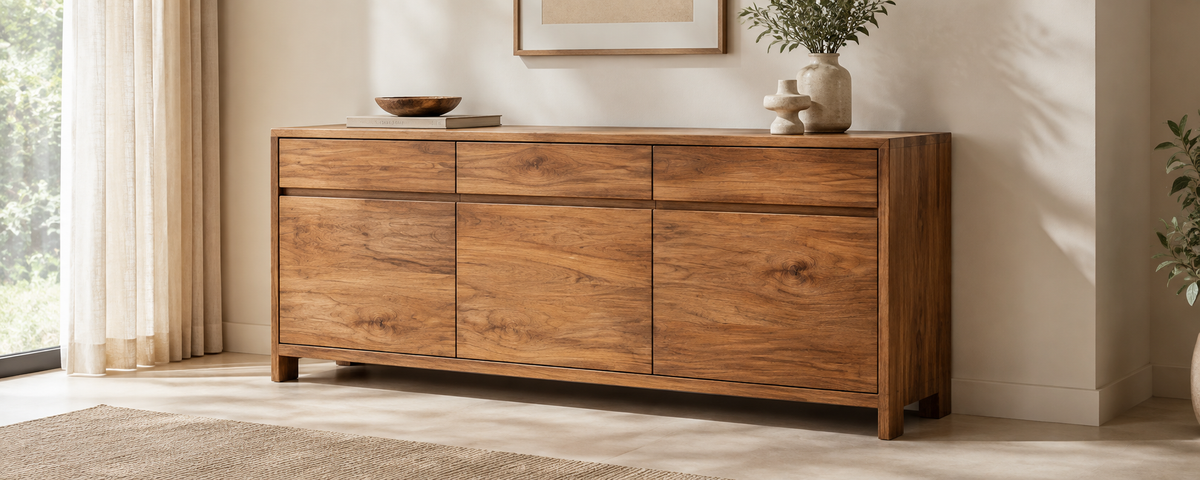
The sideboard that arrives can look noticeably warmer, cooler, lighter, or more heavily grained than the one in the product photo you ordered from-and the first instinct is to assume something went wrong. Most of the time, nothing did. Solid wood is a natural material, not a printed pattern, and the difference between a product photo and the real piece usually comes from a combination of factors that have nothing to do with a manufacturing mistake.

The Key Question
When a piece looks different from its photo, the useful question isn't "is this wrong?" - it's "is this natural variation, a photo or screen limitation, or an actual defect?" Almost every case falls into the first two categories.
What Actually Matters
Natural Grain and Color Variation
Wood grain and color vary from piece to piece, even within the same species, finish, and production run. Oak & Loom states this directly on its product pages: each piece varies in color, grain, and texture, and knots, mineral streaks, and small natural markings are described as normal characteristics rather than defects. A product photo can only show the grain pattern of one specific piece. Your piece, made from different boards, will have its own.
Screens and Lighting Change What You See
Beyond the wood itself, the way color travels from a real piece to a photo and then to your screen introduces its own variation. Oak & Loom's product FAQ acknowledges this plainly: screen settings and lighting can affect how a color appears, even when the photo accurately represents the actual item. A stain that reads as warm honey-brown on one monitor may look noticeably more amber or muted on another, before the physical piece is even involved.

Wood Changes Over Time
Solid wood can change subtly after delivery. Oak & Loom's product descriptions note that a piece may lighten or darken over time due to light exposure and environmental conditions. This is a natural characteristic of the material, not necessarily a sign of a defect. A console kept near a sunny window can shift subtly in tone over months, in a way a product photo taken at a single point in time could never anticipate.

When It's Normal vs. When It's Worth a Closer Look
|
Sign |
Normal Variation |
Worth a Closer Look |
|
Overall tone slightly warmer or cooler than the photo |
Yes |
- |
|
Visible knots, mineral streaks, or grain differences |
Yes |
- |
|
Grain pattern doesn't match the exact photo shown |
Yes |
- |
|
Color shifts gradually over months near sunlight |
Yes (natural aging) |
- |
|
Significant cracking, splitting, or structural damage |
- |
Yes - contact the seller promptly and review the applicable warranty or return terms |
|
Finish that's visibly patchy, uneven, or unfinished in spots |
- |
Yes - possible manufacturing issue |

Common Mistakes
-
Assuming color variation alone qualifies for a damage return. Natural color and grain variation is generally not considered a defect under Oak & Loom's warranty policy. If you believe your furniture has arrived damaged or has a workmanship issue, review the applicable policy and contact the seller for guidance.
-
Judging color entirely from a phone screen. Checking a listing's finish description and viewing photos on more than one device can give you a better understanding of the furniture's appearance than relying on a single screen.
-
Ordering a piece to exactly match existing furniture sight-unseen. If an exact match matters, ask the retailer whether a finish sample or additional product photos are available before ordering.
-
Expecting a piece's appearance to stay frozen at delivery. Light exposure and environmental conditions can gradually affect the tone of solid wood or its finish over time.
Practical Checklist
-
View product photos on more than one device before ordering.
-
Read the finish and material description, not just the photos.
-
Ask the retailer directly whether color and grain vary from piece to piece.
-
Request a finish sample or additional photos if matching existing furniture exactly matters.
-
Understand the applicable return and warranty terms before assuming a color mismatch is eligible for a return.
-
Assess the delivered piece under different lighting conditions, but report visible damage or suspected defects promptly according to the seller's applicable policy.
Conclusion
A solid wood piece that looks a little different from its photo isn't necessarily a sign that something went wrong. Natural differences in grain, color, and texture are part of what makes solid wood distinctive, while lighting and screen settings can affect how a finish appears. Over time, light exposure may also change the wood's tone. The important distinction is between expected natural variation and issues such as significant cracks, structural damage, or a visibly incomplete finish, which may require further assessment.
If you have questions about how a specific piece's color or grain might vary before you order, Oak & Loom's team can help. Reach out throug contact us or review the material and finish details in the [solid wood furniture collection solid wood furniture collection before purchasing.
Frequently Asked Questions
Is wood color variation a manufacturing defect?
Not necessarily. Natural differences in wood color, grain, and texture are normal characteristics of solid wood. Each piece has its own appearance, but unusual finish issues or damage should be assessed separately.
Can I return solid wood furniture because the color doesn't match the photo exactly?
A slight difference in color or grain may be a natural characteristic of solid wood rather than a defect. Whether a return or other remedy is available depends on the seller's current return and warranty terms. If you believe your furniture has arrived damaged or has a workmanship issue, contact the seller for guidance.
Why does my furniture look different in different rooms of my house?
Lighting temperature and intensity vary by room and time of day, affecting how the same wood tone appears. Wall colors and surrounding furnishings can also influence how you perceive the finish. This is a normal effect of lighting and doesn't necessarily indicate a change in the furniture itself.
Will my solid wood furniture's color change over time?
It can. Light exposure and environmental conditions may gradually affect the color of solid wood or its finish. The degree of change depends on factors such as the wood species, finish, and surrounding conditions.
Share:
How to Hide TV Wires in a Solid Wood Media Console