
Storage Bed vs Regular Bed: Which One Is Actually Worth It?
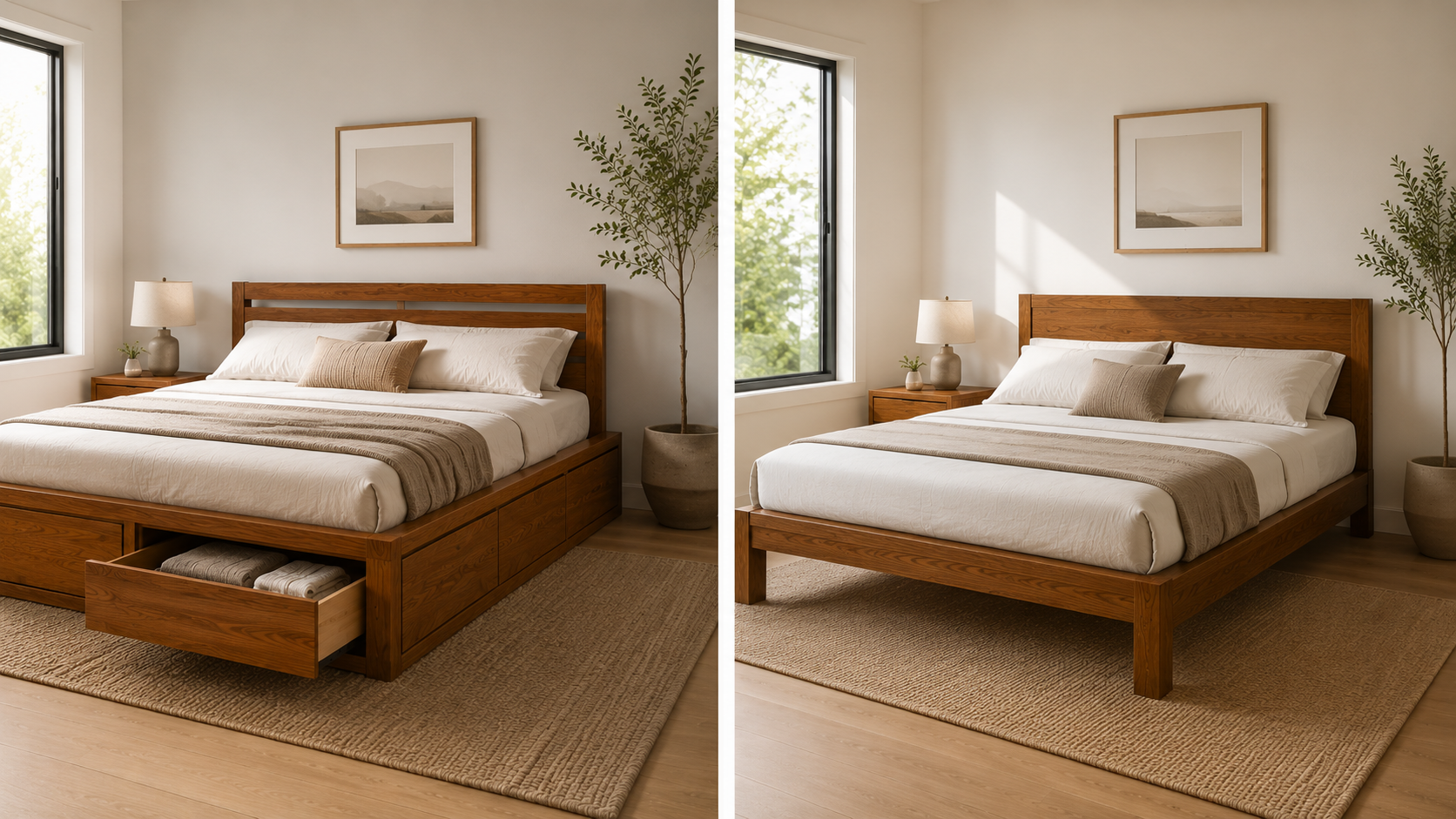
You are standing in front of two bed frames. One is a clean, solid wood platform bed. The other looks almost identical - except it includes four built-in storage drawers running along the base.
The storage bed costs more. The regular bed costs less. Naturally, the question many buyers ask at this point is: is the storage bed actually worth the extra cost, or could I manage without the added storage?
This guide provides a detailed storage bed vs regular bed comparison - covering what each option offers, where each one performs best, how the costs compare over time, and which choice makes the most sense for different bedroom needs.
No sales pitch. No vague recommendations. Just the specific information you need to make the right decision for your bedroom.
Browse Oak & Loom's solid wood bed collection - free shipping across the contiguous United States - as you read through this comparison.
"The storage bed vs regular bed decision is not about which one looks better. It is about which one makes your specific bedroom work better - for the next 20 years."
Quick Answer: Storage Bed vs Regular Bed
For most homeowners - especially those with small to medium-sized bedrooms, limited closet space, or a need to reduce standalone storage furniture - a solid wood storage bed is worth the additional cost. It can replace a dresser, free up floor space, reduce under-bed clutter, and provide extra storage without increasing the room's footprint.
A regular bed is often the better choice for larger bedrooms with ample existing storage, or when a specific design style requires a lower-profile, canopy, carved, or more decorative frame without built-in storage.
What Is a Storage Bed?
A storage bed is a bed frame with built-in storage integrated directly into its base. Storage beds are available in three common configurations:
Drawer storage beds - Built-in drawers on one or both sides of the base, accessible without moving the mattress. Ideal for everyday items such as clothing, bedding, and accessories.
Lift-up storage beds - A hydraulic or gas-lift mechanism raises the mattress and platform to reveal a large storage compartment beneath the bed. Ideal for seasonal items, bulk storage, and belongings that are accessed less frequently.
Combination storage beds - Drawers on the sides combined with additional storage beneath the base, offering both convenient daily-access storage and larger-capacity storage for seasonal items.
What Is a Regular Bed?
A regular bed - also called a standard bed frame or platform bed - provides a sleeping surface and structural support without built-in storage. The space beneath the frame remains open and may be used for storage bins, boxes, or containers, or simply left empty.
Regular beds range from basic frames to premium solid wood platform beds, carved headboard designs, and canopy beds. The absence of built-in storage does not indicate lower quality - many of the finest solid wood bed frames are standard designs without integrated storage.
Storage Bed vs Regular Bed - The Complete Side-by-Side Comparison
|
Factor |
Storage Bed |
Regular Bed |
|
Built-in storage |
Yes - drawers or lift-up |
No - open space beneath |
|
Under-bed appearance |
Contents concealed within drawers |
Open space that may be used for storage |
|
Replaces dresser? |
Yes - 4-drawer version |
No - dresser still needed |
|
Floor space used |
Bed footprint only |
Bed + dresser footprint |
|
Bedroom feel |
More organized, more spacious |
Depends on other storage |
|
Upfront cost |
Higher |
Lower |
|
20-year total cost |
Potentially lower if it replaces a dresser |
Varies based on storage needs |
|
Mattress accessibility |
Direct - drawers pull out |
Direct - no difference |
|
Mattress airflow |
Slat platform maintains airflow |
Same |
|
Assembly complexity |
Slightly more complex |
Simpler |
|
Design options |
Good range |
Widest range |
|
Best for |
Small/medium US bedrooms |
Large bedrooms with ample storage |
The 6 Factors That Determine Storage Bed vs Regular Bed
Factor 1 - Your Bedroom Size
Bedroom size is the single most important factor in the storage bed vs regular bed decision for US homeowners.
Storage bed wins when the bedroom is small to medium - under 200 square feet. In these rooms, every square foot of floor space matters. A storage bed that eliminates the need for a separate dresser frees 6 to 10 square feet of floor space - transforming how the room navigates and feels without changing a single wall or dimension.
Regular bed wins when the bedroom is genuinely large - 250 square feet or more - with a walk-in closet or ample built-in storage. In these rooms, floor space is not the constraint and the additional cost of storage bed integration does not deliver proportional benefit.
The majority of US master bedrooms - averaging 200 to 250 square feet - and virtually all US secondary bedrooms - averaging 100 to 150 square feet - fall into the range where storage bed advantages are most impactful.
Factor 2 - Your Current Storage Situation
Storage bed wins when the bedroom has insufficient storage and requires a dresser, chest of drawers, or multiple under-bed bins to manage clothing and bedding. In this situation, the storage bed absorbs the dresser's function - eliminating a piece of furniture and its cost from the bedroom entirely.
Regular bed wins when the bedroom has adequate storage through built-in closets, existing furniture that is being retained, or a walk-in wardrobe that handles all clothing and bedding storage without compromise.
Georgetown Solid Wood Platform Storage Bed
100% solid acacia with integrated storage drawers - a practical solution for homeowners who want to combine sleeping and storage functions in a single solid wood frame.
Factor 3 - The Real Cost Comparison Over 20 Years
This is the calculation most US homeowners skip - and the one that most clearly resolves the storage bed vs regular bed financial question.
Scenario A - Regular bed + separate dresser:
|
Item |
Cost |
Lifespan |
20-Year Cost |
|
Solid wood regular bed |
$2,799 |
25+ years |
$2,799 |
|
Solid wood dresser |
$1,200 |
20+ years |
$1,200 |
|
Total |
$4,000 |
- |
$4,000 |
Scenario B — Solid wood storage bed (replaces dresser):
|
Item |
Cost |
Lifespan |
20-Year Cost |
|
Solid wood storage bed |
$2,709 |
25+ years |
$2,709 |
|
Dresser needed? |
No |
- |
$0 |
|
Total |
$2,709 |
- |
$2,709 |
The solid wood storage bed costs $1,291 less over 20 years - while providing both sleeping surface and storage in one frame that occupies one piece of floor space.
This is the financial reality most US homeowners do not see at the point of purchase because they are comparing the storage bed's price to the regular bed's price alone - not to the regular bed plus all the storage furniture the bedroom still requires.
Factor 4 - Under-Bed Appearance and Organization
This is a practical factor that affects how the bedroom looks and feels every day - and one that the storage bed vs regular bed comparison resolves clearly in favor of the storage bed for most US homeowners.
Regular bed under-bed reality in most US homes: Plastic storage bins that slide around, dust accumulation, mismatched containers, boxes that have not been opened in months, shoes that ended up there because there was nowhere else. Visible from multiple angles in the bedroom and impossible to keep looking intentional.
Storage bed under-bed reality: Clean floor. Drawers closed. Contents concealed. The bedroom floor - beneath and around the bed - looks exactly as designed.
For US homeowners whose bedrooms currently have the under-bed clutter problem, this single difference in the storage bed vs regular bed comparison produces an immediate, daily improvement in how organized the bedroom appears.
Marlborough Canning Headboard Solid Wood Bed
Solid acacia with an open slatted headboard - blending airy design with integrated storage for a more organized and visually spacious bedroom.
Factor 5 - Design Flexibility
Regular bed wins on design flexibility. Without storage base requirements, regular bed frames are available in the widest range of heights, profiles, headboard styles, and designs - from ultra-low platform beds to tall statement headboard frames to canopy and four-poster designs.
If the bedroom aesthetic requires a specific profile - an ultra-low Japandi platform, a canopy frame, a tall carved statement headboard - and that profile is not available in a storage configuration, the regular bed is the right choice for that specific aesthetic requirement.
Storage bed options have expanded significantly in recent years and now cover contemporary platform, farmhouse, transitional, and traditional styles - but the range remains narrower than standard frames.
At Oak & Loom, the full solid wood bed collection includes canopy beds, carved beds, platform beds, and slatted headboard frames across all sizes - providing the complete design range alongside the storage options.
Factor 6 - Construction Quality Matters More for Storage Beds
This is one of the most overlooked factors in the storage bed vs regular bed decision - but it can have a significant impact on long-term performance.
A storage bed places additional mechanical stress on the frame compared to a regular bed. The drawer systems, glide mounting points, and base structure all carry loads and experience repeated movement that standard bed frames do not. As a result, the quality of materials and construction becomes especially important.
Lower-quality MDF and particleboard storage beds often show signs of wear sooner than solid wood alternatives, particularly in high-use households. Drawer boxes can loosen over time, glides may become less smooth, and the storage components may require repairs or maintenance earlier than expected.
A solid wood storage bed - with hardwood drawer frames, dovetail drawer construction, and mortise-and-tenon structural joinery - is generally better equipped to handle these additional stresses over the long term. Well-built drawer systems maintain their alignment, operate more smoothly, and are less prone to structural issues as the bed ages.
The practical implication is simple: if you are investing in a storage bed, construction quality matters. A well-made solid wood storage bed is more likely to deliver reliable performance for many years, while lower-quality materials may not provide the same level of durability.
For a full explanation of how to verify construction quality before purchase, read: How to Identify Quality Joinery - The Hidden Sign of Great Furniture.
Storage Bed vs Regular Bed - When Each One Is the Right Choice
Choose a Storage Bed When:
Your bedroom is small to medium (under 200 sq ft). The floor space freed by eliminating a dresser is genuinely valuable at this size. Browse storage bed options with low-profile designs for maximum visual space.
You currently use or need a dresser. If your bedroom requires a dresser, a storage bed replaces it - eliminating a piece of furniture and reducing total bedroom furniture cost.
Under-bed clutter is a persistent problem. Integrated drawers provide a more organized and concealed storage solution than under-bed bins.
You are in a US apartment or smaller home. In cities where bedroom square footage is limited, every function consolidated into an existing furniture footprint is valuable.
You are choosing solid wood construction. The long-term advantages of a storage bed are most apparent when it is built from durable, high-quality materials such as solid wood.
Choose a Regular Bed When:
Your bedroom is large with ample built-in storage. If a walk-in closet or built-in wardrobe handles all clothing and bedding storage adequately, the additional cost of a storage bed delivers minimal benefit.
The aesthetic you want is not available in a storage configuration. Ultra-low Japandi platforms, canopy frames, and tall carved statement headboards may not be available in storage configurations. If aesthetics are the priority, a regular bed is often the better choice.
You prefer maximum design flexibility. Regular solid wood beds - canopy, carved, platform, slatted - are available in the widest range of styles. Browse Oak & Loom's complete solid wood bed collection for the full range.
The bedroom already functions well organizationally. If the current storage arrangement works and under-bed space is not a problem, a regular bed is the right choice.
Bellflower Solid Wood Hand-Carved Bed
Hand-carved solid mango wood - a distinctive regular bed designed for homeowners who prioritize craftsmanship, character, and visual impact.
The Storage Bed vs Regular Bed Decision for Different Homes and Lifestyles
Apartment dwellers (New York, Chicago, Los Angeles, San Francisco):
→ Storage bed. Limited square footage makes every storage solution more valuable. The ability to replace a dresser can be a significant advantage in smaller urban bedrooms.
Suburban homes with walk-in closets:
→ It depends on bedroom size and existing storage. If the walk-in closet handles most storage needs and the bedroom is spacious, a regular bed with a premium design may be the better choice.
Children's bedrooms:
→ Storage bed. Children's rooms often require substantial storage in a relatively small space. Built-in drawers help keep clothing, toys, and bedding organized without additional furniture.
Guest bedrooms:
→ Storage bed. Guest rooms that also serve as storage spaces benefit from concealed built-in storage without sacrificing sleeping functionality.
Bedrooms where design is the top priority:
→ Regular bed. The widest range of carved, canopy, statement-headboard, and specialty designs is typically available in non-storage configurations.
Conclusion
Storage bed vs regular bed - which one is actually worth it?
For most homeowners - particularly those with small to medium-sized bedrooms, limited storage, and a need for a dresser - a solid wood storage bed can be a worthwhile investment. It combines sleeping and storage functions in a single footprint, helps reduce bedroom clutter, and may eliminate the need for additional storage furniture.
For homeowners with larger bedrooms, ample existing storage, and a strong preference for design styles that are not commonly available in storage configurations, a solid wood regular bed is often the better choice.
One consideration applies to both options: construction quality matters. Storage beds place additional demands on materials and hardware, while regular beds benefit from durable construction that supports long-term performance. Well-built solid wood bed frames generally offer greater durability and longevity than lower-quality alternatives.
At Oak & Loom, every bed frame in our collection - storage beds and regular frames alike - is crafted from 100% kiln-dried solid hardwood with mortise-and-tenon structural joinery. No MDF. No particleboard. Free shipping across the contiguous United States. Browse the full bedroom furniture collection to find the right frame for your bedroom and lifestyle.
"The storage bed vs regular bed decision is not about which one is better. It is about which one your bedroom actually needs."
→ Browse all solid wood bed frames - free US shipping: oakandloom.com/collections/wooden-beds
→ Still deciding? Contact our team for personalized guidance.
Frequently Asked Questions
Q1. Is a storage bed worth it compared to a regular bed?
A storage bed is worth considering when the bedroom is small to medium-sized, when additional storage is needed, and when under-bed clutter is a recurring problem. A solid wood storage bed can combine sleeping and storage functions in a single footprint while helping reduce the need for additional furniture. The key consideration is construction quality - well-built solid wood storage beds generally offer greater durability and long-term performance than lower-quality alternatives. Browse Oak & Loom's solid wood beds - free US shipping.
Q2. What are the pros and cons of a storage bed vs a regular bed?
Storage bed pros: Built-in storage eliminates need for dresser; frees bedroom floor space; eliminates under-bed clutter; costs less over 20 years when replacing a dresser. Storage bed cons: Higher upfront cost; slightly narrower design range; requires solid wood construction to deliver long-term value. Regular bed pros: Lower upfront cost; widest design range including canopy and carved styles; simpler assembly. Regular bed cons: Requires separate storage furniture; under-bed space remains cluttered; total bedroom furniture cost is higher when dresser is needed.
Q3. Do storage beds make bedrooms look smaller?
No - a quality solid wood storage bed makes bedrooms look and feel larger, not smaller. By replacing standalone storage furniture, a storage bed eliminates the dresser's floor footprint from the bedroom - freeing 6 to 10 square feet of open floor space. The visual result is a more open, more organized bedroom. For US homeowners considering storage beds for small bedrooms, read: Are Storage Beds Good for Small Bedrooms?
Q4. How much storage does a solid wood storage bed provide vs a regular bed?
A regular bed provides no built-in storage - the space beneath the frame remains open and is often used for storage bins or boxes. A solid wood storage bed with integrated drawers can provide substantial built-in storage for clothing, bedding, and everyday essentials while reducing the need for additional bedroom furniture. Lift-up storage beds typically offer even greater storage capacity by utilizing the full space beneath the mattress platform. For a complete breakdown of storage bed advantages, read: Storage Bed Benefits: 7 Reasons US Homeowners Are Switching.
Q5. What should I look for in a solid wood storage bed vs a regular bed?
When choosing a solid wood storage bed, verify: internal drawer depth of minimum 10 inches; four drawers for dresser-equivalent capacity; dovetail drawer corner construction; total bed height of 22 to 26 inches; and 100% solid hardwood frame and drawer construction. When choosing a solid wood regular bed, verify: 100% solid hardwood throughout; mortise-and-tenon structural joinery; and the specific design profile available in the size you need. For a complete construction quality guide, read: How to Identify Quality Joinery.
Q6. Do storage beds require more maintenance than regular beds?
Storage beds may require slightly more maintenance because they include moving components such as drawers, glides, or lift mechanisms. However, a well-constructed solid wood storage bed typically requires only basic care, such as occasional cleaning and checking drawer hardware. Regular beds have fewer moving parts, but both types can provide years of reliable performance when built from high-quality materials.

Share:
Are Storage Beds Good for Small Bedrooms? A Complete Guide for US Homeowners
Solid Wood Armoire vs Built-In Closet: Which Is Better for Your Bedroom?