
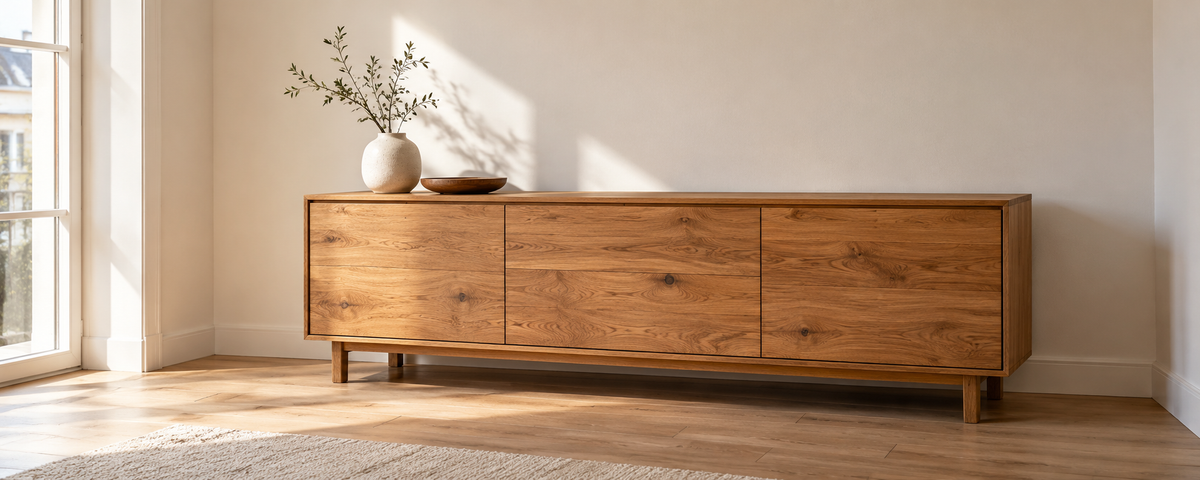
Renting and buying heavy furniture can seem like opposites. One suggests flexibility, the other permanence. Yet many renters stay in one place for years, move between similar apartments, or simply want furniture that lasts. Solid wood furniture for renters can be a practical choice, but only if you select pieces with future moves in mind.
Quick Answer
Solid wood can work in a rental if you choose manageable sizes, check weight and disassembly requirements, protect floors and walls, and favor versatile dimensions and finishes. If you expect to move every year or two, or your lease has strict restrictions, lighter furniture may be more practical. Factor in moving and handling costs before buying heavy pieces.
How Often Will You Move?
Every move puts furniture through another round of lifting, transport and handling. Heavy pieces can cost more to move and may be difficult to maneuver through stairwells or narrow doorways.
Ask yourself how many more times you expect to move. If you plan to stay for several years or move only once or twice, a well-chosen solid wood piece may be worth the investment. If you expect to relocate every year, prioritize manageable weight, easy disassembly and pieces that work in different homes.
What Actually Matters
Be Honest About Weight and Moving Costs
Solid wood furniture can be heavier than hollow or composite furniture of similar dimensions, depending on its construction. This affects moving costs, stair access and lift capacity. If the product page doesn't list the weight, ask the seller before buying and check your building's access restrictions.
Worth Considering: Invest in a few solid wood pieces you use every day, and keep less essential furniture lighter. Before buying, check each piece's weight, dimensions and delivery route, then factor in the cost of moving it again.
Before investing in a heavy piece, learn how to identify solid wood furniture so you know what you're buying.
Check Whether It Comes Apart, and How Often
Beds and tables with removable components are often easier to transport than pieces that cannot be disassembled. Oak & Loom's bed frame collection describes pre-drilled components, labeled hardware and step-by-step assembly instructions, with most frames assembled in under an hour. However, this doesn't establish whether a frame can withstand repeated disassembly and reassembly.
Before buying, ask the seller about reassembly limits, hardware replacement and the recommended moving process. When you relocate, label and bag the hardware, and keep it with the corresponding furniture parts.
Think Layout-Flexible, Not Layout-Perfect
A piece that fits one rental perfectly may not suit your next home. Moderate dimensions and versatile designs give you more options when rooms and layouts change.
Oak & Loom's guide to small buffet cabinets for apartments provides guidance on cabinet dimensions and doorway clearance. Before buying, measure your current room, doorways, stairwells and lift, then consider whether the piece could work in another layout.
Custom-sized furniture can be harder to reuse when you move. It may still be worthwhile for an awkward space, but versatile dimensions generally offer more flexibility.
Protect the Floor
Heavy furniture can scratch or dent rental floors. Use suitable felt pads or floor protectors under the legs, check them regularly for trapped grit, and lift furniture rather than dragging it when rearranging.
Check your lease for flooring requirements and photograph the floors before moving furniture in. Keep a record of existing damage so you can distinguish it from damage that occurs during your tenancy.
Protect the Walls, and Ask Before Drilling
Tall furniture can tip over and cause serious injuries, particularly in homes with children. Follow the manufacturer's tip-over prevention instructions and use the recommended anchoring hardware where required.
Because anchoring may involve drilling, check your lease and obtain your landlord's permission before making holes. If drilling is restricted, ask about an approved alternative and verify that it is suitable for the specific furniture. Do not assume that placing a bookcase against a wall or choosing a wider piece eliminates the tip-over risk.
The U.S. Consumer Product Safety Commission's Anchor It! campaign provides additional guidance on furniture tip-over prevention.

Choose Versatile Finishes
Wood tones, simple lines and adaptable designs can work with different wall colors, flooring and decorating styles. Highly ornate or strongly colored pieces may be harder to incorporate into a new home, so choose a finish you can see yourself enjoying in different spaces.
Which Pieces Make Sense for a Renter?
|
Piece |
Why it can suit a rental |
What to check |
|
Bed frame |
An everyday essential you can take to your next home |
Weight, disassembly instructions and component sizes |
|
Dining table |
A durable centerpiece for meals and work |
Tabletop dimensions, removable legs and transport clearance |
|
Sideboard / buffet |
Combines storage with a useful surface |
Width, depth, weight and clearance |
|
Tall bookcase |
Provides substantial vertical storage |
Tip-over prevention, anchoring requirements and moving weight |
|
Nightstands |
Compact and relatively easy to relocate |
Dimensions, stability and storage needs |

Common Mistakes
-
Ignoring the stairs and lift. Measure the building's route, not only your room.
-
Buying to fit one wall exactly. Layouts change at the next address.
-
Skipping move-in photos. Document floors and walls before furniture arrives.
-
Assuming anchoring is optional. Tall pieces can tip; ask permission and plan.
-
Buying many heavy pieces at once. Keep a few and stay flexible elsewhere.
Practical Checklist
-
Estimate how many more moves you expect
-
Check each piece's weight and disassembly instructions
-
Measure doorways, stairwells and lift access
-
Choose dimensions that suit different room layouts
-
Add suitable floor protectors and photograph floors at move-in
-
Ask your landlord about anchoring before drilling
-
Limit heavy furniture to pieces you will use regularly
Conclusion
Solid wood furniture can be a worthwhile investment for renters when the pieces suit their moving plans, available space and lease restrictions. Start with a few everyday essentials, check their weight and disassembly requirements, and protect floors and walls from damage.
Choose versatile pieces you can see yourself using in more than one home. Explore Oak & Loom's bed frames and sideboards to compare options for your space.
Frequently Asked Questions
Is solid wood furniture a good idea if I rent?
Yes, if you expect to keep it for several years, can manage its weight and choose dimensions that work in future homes. If you move frequently, lighter furniture may be more practical.
Can I take a solid wood bed frame apart when I move?
Many bed frames have removable components, but not all are designed for repeated disassembly and reassembly. Ask the seller about the recommended moving process before buying.
How do I protect rental floors from heavy furniture?
Use suitable felt pads or floor protectors, keep them free of grit, and lift furniture rather than dragging it. Photograph the flooring when you move in.
Can I anchor furniture to the wall in a rental?
Check your lease and obtain landlord permission before drilling. Follow the manufacturer's tip-over prevention instructions and confirm that any approved alternative is suitable for the furniture.
Share:
What to Consider Before Buying a Large Dining Table for Your Home