
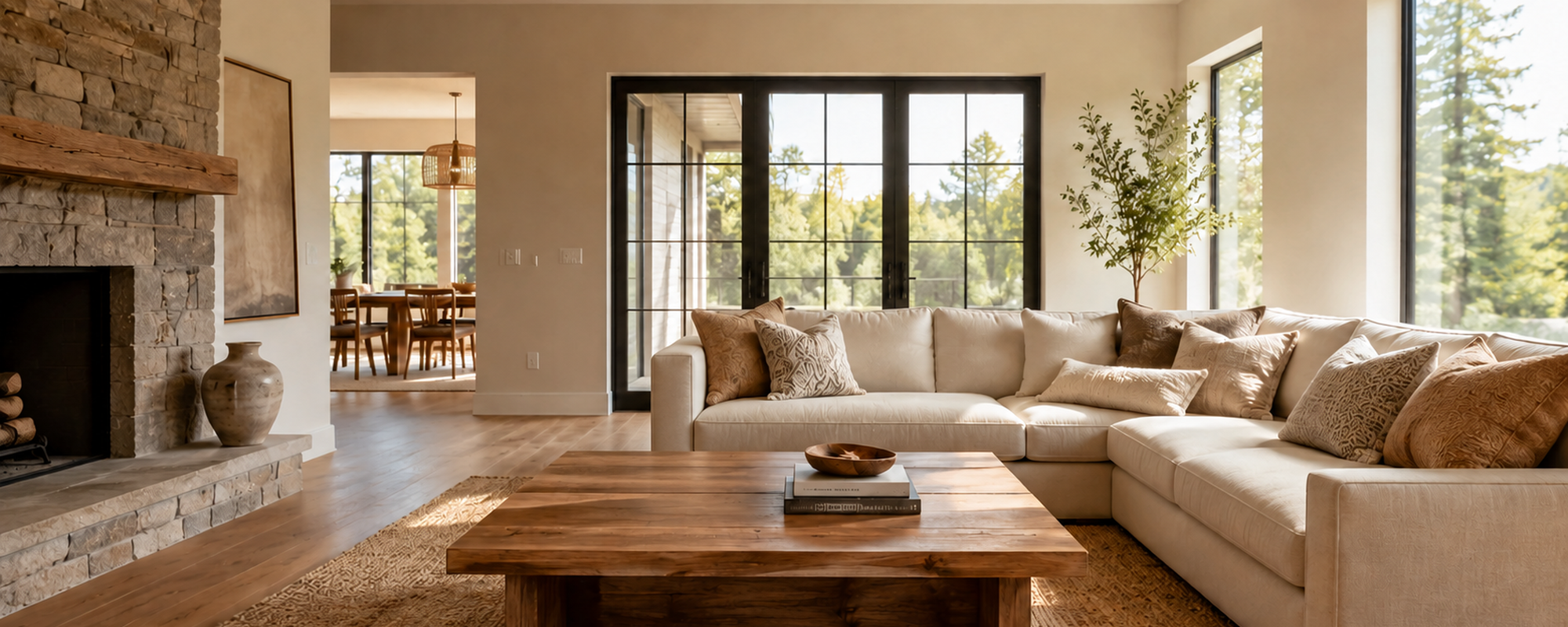
Modern rustic is one of those style names that sounds like a contradiction until you see it done well - and then it's obvious why it's become one of the most livable interpretations of rustic design for contemporary US homes. It takes the warmth and material honesty of traditional rustic style (covered in detail in our guide to rustic interior design) and pairs it with the restraint of modern design: cleaner lines, less ornamentation, and a lot more negative space. The result reads as considered rather than themed, which is exactly where traditional rustic can sometimes go wrong.
What Modern Rustic Actually Balances
At its simplest, modern rustic combines two things that don't naturally overlap: the sleek, pared-back silhouettes of modern design, and the warm, textured materials of rustic style. Modern design on its own can feel cold - all clean lines and neutral surfaces with little warmth. Traditional rustic on its own can feel heavy, especially in smaller or more contemporary spaces. Modern rustic solves both problems at once by keeping the shapes simple while letting the materials do the warming.
In practice, that means natural wood grain, exposed structural elements, and stone or leather show up against a backdrop of white or light walls, open floor plans, and furniture with cleaner, less ornate silhouettes than you'd see in a traditional rustic room. A modern rustic living room might have the same solid wood coffee table you'd find in a fully rustic one - but paired with a streamlined sofa instead of an overstuffed, heavily upholstered one, and set against plain white walls instead of exposed wood paneling.
How It's Different from Traditional Rustic
The clearest way to separate the two: traditional rustic layers texture and warmth generously, while modern rustic is more selective about where that texture shows up.
|
Traditional Rustic |
Modern Rustic |
|
|---|---|---|
|
Furniture silhouettes |
Heavier, more substantial, often with visible joinery detail |
Cleaner lines, simpler forms, less ornamentation |
|
Wall treatment |
Wood paneling, stone, exposed beams common |
Often plain white or lightly colored walls |
|
Color palette |
Warm browns and muted earth tones throughout |
Neutral base (white, gray) with wood as the main warm accent |
|
Material density |
Wood, stone, and metal layered generously |
One or two natural materials used with restraint |
|
Overall feeling |
Cozy, dense, traditionally cabin- or lodge-adjacent |
Airy, restrained, contemporary |
Neither is "more correct" - they're suited to different spaces and different comfort levels with texture. A mountain home leans naturally toward full rustic; a city apartment or a newer-build home often reads better in the modern rustic direction, because the architecture itself is already clean-lined and doesn't support heavy wood paneling or exposed structural beams.
The Elements That Make Modern Rustic Work
Cleaner silhouettes. Furniture with simple, straight lines and minimal ornamentation reads as modern even when the material itself - solid wood with visible grain - is unmistakably rustic. This is the single biggest lever in the style: swap an ornately carved or heavily distressed piece for one with a simpler profile, and a room shifts from traditional rustic toward modern rustic without changing the material palette at all.
A neutral base with wood as the accent. Where traditional rustic often uses warm tones throughout the room, modern rustic tends to keep walls, larger upholstery, and flooring in a neutral palette - white, light gray, or soft greige - and lets the wood furniture carry the warmth on its own. This keeps the room from feeling monochromatically brown, which is a common way rustic rooms tip into feeling dated rather than warm.
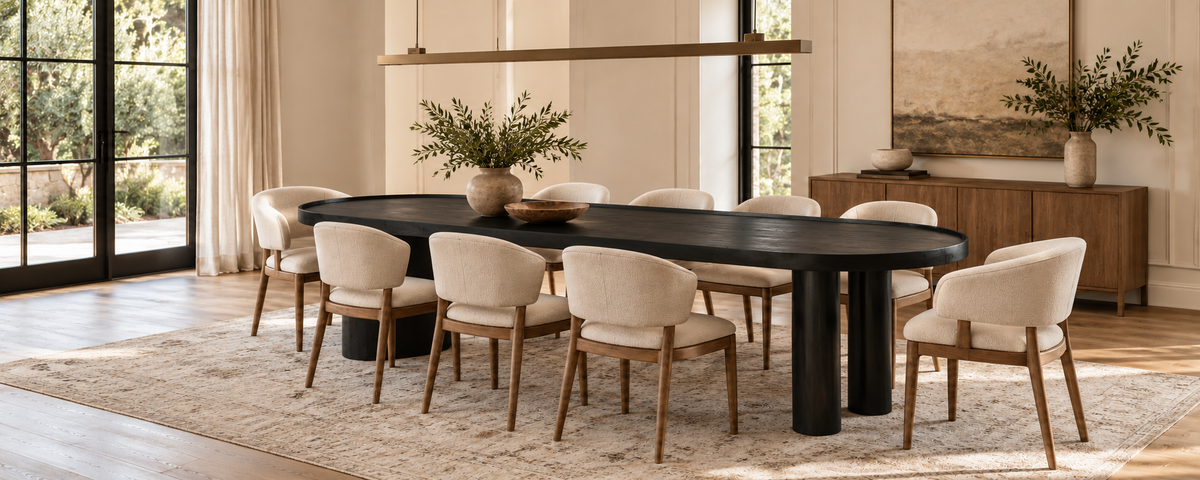
Texture used with restraint. Modern rustic rooms typically commit to one or two natural materials rather than several. A wood dining table and a jute rug might be the only two textural elements in an otherwise clean, neutral room - and that restraint is what keeps the space feeling curated rather than themed.
Wood tone as the connective thread. Because modern rustic rooms use less overall texture, the wood tone itself carries more visual weight. Consistent, warm wood tones across the furniture in a room - even if the pieces themselves are quite different in shape - help hold a modern rustic space together.
How to Avoid Turning Modern Rustic into Farmhouse or Industrial
This is the most common way modern rustic gets muddled, and it's worth being specific about the difference:
Farmhouse drift happens when white shiplap, apron sinks, and vintage-Americana details start creeping in. Modern rustic doesn't require - or particularly want - farmhouse's specific decorative vocabulary. If a room starts accumulating black metal signage, mason jars, or barn-door hardware, it's sliding toward farmhouse rather than staying modern rustic.
Industrial drift happens in the opposite direction - too much exposed metal, concrete, and cold surfaces without enough warm wood to balance them. Industrial style shares modern rustic's clean lines and open-plan sensibility, but it leans on steel, brick, and raw concrete rather than wood as the primary material. If a modern rustic room starts feeling more like a converted warehouse than a warm home, it's worth adding back a wood piece and removing a metal one.
The reliable way to stay in modern rustic territory: keep wood as the dominant natural material, keep the color palette neutral rather than either stark industrial gray or farmhouse white-and-black, and keep furniture silhouettes simple rather than either heavily distressed (rustic/farmhouse) or starkly minimal metal-and-glass (industrial).
Where This Style Works Best
Modern rustic tends to suit newer-build apartments and homes particularly well, since the architecture - clean walls, larger windows, open floor plans - already leans modern, and adding warm wood furniture is a lighter lift than trying to layer full traditional rustic texture into a space that wasn't built for it. It's also a natural fit for anyone who likes the warmth of rustic style but finds the fuller, more layered version too heavy or too themed for their taste.
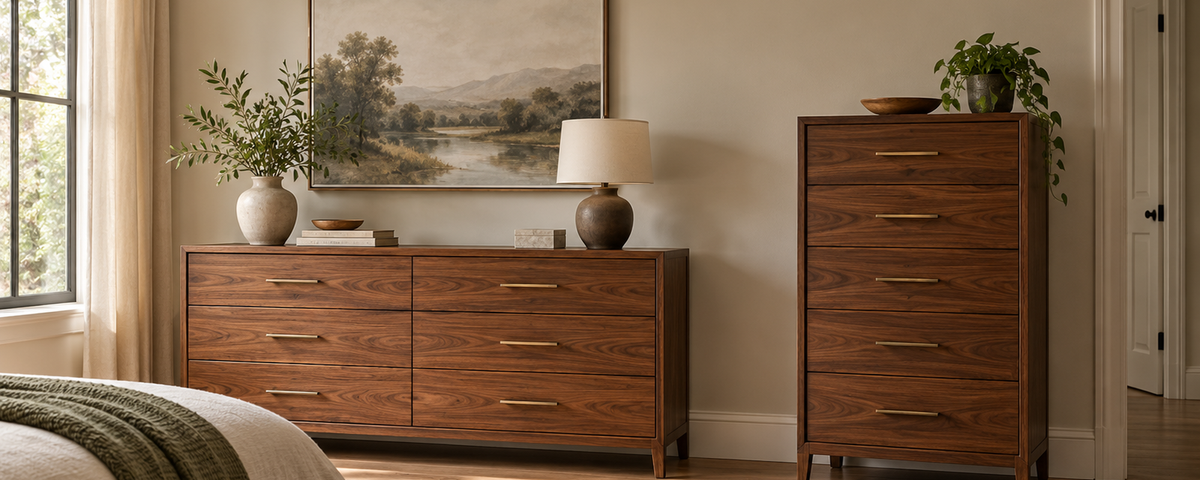
In a studio or one-bedroom apartment, modern rustic often shows up as a single strong wood anchor piece - a bed frame or a coffee table - set against otherwise plain walls and simple furniture, rather than an attempt to rework the whole space. In a larger open-plan home, it can extend further: a wood dining table, a matching sideboard, and consistent wood tones across the living and dining areas, still paired with clean-lined seating and a neutral wall color to keep the "modern" half of the equation intact. The scale changes; the underlying balance between restraint and warmth doesn't.
How to Shop for Modern Rustic Furniture
A few practical things to look for when actually buying pieces for a modern rustic room, rather than just referencing the style in the abstract:
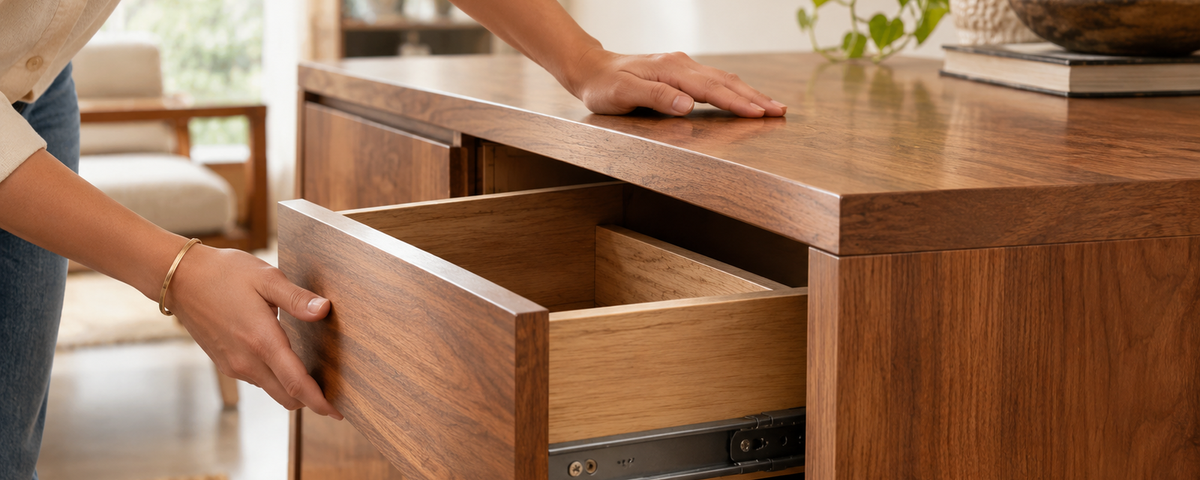
Look at the joinery, not just the wood tone. Two pieces can use the same wood and read completely differently depending on how they're built. Simple, clean joints - straight legs, minimal visible hardware, no heavy carving - push a piece toward modern rustic. Elaborate turned legs, ornate detailing, or heavy distressing push it toward traditional rustic instead, even in the same wood.
Choose a finish that shows grain without looking raw. A finish that's too glossy fights the material honesty rustic style is built on; a finish that's completely raw or unsealed can look unfinished rather than intentional in a otherwise polished modern room. A natural or lightly matte finish that still lets the grain read clearly is usually the better fit.
Don't buy every piece in the same wood tone. A room where every single piece of furniture matches exactly can start to look like a matched showroom set rather than a considered space. A little variation - a slightly warmer tone on one piece, a slightly lighter one on another - reads as more collected and less like everything came from one box.
Let one piece do the "rustic" work, and keep the rest simple. You don't need every item in the room to carry heavy texture. A single strong wood piece - a bed frame, a dining table, a sideboard - paired with simpler, more neutral supporting furniture usually captures the style better than trying to make every piece equally rustic.
Modern Rustic Interior Design FAQ
What is modern rustic interior design?
Modern rustic pairs the clean lines and restrained color palette of modern design with the warm, natural materials of rustic style - typically wood with visible grain, one or two other natural textures, and a neutral background rather than a fully warm-toned room.
How is modern rustic different from regular rustic?
Traditional rustic layers multiple natural materials generously against a warm color palette. Modern rustic is more selective - one or two natural materials, simpler furniture silhouettes, and a neutral base with wood as the main warm accent, rather than warmth throughout the whole room.
Does modern rustic work in a small apartment?
Yes, often better than fuller rustic style does, since modern rustic's restraint and clean lines suit smaller spaces well. A solid wood coffee table or bed frame against light walls, without heavier layered texture, is an easy way to bring the style into a compact room.
Share:
How to Protect Hardwood Floors From Heavy Wood Furniture
What Size Rug Goes Under a Dining Table?