
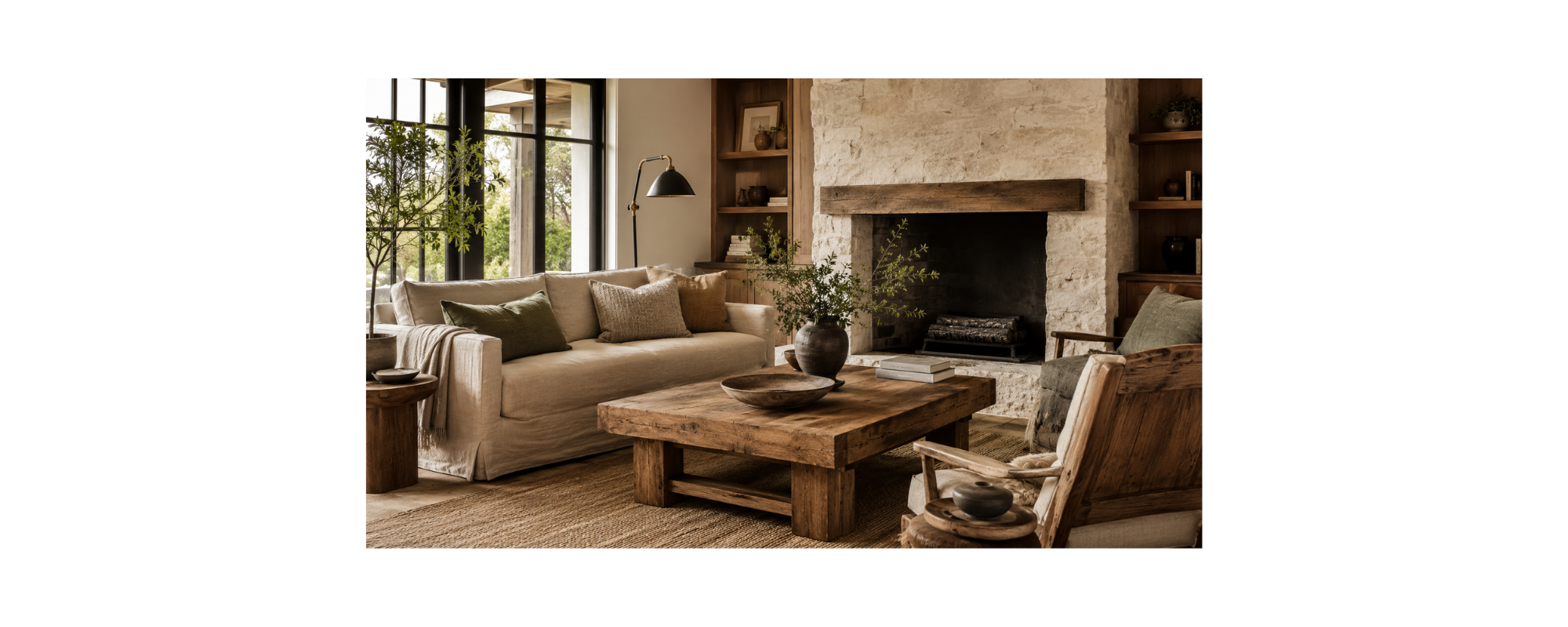
"Rustic" gets used loosely enough in home decor that it's easy to assume it means anything with exposed wood and a plaid throw pillow. It doesn't, exactly - and the loose usage is part of why so many rooms that aim for rustic end up looking either like a themed cabin rental or like nothing in particular. Rustic interior design is a real, definable style with its own logic, and understanding that logic is what separates a room that feels rustic from one that just has some wood furniture in it.
What Actually Defines Rustic Interior Design
At its core, rustic design is about honesty of material. Wood that shows its grain instead of hiding it under a high-gloss finish. Stone left rough instead of polished to a mirror shine. Metal that's allowed to look like metal - iron, brass, or steel with some texture and age to it - rather than chrome trying to disappear into the background.
The style traces back to a genuinely American tradition: the simple, practical homes built by 19th-century homesteaders and ranchers, where furniture and finishes were made from whatever natural materials were on hand, not chosen for show. That practical, unfussy origin is still the heart of the style today, even in a downtown apartment nowhere near a ranch. A rustic room isn't trying to look expensive or polished - it's trying to look honest, warm, and a little imperfect on purpose.
A few things reliably show up in a well-executed rustic room:
-
Natural wood with visible grain and texture - the more the material looks like it came from a tree, the more rustic it reads
-
A warm, muted color palette - think browns, warm grays, cream, and deep greens, rather than bright or saturated color
-
Non-shiny metals - matte black iron, aged brass, or worn steel instead of polished chrome
-
Textured natural fabrics - linen, wool, jute, and leather, instead of silk or high-shine synthetics
-
A sense of history - pieces that look like they've been lived with, not pieces still in their showroom finish
What rustic design deliberately avoids is just as telling: ornate detailing, mirrored or lacquered surfaces, anything that reads as precious or fragile. A rustic room should feel like you could put your feet up in it.
Rustic vs. Farmhouse: What's the Actual Difference
These two get treated as interchangeable constantly, and it's a fair mistake to make, because farmhouse style borrows heavily from rustic principles. But they're not the same thing, and the difference matters if you're trying to actually achieve one or the other.
Farmhouse is a specific, fairly narrow aesthetic - white or cream walls, shiplap, apron-front sinks, black metal accents, and a particular vintage-Americana visual language that became especially popular through a specific wave of home-renovation shows. It has a recognizable "look" that you either match or you don't.
Rustic is broader. It's less a specific look and more a set of material principles - natural, textured, unpolished - that can show up inside many different styles. You can find rustic elements in a Western ranch house, a Scandinavian cabin, a mountain lodge, or a Southwestern adobe home, and none of those rooms would necessarily read as "farmhouse." A rustic room can lean warm and traditional, or it can lean clean and contemporary (more on that distinction in our companion guide to modern rustic interior design - farmhouse really only points in one direction.
The simplest way to think about it: farmhouse is a style. Rustic is a material philosophy that many styles, including farmhouse, borrow from.

How Natural Materials Work Together
The trick to rustic design isn't piling on natural materials - it's balancing them so the room doesn't tip into "too much of one thing." A few pairing principles help:
Contrast weight with lightness. A heavy wood dining table reads best against lighter dining chairs, not another heavy piece. If every element in the room is equally substantial, the space starts to feel dense rather than warm.
Mix wood tones deliberately, not accidentally. Rustic rooms often combine two or three wood tones - a warmer walnut piece next to a lighter oak one, for instance - which reads as collected-over-time rather than matched-from-a-catalog. The mistake to avoid is mixing wood tones that clash in undertone (a very orange-toned wood next to a very gray-toned one tends to fight rather than complement).
Let stone and metal play a supporting role, not the lead. A stone fireplace surround or a set of iron light fixtures adds texture and grounding, but a room built entirely around stone and iron tends to feel cold rather than warm. Wood should generally carry the room, with stone and metal as accents.
Use textiles to soften hard surfaces. Wool throws, linen upholstery, and woven baskets exist to keep a room full of wood and stone from feeling austere. This is often the difference between a rustic room that feels cozy and one that feels like a display.
Where Solid Wood Furniture Fits
Solid wood furniture is genuinely the backbone of rustic design, more than any other single element - which is part of why it's worth choosing carefully rather than as an afterthought.
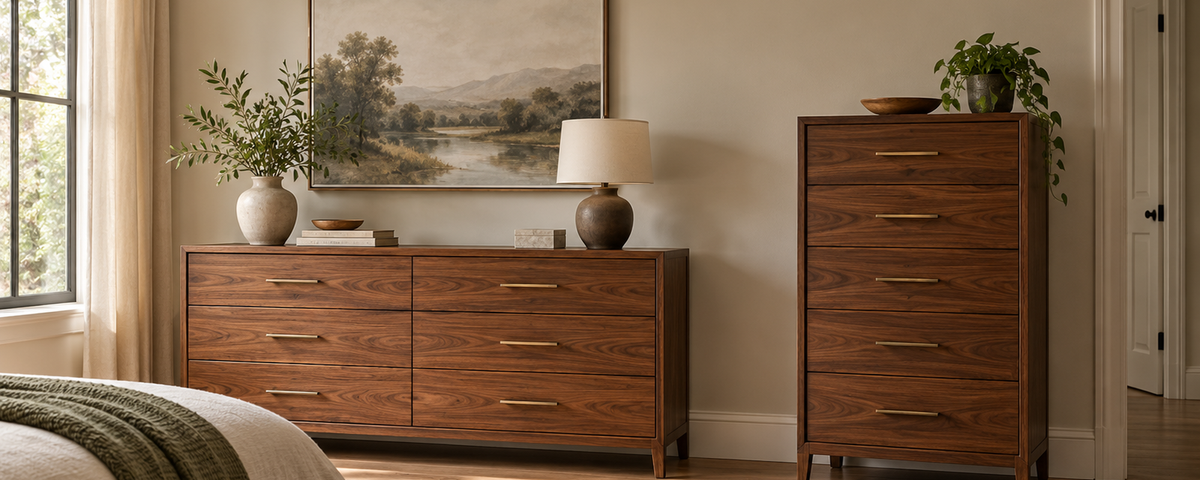
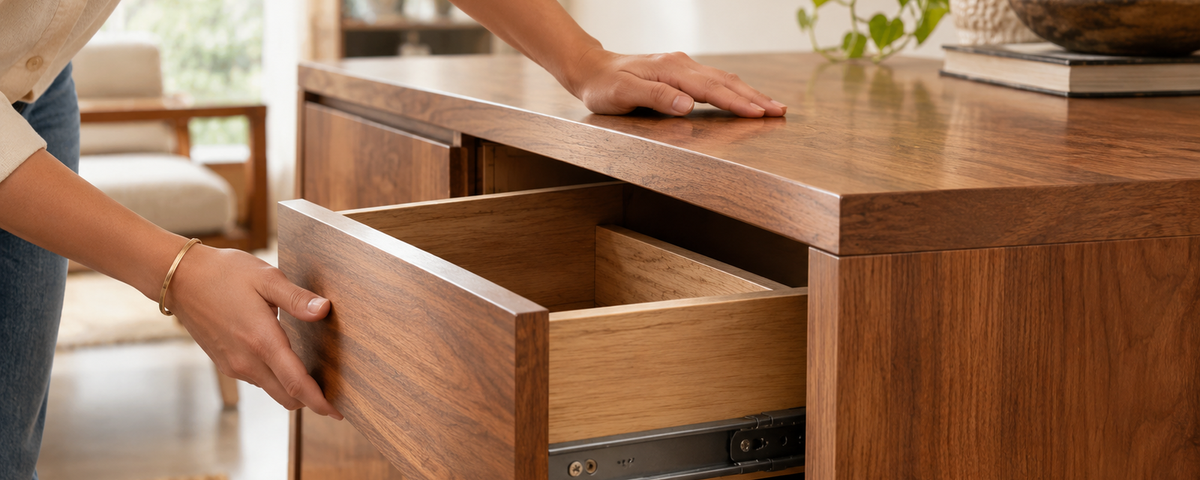
The anchor pieces in a rustic room tend to be the largest, most structural items: a bed frame, a dining table, a sideboard, a coffee table. These are the pieces where visible wood grain and an honest, unfussy joinery style do the most visual work, because they're the largest surfaces in the room. A rustic room with a laminate dining table and a few rustic-looking accessories around it will never read as convincingly as one built around a single, genuinely solid wood table, even a modest one.
This is also where rustic rewards investing in fewer, better pieces rather than more, smaller ones. One well-made solid wood sideboard does more for a room's rustic credibility than a dozen decorative accessories.
How to Avoid Making a Rustic Room Look Themed or Overly Heavy
This is where rustic design most often goes wrong, and it's worth naming directly: a room can follow every rule above and still end up looking like a cabin-themed rental rather than a genuinely well-designed space. A few habits prevent that:
Don't commit to a single motif. Antlers, horseshoes, or a "mountain lodge" theme applied wall-to-wall reads as costume rather than style. Rustic works because of its materials, not because of literal cabin iconography - a room can be unmistakably rustic without a single antler in it.
Leave visual breathing room. Rustic rooms with wood on every surface - floor, ceiling beams, furniture, and walls all at once - tend to feel heavy rather than warm. Choosing where wood shows up (say, the furniture and the floor, but not a fully wood-paneled ceiling) keeps the room from closing in on itself.
Balance dark, heavy pieces with lighter elements. A large, dark wood dining table benefits from lighter-colored walls, a pale rug, or lighter dining chairs around it. Pairing heavy furniture with an equally dark, heavy room compounds the density rather than balancing it.
Mix in a few non-rustic pieces. A single contemporary light fixture or a piece of modern art in an otherwise rustic room keeps the space from feeling like a period recreation. This is the same instinct that makes modern rustic design work so well as a variation - a small dose of contrast keeps rustic from tipping into costume.
Rustic Style in Contemporary US Homes
Rustic doesn't require a cabin, a ranch, or even a house with exposed structural beams. In a city apartment, the same principles apply at a smaller scale: a solid wood bed frame, a textured wool throw, a few pieces with visible grain and honest joinery, and a warm neutral palette will read as rustic in a one-bedroom apartment just as effectively as in a mountain lodge - the style is about material choices, not square footage.
The most common adjustment for apartment-scale rustic is simply editing down. A full ranch-house rustic room might use six or seven natural materials at once; an apartment version usually reads better with two or three done well - a solid wood bed frame, a woven rug, and a handful of natural-fiber textiles - rather than attempting the full range in a smaller space.
Rustic Interior Design FAQ
What is rustic interior design?
Rustic interior design is a style built around natural, minimally processed materials - wood with visible grain, unpolished stone, matte metal, and textured natural fabrics - in a warm, muted color palette. It traces back to practical 19th-century homestead and ranch interiors and prioritizes material honesty over polish or ornamentation.
Is rustic the same as farmhouse?
No. Farmhouse is a specific aesthetic (shiplap, apron sinks, a particular vintage-Americana look), while rustic is a broader set of material principles that can appear within farmhouse, but also within Western, mountain-lodge, Scandinavian, and other styles.
Does rustic style work in a modern apartment?
Yes. Rustic is defined by material choices - natural wood, textured fabric, unpolished finishes - rather than by architecture, so it scales down comfortably to apartment-sized rooms. The main adjustment is using fewer materials well rather than the full range a larger home might support.
What furniture is essential to a rustic room?
The large, structural pieces do the most work: a solid wood bed, dining table, sideboard, or coffee table with visible grain and honest construction. These anchor pieces matter more to the style than smaller decorative accessories.

Share:
Dining Bench vs. Dining Chairs: Which Is Better for Everyday Use?
How to Protect Hardwood Floors From Heavy Wood Furniture