
Mango Wood vs. Acacia Wood Bed Frames: Which Is the Better Buy?
If you are shopping for a solid wood bed frame and paying attention to premium furniture materials, you have probably noticed two wood species appearing again and again: mango wood and acacia wood.
Both are genuine solid hardwoods. Both are considered sustainable. Both produce beautiful, durable furniture designed for long-term everyday use. Both also appear across Oak & Loom’s solid wood bed frame collection with free shipping across the contiguous United States.
So which one is actually the better buy?
If you want maximum hardness, stronger dent resistance, and bold grain contrast, acacia wood is usually the more practical choice. If you prefer warmth, natural variation, and exceptional sustainability provenance, mango wood often feels richer and more character-driven.
The real answer depends on what matters most to you - durability, grain pattern, maintenance, sustainability, bedroom style, or long-term aging behavior.
This guide breaks down the complete mango wood vs. acacia wood bed frame comparison: hardness ratings, grain characteristics, moisture resistance, sustainability credentials, maintenance expectations and the specific bedroom styles where each wood genuinely performs best.
“There is no best wood. There is only the right wood for the right piece in the right room - and the difference between knowing and guessing is understanding what you are actually comparing.”
Mango Wood Bed Frames - The Complete Profile for US Buyers
What Is Mango Wood?
Mango wood comes from the mango tree (Mangifera indica) - one of the most widely cultivated fruit trees across tropical regions, especially South and Southeast Asia.
Its sustainability story is one of the strongest among furniture hardwoods. Mango trees are harvested for timber only after completing their commercial fruit-bearing life cycle, typically after 40-60 years. At that stage, older trees are naturally replaced with younger productive orchards.
Instead of becoming agricultural waste, the wood is repurposed into solid hardwood furniture - with no dedicated deforestation required.
This makes mango wood one of the most transparently sustainable choices for buyers who care about responsible sourcing and long-term natural materials.
Mango Wood Physical Properties
Janka Hardness: Approximately 1,070 lbf - harder than American cherry, comparable to walnut, and significantly harder than pine.
Grain Character: Highly varied and naturally expressive. Some sections appear straight-grained, while others develop interlocking or wavy movement. Natural mineral streaks can introduce subtle green, grey, or pink undertones that make every piece visually unique.
Color: Warm golden-brown tones that deepen gradually over time, developing a rich natural patina with age and oiling.
Dimensional Stability: Good stability under normal indoor humidity conditions. Like all solid hardwood furniture, mango wood benefits from basic seasonal care and humidity balance.
What Mango Wood Feels Like in a Bedroom
Mango wood creates warmth in a way that feels personal rather than overly polished. Because the grain varies naturally from piece to piece, every bed frame carries its own individual character.
It works especially well in rustic, bohemian, eclectic, and transitional interiors - spaces built around layered textures, natural materials, and relaxed warmth.
A mango wood bed frame pairs beautifully with linen bedding, warm neutrals, woven textures, and softer lighting. The overall effect feels organic, collected, and intentionally lived-in rather than overly staged.
Bellflower Solid Wood Hand-Carved Bed - Solid Mango Wood
Hand-carved solid mango wood with a softly distressed finish that highlights the natural warmth and grain variation of the species. Every panel carries unique tonal movement and organic character, meaning no two pieces look exactly alike.

What Is Acacia Wood?
Acacia wood comes from the Acacia genus - a large family of hardwood species found across Australia, Africa, and Asia. Most furniture-grade acacia used in premium bed frames comes from responsibly managed plantations grown specifically for timber production.
Well-managed acacia plantations can be FSC-certified, making acacia a strong option for buyers who want verified sustainability standards and responsibly sourced hardwood furniture.
When shopping for acacia furniture, FSC certification is worth looking for specifically - it verifies the supply chain rather than relying on general sustainability claims.
Acacia Wood Physical Properties
Janka Hardness: Typically between 1,700 and 2,300 lbf - significantly harder than mango wood, harder than red oak, and among the most durable furniture hardwoods commonly used in bedroom furniture.
Grain Character: Bold, dramatic, and high-contrast. Acacia often displays strong linear grain movement with visible contrast between darker heartwood and lighter sapwood, creating a more architectural and visually striking appearance than mango wood.
Color: Rich medium-to-dark brown tones with natural tonal variation throughout the same plank. This contrast is one of acacia wood’s most recognizable and desirable visual traits.
Dimensional Stability: Excellent overall stability. Acacia’s density and natural oil content help reduce moisture-related movement, making it especially reliable in homes with noticeable seasonal humidity changes.
What Acacia Wood Looks Like in a Bedroom
Acacia wood creates a stronger visual statement than mango wood. The grain itself becomes part of the room’s design language - bold, grounded, and naturally dramatic.
It works especially well in contemporary, transitional, organic modern, and nature-forward interiors where the furniture is intended to feel substantial and visually confident.
An acacia wood bed frame is also one of the most practical long-term choices for everyday use. Its superior hardness helps resist dents, surface wear, and visible marking far better than softer hardwood species.
For households with children, pets, or heavier daily use, that added durability becomes a meaningful long-term advantage.
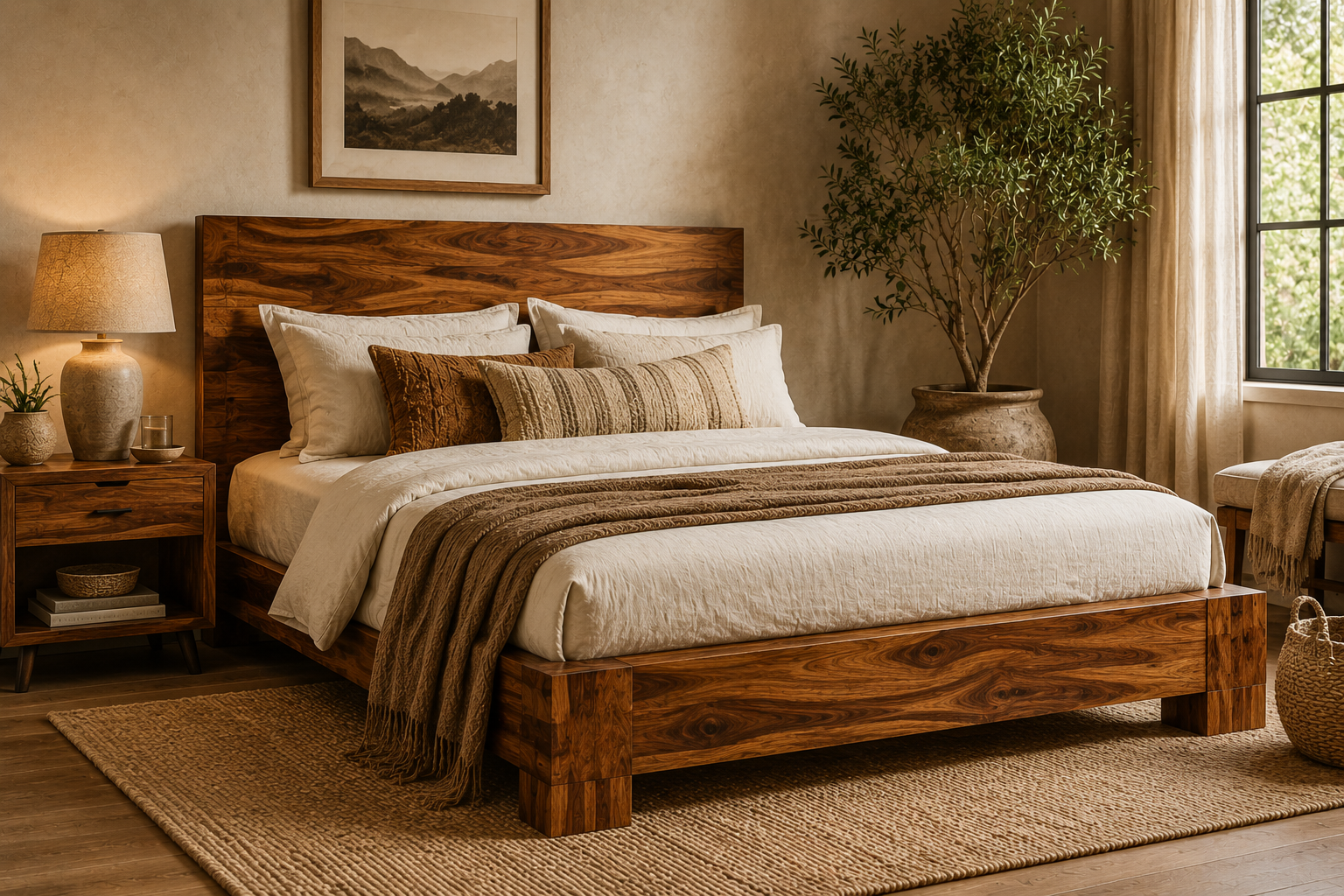
Blue Ridge Solid Wood Platform Bed - Solid Acacia Wood
Crafted from solid acacia wood with bold natural grain contrast and a strong architectural presence. The rich tonal variation and dense hardwood construction make it ideal for contemporary, transitional, and nature-forward bedrooms designed for long-term everyday use.

Mango Wood vs Acacia Wood Bed Frame - Complete Side-by-Side Comparison
|
Characteristic |
Mango Wood |
Acacia Wood |
|
Janka Hardness |
1,070 lbf |
1,700-2,300 lbf |
|
Grain Character |
Warm, varied, naturally unique |
Bold, dramatic, high-contrast |
|
Color Range |
Golden-brown, amber, mineral streaks |
Rich brown heartwood with lighter sapwood contrast |
|
Sustainability |
Exceptional - repurposed after fruit-bearing lifecycle |
High - plantation-grown and FSC-certifiable |
|
Moisture Resistance |
Good - benefits from seasonal oiling |
Excellent - natural oils improve stability |
|
Daily Wear Resistance |
Good for standard use |
Excellent - highly dent-resistant surface |
|
Best Bedroom Style |
Rustic, bohemian, eclectic, transitional |
Contemporary, transitional, organic modern |
|
Patina Over Time |
Develops deeper golden warmth |
Develops richer contrast and depth |
|
Climate Performance |
Performs well in most indoor environments |
Excellent in fluctuating humidity conditions |
|
Maintenance Needs |
Annual oiling + basic seasonal care |
Annual oiling with slightly lower upkeep needs |
Mango Wood vs Acacia Wood Bed Frame - The Real Difference That Matters
The mango wood vs. acacia wood comparison ultimately comes down to one specification more than any other: Janka hardness.
Acacia rates between 1,700–2,300 lbf, making it roughly 60–115% harder than mango wood at approximately 1,070 lbf.
In real-world bedroom use, that difference is noticeable.
A dropped water bottle, luggage corner, vacuum attachment, or accidental impact that might leave a visible dent on mango wood may leave only a minor mark - or none at all - on an acacia wood frame.
For households with children, pets, or heavier everyday use, acacia’s superior hardness becomes a meaningful long-term advantage. The surface simply resists denting, marking, and wear more effectively over time.
Mango wood still offers more than enough durability for standard bedroom use. For buyers who value warmth, natural variation, and a softer visual character over maximum hardness, mango often feels more inviting and expressive as a material.
Mango Wood vs. Acacia Wood - Sustainability
Both mango wood and acacia wood earn strong sustainability credentials, but for different reasons.
Mango Wood Sustainability
Mango wood has one of the most transparent sustainability stories in the furniture industry. Mango trees are harvested only after completing their productive fruit-bearing life cycle, allowing older orchard trees to be repurposed into solid hardwood furniture instead of becoming agricultural waste.
Because the wood comes from an existing agricultural system rather than dedicated forest harvesting, mango wood is widely considered an exceptionally responsible material choice.
Acacia Wood Sustainability
Acacia wood sustainability depends more heavily on sourcing practices. Responsibly managed plantation-grown acacia - especially FSC-certified acacia - represents a strong and credible sustainability standard for hardwood furniture.
When purchasing acacia furniture, FSC certification is worth looking for because it verifies responsible forest management and supply-chain practices.
For buyers who prioritize maximum transparency in material origin, mango wood often feels more naturally traceable. For those who specifically want certified responsibly managed timber, FSC-certified acacia is an excellent option.
Georgetown Solid Wood Platform Bed - Solid Acacia Wood
Crafted from solid acacia wood with integrated storage and naturally bold grain character. The dense hardwood construction delivers exceptional durability while the clean, grounded silhouette suits contemporary, transitional, and organic modern bedrooms beautifully.

Which One Should You Choose?
Choose a Mango Wood Bed Frame If:
You love natural warmth and individual character.
The grain variation in mango wood makes every piece visually unique. No two bed frames look exactly alike, which gives the material a more personal and collected feel than more uniform hardwoods.
Your bedroom aesthetic leans rustic, bohemian, eclectic, or transitional.
Mango wood’s warm golden-brown tones and natural variation create a softer, more relaxed atmosphere that works beautifully with layered textures and organic interiors.
Sustainability transparency matters to you.
Mango wood’s post-fruit-harvest origin makes its sustainability story unusually traceable and easy to understand compared to many other furniture hardwoods.
You prefer a softer, more expressive wood character.
Mango wood feels warmer and more organic visually, making it especially appealing in bedrooms designed around comfort, texture, and individuality rather than sharp contrast or dramatic grain patterns.
Choose an Acacia Wood Bed Frame If:
You want maximum hardness and long-term wear resistance.
Acacia is significantly harder than mango wood, which helps it resist dents, surface marking, and everyday wear more effectively over time. For households with children, pets, or heavier daily use, that added durability becomes a meaningful practical advantage.
Your bedroom aesthetic leans contemporary, modern, or transitional.
Acacia’s bold grain contrast creates a stronger visual statement than mango wood. It works especially well in interiors that favor cleaner lines, architectural forms, and more dramatic natural materials.
Your home experiences noticeable seasonal humidity changes.
Acacia’s density and natural oil content make it especially stable across changing indoor conditions, including humid summers and drier winter environments.
You prefer a bolder, more dramatic grain pattern.
The contrast between acacia’s darker heartwood and lighter sapwood creates a visually striking appearance that feels confident, grounded, and naturally expressive.
When Either Works Beautifully
Both mango wood and acacia wood are excellent choices for solid hardwood bed frames. With proper care, both can last for decades while developing a rich natural patina over time.
If your style sits somewhere between warm and contemporary - transitional, organic modern, or nature-inspired interiors - either material can work beautifully. In those cases, the better choice often comes down to the specific grain pattern, finish, and overall feeling of the piece rather than the wood species alone.
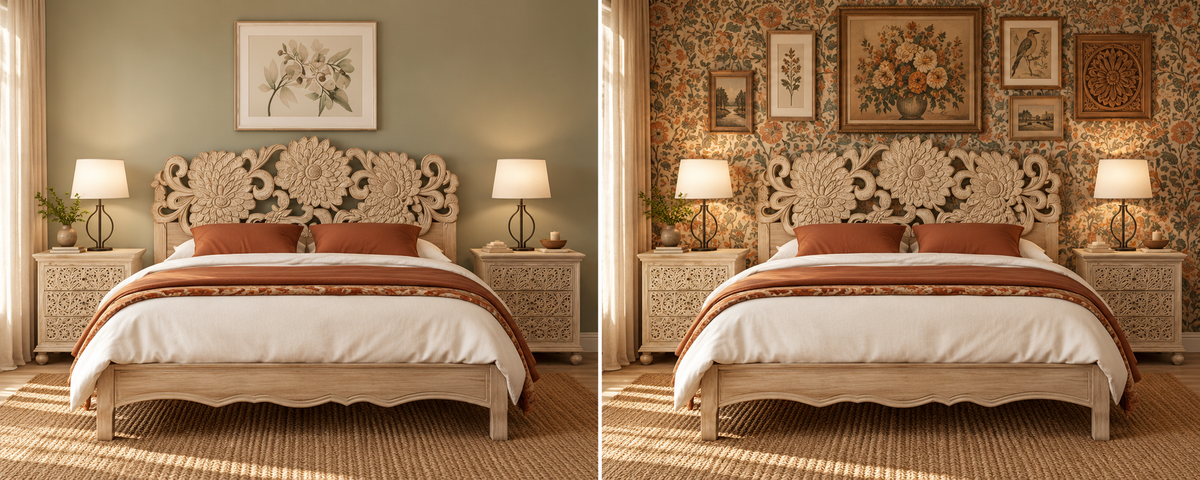
Traditional carved solid wood craftsmanship with rich natural warmth and timeless character. The detailed carving and organic wood texture create a bedroom centerpiece that feels collected, substantial, and deeply rooted in handcrafted design.

Conclusion
Ultimately, the right mango wood vs acacia wood bed frame depends on the balance between visual warmth, grain character, long-term durability, and everyday practicality.
Choose mango wood for its warmth, natural variation, sustainability story, and the softer, more relaxed atmosphere it creates naturally in rustic, eclectic, and transitional interiors.
Choose acacia wood for its superior hardness, dramatic grain contrast, long-term durability, and the bold, grounded presence it brings to contemporary and nature-forward spaces.
Either way, you are choosing a genuine solid hardwood capable of lasting for decades, developing a rich patina over time, and bringing the irreplaceable character of real natural wood into the bedroom.
At Oak & Loom, every mango wood and acacia wood bed frame is crafted from 100% solid hardwood with kiln-dried construction and traditional mortise-and-tenon joinery - never MDF or particleboard in structural components. Free shipping is available across the contiguous United States on every frame.
“The best wood is the one you want to wake up next to every morning. Both mango and acacia are worth that. The question is which one feels most like home to you.”
→ Browse mango and acacia solid wood bed frames:
oakandloom.com/collections/wooden-beds
→ Questions about wood species? Ask our team.
Frequently Asked Questions
Is mango wood or acacia wood harder for a bed frame?
Acacia wood is significantly harder than mango wood and resists dents and surface wear more effectively over time.
Its Janka hardness rating typically ranges between 1,700–2,300 lbf compared to approximately 1,070 lbf for mango wood. For households with children, pets, or heavier everyday use, acacia’s added hardness can be a meaningful long-term advantage.
For standard bedroom use, however, both woods offer excellent long-term durability and can last for decades with proper care.
Is mango wood a sustainable choice for furniture?
Yes - mango wood is widely considered one of the more sustainable hardwood choices used in furniture.
Mango trees are harvested only after completing their fruit-bearing life cycle, allowing older orchard trees to be repurposed into solid hardwood furniture rather than discarded as agricultural waste.
This gives mango wood a sustainability story that feels especially transparent and traceable compared to many other furniture hardwoods.
Which wood looks better in a master bedroom?
That depends entirely on the atmosphere you want the room to create.
Mango wood feels warmer, softer, and more organic because of its natural grain variation and golden-brown tones. Acacia wood feels bolder and more architectural due to its dramatic grain contrast and stronger visual movement.
For rustic, bohemian, or eclectic interiors, mango wood often feels more natural. For contemporary, organic modern, or nature-forward spaces, acacia wood usually creates the stronger visual statement.
Does mango or acacia wood require more maintenance?
Both woods require relatively similar maintenance.
A light application of furniture-grade wood oil once per year, along with stable indoor humidity levels, is usually enough to keep either material in excellent condition long term.
Acacia’s natural oil content and higher density make it slightly more resistant to moisture-related movement, but the practical maintenance difference between the two is fairly minimal in most homes.
Read: How to Care for a Solid Wood Bed Frame.
Can mango and acacia wood furniture be used together in the same bedroom?
Yes - both woods sit comfortably within a similar warm natural wood palette and can work beautifully together.
The key is consistency in finish and overall tone. Two natural finishes usually feel layered and intentional, while combining a very dark stain with a lighter natural finish creates stronger visual contrast.
When balanced carefully, mixing wood species can actually make a bedroom feel more collected and designer-driven.
Read: The Right Way to Mix Furniture Styles Without Your Home Looking Cluttered.
Does Oak & Loom offer both mango wood and acacia wood bed frames?
Yes - Oak & Loom offers both mango wood and acacia wood bed frames in its solid hardwood collection.
Every frame is built from 100% solid hardwood using kiln-dried construction and traditional mortise-and-tenon joinery, with no MDF or particleboard used in structural components.
Which mango wood vs acacia wood bed frame is better for long-term durability?
Acacia wood is generally the better choice for long-term dent resistance and heavy everyday use because of its higher hardness and denser surface structure. Mango wood, however, offers excellent durability for standard bedroom use while delivering a warmer and more naturally varied appearance.
Share:
What Mattress Works Best with a Solid Wood Slat Bed Frame? Complete US Buyer's Guide
How to Care for a Solid Wood Bed Frame Season by Season - Under 1 Hour a Year