
There is a particular kind of furniture that quietly holds a room together without ever asking for attention. The console table is exactly that - and it is also, paradoxically, one of the most frequently misused pieces in American homes. It arrives, gets pushed against a wall, receives a lamp and a vase, and stays exactly that way for years. Functional enough. Invisible in the best and worst sense.
The console table is capable of so much more than that. In an entryway, it is the first piece of furniture your guests interact with - the piece that sets the tone for everything that follows. In a living room, it can serve as the visual counterpoint to a sofa, anchoring the back of a seating arrangement with warmth and purpose. In a hallway, a dining room, a bedroom - each context draws out a different function and a different set of styling possibilities that most people never explore because no one has shown them how.
This guide does exactly that. Room by room, you'll learn how to style a solid wood console table so it looks intentional, balanced, and perfectly suited to its surroundings-whether it's in an entryway, living room, hallway, dining room, or bedroom. As you explore these ideas, browse Oak & Loom's living room furniture collection for complementary pieces that complete the space.
"A console table styled well doesn't look styled at all. It looks like it was always supposed to be there - and like the room would feel incomplete without it."
The Entryway: Your Console Table's Most Important Role
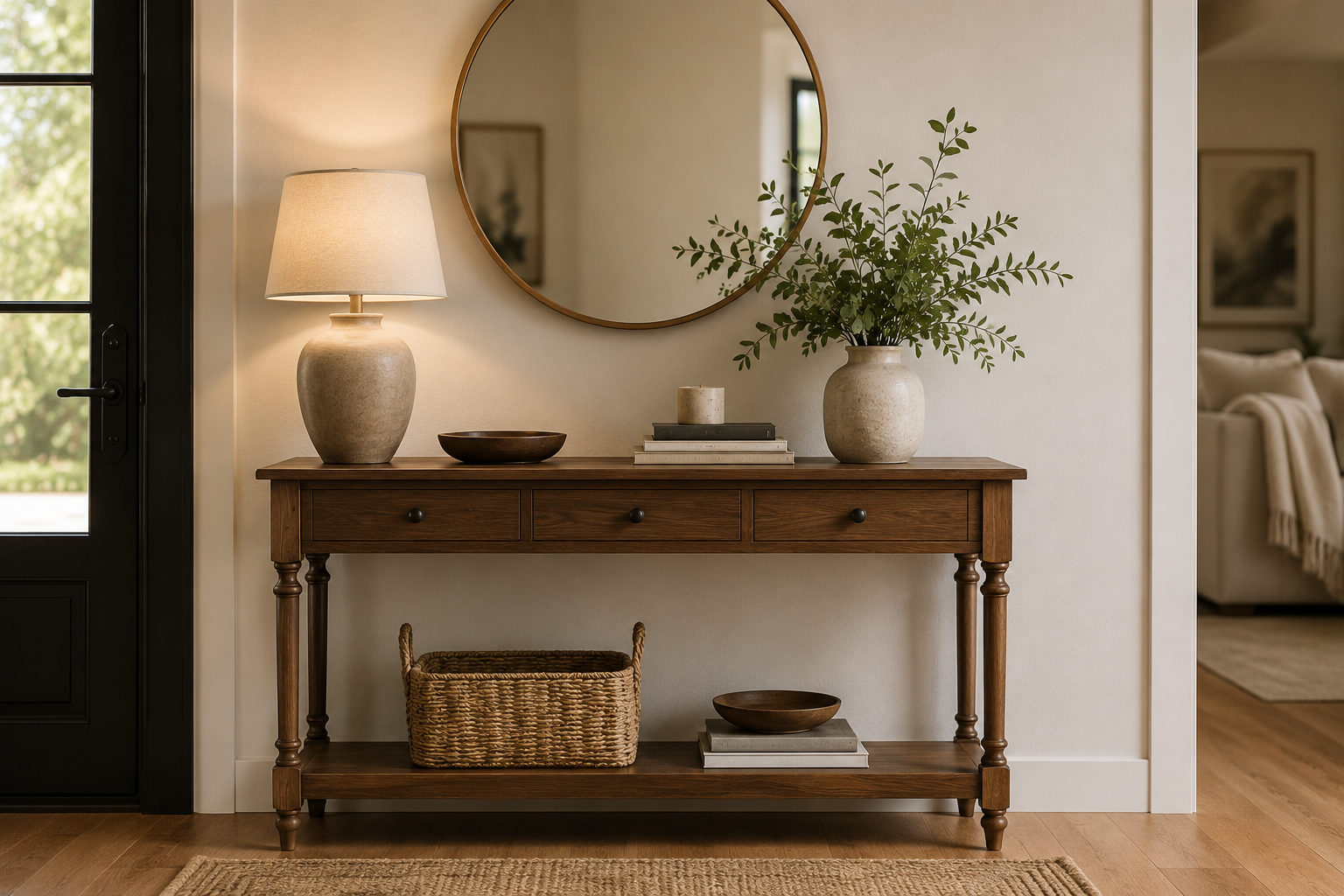
The entryway console table is the first piece of solid furniture your guests encounter when they walk through your door. Before they see your living room, your kitchen, your artwork - they see this. That first impression is set by the height of the surface, the visual weight of the frame, and the objects you choose to place on it.
The styling logic for an entryway console starts with function and builds upward. An entryway needs to do practical work - a place to set keys, drop mail, charge a phone. But the objects that serve those practical purposes don't have to look practical. A shallow ceramic bowl for keys reads as a design object as much as a functional one. A small tray for mail becomes an accessory. The lamp you add for evening light doubles as the room's primary decorative gesture.
Height is the first principle. A console table in an entryway should ideally stand between 30 and 36 inches tall-high enough to provide a comfortable drop zone for everyday essentials while remaining visually proportional to the wall above it. A mirror or artwork should be centered at approximately 57 to 60 inches from the floor, leaving 6 to 12 inches of space between the bottom of the frame and the console surface. These proportions create a balanced, intentional focal point rather than making the console feel like an afterthought.
The floor below the console deserves attention too. An open-base console table with visible legs - particularly one in solid carved wood - creates a visual line that carries through to the floor, making the entry feel taller. A small basket, a pair of boots styled simply, or a low plant beneath the console uses that floor space without cluttering it.

The Entryway Styling Formula
For those who want a clear, repeatable formula for an entryway console table that always looks finished:
Left anchor: A table lamp. The lamp should be proportional to the console-generally 24 to 28 inches tall for a standard 30 to 36-inch console table. Position the lampshade slightly below eye level so the light diffuses warmly throughout the entryway rather than projecting upward.
Center: One or two objects of varying height. A vase with stems - fresh or dried - provides vertical interest. A stack of two or three books provides horizontal interest and visual grounding. The contrast between vertical and horizontal elements in the center zone is what prevents the surface from looking flat.
Right anchor: Something functional disguised as décor-a tray, bowl, or small dish for everyday essentials like keys and mail. It should feel like an intentional part of the styling rather than an afterthought.
Wall above: A mirror is the most forgiving choice - it bounces light, makes the entry feel larger, and works with nearly any frame finish. Artwork works equally well but requires more consideration of scale and subject matter relative to the room beyond.
Floor below: Use this space intentionally. An empty floor beneath a console table often feels unfinished. A woven basket, a low indoor plant, or a small stool with a folded throw adds function, texture, and visual balance without creating clutter.
Pro Tip: Step back and view the console from the room's entrance. If one side feels noticeably heavier than the other, adjust the placement of objects until the arrangement feels visually balanced.
The Living Room: Behind the Sofa
Placing a console table directly behind a freestanding sofa - between the back of the sofa and the wall behind it - is one of the most underused furniture arrangements in American living rooms, and one of the most effective.
The back of a sofa is often a visual challenge in open-plan living spaces. When the sofa floats in the room, facing the television or fireplace, its rear is exposed-a broad upholstered surface that can look unfinished when viewed from the dining area, kitchen, or entryway. A console table positioned directly behind the sofa, with 1 to 3 inches of clearance, solves this immediately. It visually anchors the sofa, defines the seating zone, and provides a practical surface for lamps, books, and decorative objects.
The height of a console table used behind a sofa should ideally match or slightly exceed the sofa back - typically 30 to 34 inches. A console that sits significantly below the sofa back disappears visually. One that sits significantly above it creates an awkward relationship between the two pieces.
Styling a console table behind a sofa differs from styling one in an entryway because it is viewed primarily from across the room rather than up close. That means accessories should have greater visual presence. Choose a large table lamp instead of a small one, taller vases or sculptural décor instead of small dishes, and books stacked horizontally rather than standing vertically. From 10 to 15 feet away, the console becomes part of the room's overall composition, so every object should be chosen with scale in mind.
"The space behind a sofa is one of the most valuable - and most neglected - pieces of real estate in a living room. A console table claims it with purpose."

The Hallway: Function and Flow
A hallway console table has to work harder than any other placement in the home because it operates within a space defined by movement rather than rest. People pass through hallways - they don't linger - which means the console table needs to do its styling work quickly and clearly, without visual clutter that slows the eye or interrupts the flow.
The most important principle for a hallway console table is proportion. In hallways less than 5 feet wide, choose a console with a depth of 12 to 14 inches to maintain comfortable walking clearance. Anything deeper can interrupt the natural traffic flow. Most standard console tables measure 12 to 16 inches deep, making them suitable for the majority of US hallways. If your hallway is 6 feet wide or more, you have greater flexibility to choose a deeper console and style it more generously without the piece feeling intrusive.
Lighting is the hallway console's most important styling element because hallways are often the darkest areas of a home. A table lamp doesn't just provide decoration-it transforms the atmosphere of the space. A warm LED bulb at table height creates a welcoming glow that makes the hallway feel more inviting from the moment you enter.
Keep the surface clear of small items. A hallway console styled with too many small objects - small frames, small dishes, small plants - looks busy when viewed from the end of the hallway. Choose 2 to 3 objects with scale, and let the space around them do the visual work.

The Dining Room: The Sideboard Alternative
Not every dining room has room for a full sideboard - or needs one. A console table against the dining room wall serves many of the same functions as a sideboard at a fraction of the visual weight: a surface for serving dishes during meals, a display surface between meals, and a piece that grounds the dining room wall without filling it.
The styling logic for a dining room console is driven by its relationship with the dining table. The two pieces should share at least one material or finish-not necessarily match, but complement each other. For example, a solid mango wood dining table paired with a solid wood console in a similar tone creates a cohesive look while allowing each piece to retain its own character.
Between meals, a dining room console styled with a low floral arrangement or plant at its center, flanked by candles or lanterns of varying heights, creates a warm secondary focal point in the room that balances the dining table without competing with it. During gatherings, the surface becomes functional - a serving station, a drinks area, a place for desserts - which means the styling objects need to be moveable and the surface itself needs to be clear of anything permanently fixed.
A solid wood sideboard offers the same visual presence while providing additional enclosed storage. If storing dinnerware, linens, or serving pieces is important, compare both options before deciding which best suits your dining room.
The Bedroom: An Unexpected Application
A console table in the bedroom is not a common choice - and that is precisely why it works so well when it is made deliberately. In a master bedroom without a dedicated dressing area, a console table against the wall serves as a dressing table surface - a place for a mirror, a tray of jewelry and perfume, and the objects of a morning routine that otherwise crowd a nightstand or bathroom counter.
In a larger master bedroom, a console table placed at the foot of the bed or along a side wall creates a secondary surface that reduces visual pressure on the nightstands and gives the room a more layered, intentional feel. A table lamp on the console adds a third light source, complementing ceiling lighting and bedside lamps with a softer ambient glow that makes the bedroom feel warmer and more relaxing in the evening.
The styling in a bedroom console leans more personal than any other placement. This is the surface for the objects that matter to you specifically - a small plant that you like looking at from bed, a stack of books you are working through, a candle in a scent you have chosen for the room. The bedroom console doesn't need to perform for guests. It performs for you, every morning and every evening, and the styling should reflect that.
Pair a bedroom console with pieces from Oak & Loom's solid wood bedroom furniture collection. Combining it with a solid wood nightstand or wooden dresser in a complementary finish creates a cohesive material palette across the room without making the furniture feel overly matched.

The Console Table Styling Comparison: Room by Room
|
Room |
Primary Function |
Ideal Height |
Key Styling Element |
What to Avoid |
|
Entryway |
First impression + drop zone |
30–36 inches |
Mirror + table lamp |
Too many small accessories |
|
Behind sofa |
Define the seating zone |
Match or slightly exceed sofa back (30–34 inches) |
Large lamp + tall vase |
Small décor that gets lost from a distance |
|
Hallway |
Improve flow + add ambient light |
30–34 inches |
Table lamp + 2–3 statement objects |
Blocking walkways or visual clutter |
|
Dining room |
Serving surface + display |
30–36 inches |
Floral arrangement + candles |
Permanent décor that limits serving space |
|
Bedroom |
Personal display + dressing |
28–34 inches |
Mirror + personal accessories |
Styling solely for appearance instead of function |
|
Home office |
Credenza alternative |
28–32 inches |
Task lamp + organized storage |
Visible cables and unnecessary clutter |
Universal Styling Principles That Work in Every Room
Regardless of which room your console table lives in, five principles apply universally and produce consistently strong results.
The rule of odd numbers. Objects grouped in threes-or fives-read more naturally to the eye than even groupings. Two identical vases flanking a lamp look symmetrical and deliberate. Three objects of varying heights in the same zone look curated and alive. When in doubt, group in threes.
Vary the height. A console surface styled with objects of uniform height looks flat regardless of how beautiful the individual objects are. The visual interest comes from contrast - a tall lamp beside a mid-height vase beside a low stack of books creates movement across the surface that a trio of same-height objects cannot.
Use the lower shelf. If your console has a lower shelf - like the Montrose or the Astoria - use it. A lower shelf styled with a woven basket, a stack of art books, or a trailing plant uses the piece's full vertical range and prevents the console from floating disconnected from the floor.
Connect to the wall above. A console table that has nothing on the wall above it looks unfinished, regardless of how well the surface is styled. A mirror, a piece of artwork, a collection of smaller frames, or even a wall-mounted light fixture above the console completes the vertical relationship between the piece and the wall.
Edit ruthlessly. The most common console table mistake is too much. A surface with seven objects on it reads as clutter, however carefully each object was chosen. Three to five objects - with genuine negative space between them - reads as intention. When you finish styling a console surface, remove one more thing than feels necessary. The result will almost always be better.
"Console table styling is an editing exercise as much as a decorating one. What you leave off the surface matters as much as what you put on it."

A Practical Checklist: Before You Style Your Console Table
Work through this before placing a single object on the surface:
-
Confirm the console is level and stable. A beautiful surface styled with care still looks wrong if the table rocks or sits unevenly. Adjust the feet before styling begins.
-
Clean the surface completely. Start with a bare, clean surface. Place nothing until you have decided on your layout. Styling around existing clutter always produces a cluttered result.
-
Identify the primary function. Drop zone? Display surface? Serving station? The function determines which objects belong on the surface and which don't.
-
Choose your anchor piece first. Usually a lamp or a large vase-the tallest element that establishes the visual scale for everything else. Place this first and build around it.
-
Group in threes. Three objects, three heights, three different textures where possible. Place the grouping, step back to the door or entry point of the room, and assess from the distance at which most people will view the piece.
-
Add the wall element. Hang a mirror or artwork before finalizing the surface styling - the relationship between the wall and the surface should be resolved together, not independently.
-
Style the floor. If the console has legs, decide what - if anything - goes beneath it. An empty floor beneath an open-leg console reads as unfinished in most rooms.
-
Edit. Remove at least one object from your initial arrangement. Stand back. If the surface looks better, remove another. Stop when removal would take away too much rather than too little.
Conclusion
A console table is one of the most versatile pieces of furniture in a home - and one of the most rewarding to get right. In an entryway it sets the first impression. In a living room it defines a zone. In a hallway it changes the character of a passage. In a bedroom it brings a layer of warmth and personal detail that no other piece quite replicates.
What makes the difference between a console table that looks placed and one that looks purposeful is almost never the piece itself. It is the understanding of what the room needs, what the surface is for, and how the objects on it - and the wall above it and the floor beneath it - work together to create something that feels complete.
A solid wood console table, crafted from genuine hardwood, provides a timeless foundation for every styling choice. Its natural grain, warmth, and durability bring character to the space before a single decorative object is added. Thoughtful styling simply helps those qualities shine.
"The right console table in the right room, styled with the right restraint - that is one of the quietest, most powerful things you can do to a space."
→ Browse Oak & Loom's Solid Wood Console Table Collection to find a design that complements your entryway, living room, hallway, dining room, or bedroom.
→ Need help choosing the right size or style? Talk to the Oak & Loom team for room layout advice, styling guidance, and custom furniture inquiries.
Frequently Asked Questions
Q1: Where should a console table be placed in a home?
A console table works well in almost every room-entryways, behind sofas in living rooms, hallways, dining rooms, bedrooms, and even home offices. The best location depends on the function you need, whether that's creating a drop zone, defining a seating area, adding a serving surface, or providing extra display space. Browse Oak & Loom's full range of solid wood console tables to find a profile suited to your room.
Q2: How do you style a console table without it looking cluttered?
The most reliable method is to group objects in odd numbers - threes or fives - at varying heights, with genuine negative space between groupings. Choose one anchor piece first - usually a lamp or tall vase - and build the rest of the surface around it. Edit your arrangement by removing one more object than feels necessary. The result is almost always more considered. For more room-specific guidance, explore Oak & Loom's living room furniture collection.
Q3: What should you put on a console table in an entryway?
An entryway console table needs a lamp for ambient evening light, a mirror or artwork on the wall above, a functional object dressed as decorative - a bowl or tray for keys - and one or two objects of varying height in the center zone. Keep the floor beneath the console intentional: a basket, a plant, or a small stool with a throw. Avoid too many small objects that create visual clutter at the entryway. See the Lancaster Traditional Console Table for an entryway-ready option.
Q4: Can a console table replace a sideboard in a dining room?
Yes - in dining rooms where a full sideboard is too large or visually heavy, a console table serves many of the same functions: a surface for serving during meals and a display surface between them. The key difference is storage - sideboards offer enclosed storage that console tables typically don't. If dining room storage is a priority, compare both options in Oak & Loom's solid wood sideboard collection and console table range before deciding.
Q5: What height should a console table be?
Most console tables are 28 to 36 inches tall, making them suitable for most rooms. The ideal height depends on where the console table will be used:
-
Entryway: 30–36 inches for a comfortable drop zone.
-
Behind a sofa: Match or slightly exceed the sofa back (typically 30–34 inches).
-
Hallway: 30–34 inches works well in most spaces.
-
Bedroom: 28–34 inches, depending on whether it's used as a dressing table or decorative surface.
Q6: Is solid wood better than MDF for a console table?
Yes-especially for high-traffic areas like entryways and hallways. Solid wood is more durable, can be refinished if scratched, and typically lasts much longer than MDF. It also resists everyday wear better, making it a worthwhile long-term investment. Read Oak & Loom's hardwood vs. engineered wood guide for a more detailed comparison.
Share:
How Many People Can Your Dining Table Actually Seat? A Sizing Guide
Layering Wood Tones in the Living Room: Avoiding a Matchy-Matchy Look