
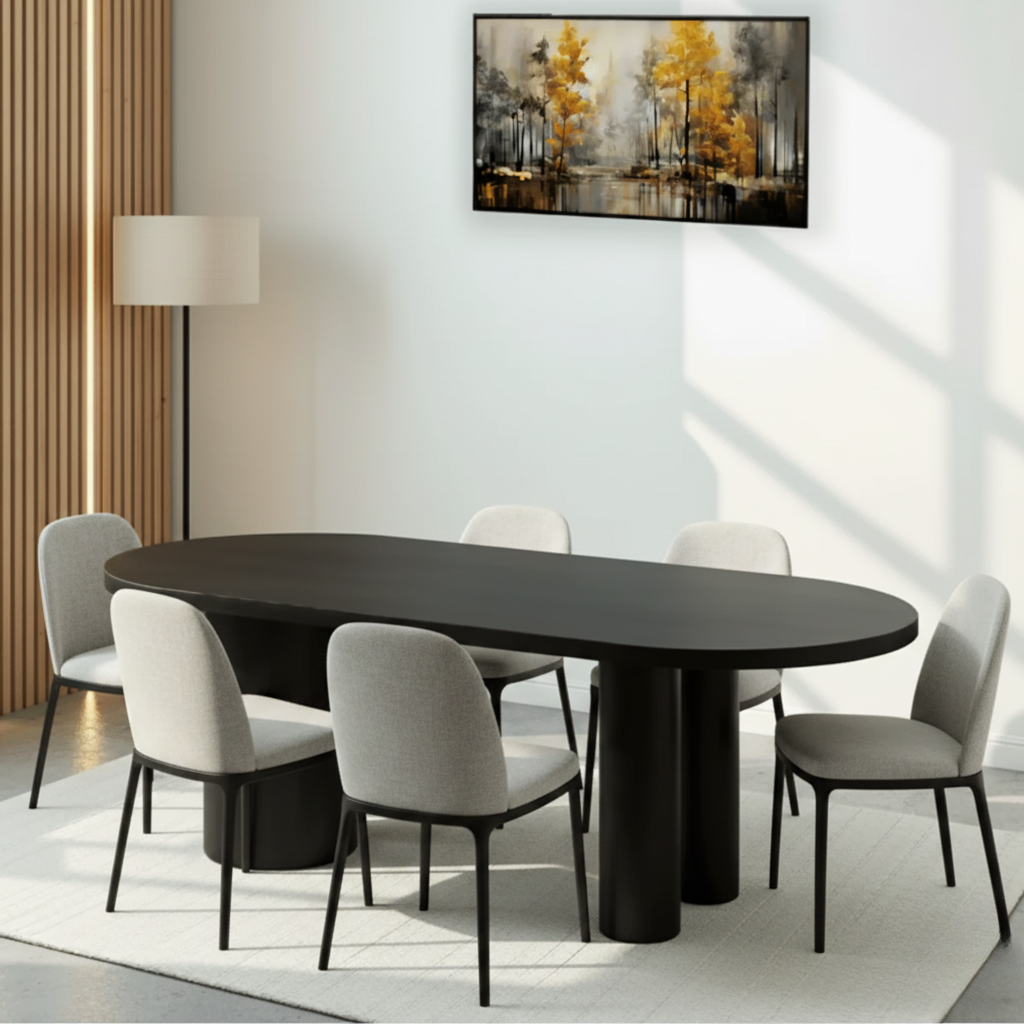
A dining table is the most lived-in piece of furniture in your home. It holds birthday cakes with candles still smoking, homework scattered across its surface on a Tuesday evening, and slow Sunday morning coffees no one wants to rush. It carries arguments, apologies, and celebrations - but more importantly, it quietly becomes the place your family returns to every single day.
A dining table doesn’t just furnish a room - it frames the life lived around it. Which is why choosing the right one deserves more than a quick scroll through a furniture website. The right dining table grows with your family over time. The wrong one gets replaced every few years - each replacement a reminder that the first choice didn’t fully work.
This guide will make sure you get it right the first time.
The dining table is the only piece of furniture in your home that your entire family uses, every single day, for the rest of their lives at home. Choose it accordingly.
Step 1 - Start With the Right Size
The most common dining table mistake is choosing the wrong size for the room. If it’s too small, the table feels lost; if it’s too large, every meal feels like navigating an obstacle course.
The Clearance Rule
Before you look at a single table, measure your dining room and apply this rule: you need a minimum of 36 inches of clearance on all sides of the table - from the edge of the table to the wall or nearest piece of furniture. This allows chairs to be pulled out, people to walk past comfortably, and the room to breathe.
If your dining room is 12 feet x 12 feet (144 inches x 144 inches), subtract 36 inches of clearance from each side (72 inches total) and you are left with a maximum table width of approximately 42 inches. Write this number down before you shop.
Dining Table Size Guide: How Many People Can It Seat?
The single most important dimension when choosing a family dining table is width - and specifically how that translates to comfortable seating. Here is a practical sizing guide:
|
Seating |
Table Dimensions |
Notes |
|
4 people |
48 x 30 in (rectangular) or 42 in diameter (round) |
Minimum for comfortable 4-person dining; works in smaller dining rooms |
|
6 people) |
60–72 x 36 in (rectangular) or 54 in diameter (round) |
The most popular family size; fits most standard dining rooms |
|
8 people |
84–96 x 42 in (rectangular) or 72 in diameter (round) |
Requires a dining room at least 12 ft wide to allow comfortable movement |
|
10+ people |
108–120 x 42 in or extendable table |
Consider an extendable table for everyday 6-seating with 10+ capacity for gatherings |
Important: these dimensions assume approximately 24 inches of table width per person and comfortable elbow room. Always add at least 36 inches of clearance around the table on all sides for chair movement - 42-48 inches is more comfortable.
Explore our dining tables for families
Step 2 - Choose the Right Shape for Your Life
Once you have the size right, the next decision is shape. Shape is not just aesthetic - it determines how your family actually uses the table every day.
Rectangular Dining Tables - The Family Standard
Rectangular dining tables are the most practical choice for families. They maximize seating capacity, define the room clearly, and work in virtually every dining room layout. They are easy to add leaves to for larger gatherings and easy to anchor with a sideboard on the adjacent wall. For most families, a rectangular solid wood dining table is the right choice - and it remains the right choice as the family grows.
Round Dining Tables - Conversation First
Round dining tables are exceptional for smaller families or compact dining rooms. They create a natural intimacy - everyone faces everyone, no one is at the "head" of the table, and conversation flows easily. However, they seat fewer people per square foot than rectangular tables and are harder to extend for large gatherings.
If your dining room is small and your family is unlikely to grow significantly, a round table is a beautiful and practical choice. If you host frequently or your family is expanding, rectangular is the safer investment.
Dining Table With Bench Seating - More People Less Space
Adding a bench along one or two sides of a rectangular dining table is one of the most practical decisions a family with children can make. A bench seats more people than chairs in the same linear space; children love sitting together on them, and they tuck neatly under the table when not in use. Several of Oak & Loom's dining sets include bench seating alongside chairs - giving you the flexibility to seat your everyday family comfortably and accommodate a full gathering when needed.
Once you’ve chosen the shape that fits your space and how your family uses the table, the next decision is even more important - what the table is made of. Because no matter how good a table looks on day one, its material determines how well it survives everyday family life.

Step 3 - Material Matters More Than Anything Else
The material your dining table is made from will determine whether it survives family life - or surrenders to it.
Why Solid Wood Is the Only Material Worth Considering for Families
A family dining table takes more daily abuse than almost any other piece of furniture in the home. It gets spilled on, drawn on by toddlers, scraped by chairs, leaned on heavily, and used multiple times every single day for years. The material it's made from needs to be able to handle all of that - and still look good in twenty years.
Solid hardwood is the only furniture material that meets this standard honestly. For families looking for long-term durability, solid hardwood - such as mango, acacia, or oak - is the most reliable choice. It is dense, durable, and, importantly, repairable. When a solid wood table gets scratched or dented, it can be sanded and refinished - allowing the table to age gracefully instead of deteriorating over time.
Engineered wood, MDF, and veneer surfaces cannot be refinished. A deep scratch is permanent. A water ring is permanent. The table deteriorates visibly over time and eventually gets replaced - often more than once over the life of a family.
Best Wood Types for Family Dining Tables
Not all woods perform equally under the stress of daily family use. Children, frequent meals, homework sessions, and craft projects all demand a surface that can take a knock and be cleaned easily. Here is how the most common options compare:
| Wood / Material | Family Suitability Assessment |
| Oak (best overall for families) | Hard, dense, and highly scratch-resistant. The open grain of oak actually hides fine scratches better than closed-grain woods. Easy to clean, and an oiled or waxed oak surface is more forgiving of water and spills than a lacquered finish. Expect to pay $600–$2,000+ for a solid oak family dining table. |
| Acacia | Excellent durability with a rich, varied grain. Acacia is a dense hardwood that handles daily use well. Slightly more porous than oak - regular oiling keeps it resilient. Generally more affordable than oak at $400–$1,200. |
| Walnut | Beautiful but softer than oak. Better suited to families that are careful about surface protection - not ideal for homes with young children doing arts and crafts at the table. |
| Pine (budget option) | Significantly softer than hardwoods. Will dent and scratch visibly under normal family use within a few years. Suitable as a temporary or budget purchase only. |
| MDF / particle board (avoid for families) | No surface resilience. Chips, swells with moisture, and cannot be sanded down. Not a sound investment for a piece that will receive daily family use. |
How to Protect a Wooden Dining Table for Daily Family Use
The right protection treatment significantly extends both the life and the appearance of your dining table. Here are the main options:
| Protection Method | Details for Family Use |
| Oil finish (recommended for families) | Penetrates the wood and provides protection from within. Easy to reapply when dull (annually or as needed). Scratches can be sanded and re-oiled. The most practical choice for a table that sees daily family use. Downside: less water-resistant than lacquer - wipe spills quickly. |
| Wax finish | Beautiful warm sheen; easy to touch up. Less protective than oil against prolonged moisture. Best on tables in lower-traffic family settings. |
| Lacquer/polyurethane (film finish) | Forms a hard surface film that provides good water and scratch resistance. Looks polished and requires less ongoing maintenance. Downside: when it fails, the entire surface needs stripping and recoating - less forgiving than oil. |
| Tablecloth/table runner | The most practical protection for high-traffic family tables. A heat-resistant tablecloth pad + tablecloth combination prevents heat marks, scratches, and spills reaching the surface. |
Round vs. Rectangular Dining Tables for Families
| Round Tables | Rectangular Tables |
| No corners - safer for young children; eliminates sharp corner bumps | Seat more people in the same floor space; easier to add extra seats |
| Everyone faces each other - more intimate, better for conversation | More versatile for serving; easier to place centrally or against a wall |
| Practically limited to 4-6 people before becoming very large | Scales more easily from 4 to 10+ seats without becoming unwieldy |
| Best in: square rooms, smaller dining spaces, homes with young children | Best in: rectangular rooms, larger families, those who entertain frequently |
What Oak & Loom Uses
Every dining table in the Oak & Loom collection is built from 100% solid wood - mango, acacia, or teak, depending on the collection. No veneer. No MDF. No composite cores. Solid wood all the way through, built to handle exactly what family life demands of it.

Step 4 - Think About Seating, Not Just the Table
The dining table and the chairs are a system. Getting the table right but the chairs wrong is a common mistake - and one that affects daily comfort more than most people expect.
Chair Height and Table Height Must Match
Standard dining table height is 28 to 30 inches. Standard dining chair seat height is 17 to 19 inches. This combination leaves approximately 10 to 12 inches of clearance between the seat and the table underside - enough for a comfortable seated posture for most adults.
Before buying chairs separately, confirm the table height and check that your chosen chairs fall within the compatible seat height range.
Consider Durability for Children
If you have young children or are planning to, consider chair upholstery carefully. Fabric upholstery looks beautiful, but stains easily. Leather and faux leather wipe clean. Solid wood dining chairs with minimal or no upholstery are the most practical for families with young children and can always be given cushions later.
Browse Oak & Loom's full dining chairs collection to find seating that matches both your table and your family's daily reality.

Step 5 - Plan for Hosting, Not Just Every Day
The best family dining tables do double duty: they work for Tuesday night dinners with four people and for holiday gatherings with twelve. Planning for this from the start saves you from needing a second table - or a second dining room.
The Hosting Formula
A helpful rule of thumb is to allow about 24 inches of table space per person for comfortable dining. For example, a 72-inch table can easily accommodate up to six people, making it ideal for everyday meals.
However, when your household often hosts larger gatherings, relying on temporary arrangements like folding tables can feel inconvenient and disconnected. Choosing a dining table that naturally adapts to both daily use and occasional hosting ensures a smoother, more enjoyable experience-without the need for compromises or last-minute adjustments.
The Sideboard Solution
A solid wood sideboard adjacent to the dining table is the single most practical addition for families that host. It provides storage for dinnerware, serving pieces, and table linens, and becomes a buffet surface during gatherings - keeping the dining table clear for guests.
Step 6 - Think About Finish and Maintenance
With children at the table, finish matters. Here’s what works best in real family use:
Dark Finishes
Dark finishes - espresso, mahogany, dark walnut - hide everyday food stains and spills better than lighter finishes. They show dust more readily but are generally more forgiving of the daily wear of family life.
Light and Distressed Finishes
Light finishes and distressed finishes - whitewash, natural, aged wood - have a different advantage: minor scratches and marks are less visible because the finish already celebrates imperfection. A distressed table in a family home with young children is a genuinely practical choice.
How to Care for a Solid Wood Family Table
-
Wipe spills immediately with a damp cloth - do not let liquids sit
-
Use placemats and coasters to protect the surface during meals
-
Oil the surface with food-grade wood oil every 6 to 12 months
-
Use felt pads under all decorative objects to prevent scratching
-
For deeper care tips, visit our guide on how to protect a wooden dining table

The Family Dining Table Checklist
Before you buy, run through this checklist:
-
Room measured - minimum 36 inches clearance on all sides confirmed
-
Size chosen - one size up from current need to allow for growth
-
Shape decided - rectangular for families, round for smaller spaces
-
Material confirmed - 100% solid wood only, no MDF or veneer
-
Seating planned - chairs and/or bench, seat height checked
-
Hosting capacity - table seats maximum expected guest count
-
Finish chosen - dark for practical, distressed for character
-
Sideboard considered - for storage and serving during gatherings
If you can check every box, you are ready to buy a table that your family will still be using - and still loving - twenty years from now.
For most families, this is a 15–20 year decision - not a quick purchase.
Explore our solid wood dining table collection
Final Thoughts
A dining table isn’t just a purchase - it’s a long-term decision about how your family gathers every day. The right table supports both everyday meals and the moments that matter most, without needing to be replaced every few years.
When chosen well, it becomes one of the few pieces of furniture in your home that only gets better with time - not just in how it looks, but in the memories it holds.
The families who get this right buy once, buy well, and never think about it again - except to notice, year after year, how good it still looks and how much life it has absorbed. The families who get it wrong replace it, and replace it again, and spend years eating at a table that never quite felt right.
At Oak & Loom, every dining table and dining sets is built from 100% solid wood - designed to anchor your dining room, support your family's life, and grow more beautiful with every year of use.
That is what a family dining table should be. Nothing less.
"The right dining table doesn't just seat your family. It becomes the place your family always comes back to."
If you choose carefully, this is a decision you will only ever make once.
→ Oak & Loom Dining Tables: oakandloom.com/collections/dining-tables
→ Complete Dining Sets: oakandloom.com/collections/dining-sets
→ Need help choosing? Contact our team - free guidance on finding the perfect table for your family.
Frequently Asked Questions
What size dining table is best for a family of 4?
A 60 to 72-inch rectangular dining table is ideal for a family of 4. It comfortably seats 4 for daily use and can accommodate up to 6 people when needed. If you have the space, choosing a slightly larger table is a smart long-term decision, especially for growing families or occasional guests.
What size dining table do I need for a family of 5?
For a family of 5, a rectangular dining table of 72–78 inches (6–6.5 ft) long by 36 inches wide comfortably seats five with room for a sixth seat at gatherings. If you prefer a round table, a 54-inch diameter works for 5 people but feels snug - a 60-inch round is more comfortable. Ensure your dining room can accommodate the table plus at least 36 inches of clearance on all sides for chair movement; 42–48 inches is more comfortable.
What is the best wood for a family dining table?
Oak is the best all-round choice for a family dining table. It is hard enough to resist the knocks, dents, and scratches of daily family use, its open grain hides fine marks well, and it can be oiled and resealed to maintain its appearance over decades. Acacia is an excellent more affordable alternative. Avoid softer woods like pine and engineered materials like MDF for a table that will be used multiple times daily - they will show wear very quickly and cannot be restored the way solid hardwood can.
How do I protect a wooden dining table from scratches?
The best approach combines a suitable surface finish with practical habits. For the surface: an oil or hardwax finish is the most family-friendly option because it can be spot-repaired and re-applied without stripping the whole table. For daily habits: use placemats under plates and bowls, coasters under hot and cold drinks, a heat-resistant pad for any dishes straight from the oven, and wipe spills immediately with a soft damp cloth. A simple protective table runner used daily will dramatically reduce the rate of wear on the surface while maintaining a stylish look.
Is a round or rectangular table better for a family?
It depends on your family size and dining room shape. Round tables work beautifully for families of 4–5 in a square room - everyone faces each other, conversation flows naturally, and there are no sharp corners. Rectangular tables are more practical for families of 6+ or those who entertain, as they seat more people efficiently and are easier to extend with a leaf. For a young family with small children, a round table eliminates the sharp corner risk. For a larger family, a rectangular extendable table is usually the most practical choice.
How long should a quality family dining table last?
A solid hardwood dining table used by a family daily should last a minimum of 25 years, and many quality oak tables last 50–80+ years with basic care. The surface will develop character - slight marks, a warm patina - but this adds to the appeal of solid wood furniture rather than diminishing it. Every 5–10 years, an oil or wax reapplication refreshes the appearance. In contrast, a particle board or MDF dining table under daily family use typically shows significant wear within 3–5 years and may need replacement within 8–10 years.
Are extendable dining tables worth it for families?
Yes, for most families they are excellent value. A good quality extendable table functions as a 6-seat everyday dining table and expands to seat 10 or 12 for gatherings - without occupying extra floor space in daily use. The key quality marker to look for is the extension mechanism: the best designs use butterfly leaves (stored inside the table, revealed with a push-pull motion) or self-storing leaves that sit within the table frame. Avoid tables where the extension leaf must be stored elsewhere - it rarely gets used. Solid wood extendable tables maintain structural integrity far better than MDF alternatives, where the extension hardware can loosen over time.
Should I choose a dining set with chairs or with a bench ?
A combination of both works best for most families. A bench allows you to seat more people in less space and is especially practical for children, while chairs provide better individual comfort. This mix gives you flexibility for both everyday meals and larger gatherings.
What is the best material for a family dining table?
Solid wood is the most durable and practical choice for family use. Hardwoods like mango, acacia, or oak can handle daily wear and can be sanded and refinished if scratched or damaged. In comparison, engineered wood or veneer surfaces are more prone to permanent damage over time.
How much clearance do I need around a dining table?
You should allow at least 36 inches of clearance on all sides of the dining table. This ensures there is enough space to pull out chairs, move around comfortably, and keep the room from feeling cramped.
How do I protect a solid wood dining table from daily use?
Simple habits can keep your table in good condition: wipe spills quickly, use placemats and coasters, apply wood oil periodically, and place felt pads under decorative items. One advantage of solid wood is that it can be refinished if it shows signs of wear over time.
Should I buy a dining table or a complete dining set?
If you are setting up a dining space from scratch, a complete dining set is often the easier and more practical option, as it ensures proper proportions between the table and seating. If you already have chairs, buying a table separately gives you more flexibility in design.
Share:
Interior Design Trends 2026: The 5 That Matter And 1 That Outlasts All of Them
How to Mix Furniture Styles Without Clutter: 5 Rules Designers Never Reveal