
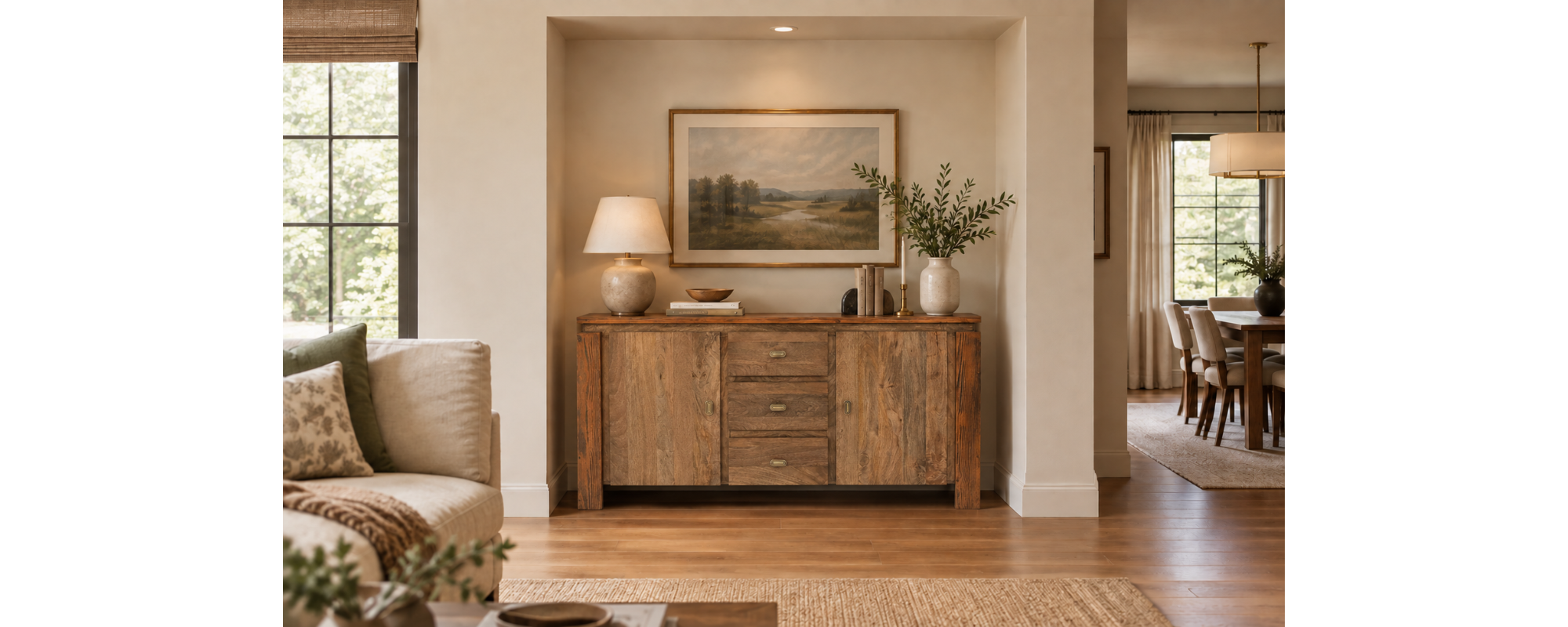
A dining table that's two inches too long for the alcove, a sideboard that's three inches too deep for the hallway it needs to pass through, or a bed frame that almost matches the finish already in the room - these near-misses are the situations where custom sizing can earn its cost, especially when a standard piece would compromise how the space works or looks.
Custom furniture isn't automatically the better choice; it's the right choice for specific situations, and the wrong one for others. Here's when the extra cost and wait time can pay off - and when a standard size is genuinely the smarter buy:

Quick answer: Custom-sized furniture is worth the investment when a standard size doesn't fit your space, when the piece needs to match an exact existing finish or function, or when you're buying something meant to last for decades in a specific spot. It's usually not worth it for pieces you might replace or relocate soon, when a near-standard size already works, or when your timeline can't accommodate a longer custom lead time, which varies by maker and project.
Why This Matters
Custom furniture can cost more and take longer to arrive than a standard piece, so the decision isn't free either way. Choosing custom when it isn't needed means paying and waiting for a level of precision your room may never benefit from.
Choosing standard when custom was actually needed means living with a compromise - or with a piece that doesn't work as well as it could for as long as you own it.
When Custom Sizing Actually Makes a Difference
Your Space Doesn't Match Standard Dimensions
Standard furniture is generally designed around common room layouts and dimensions, which can make unusual spaces harder to furnish. A narrow alcove, an unusually low ceiling, or a doorway that makes a standard sideboard difficult to maneuver can all create problems that aren't solved by simply choosing a different standard piece. If you've measured your doorways, hallways, and available space and can't find a standard size that fits without compromising the layout, that's a strong signal that custom sizing is solving a practical problem rather than adding a preference. Before ordering, see our guide to How to Measure Doorways and Stairs Before Ordering Furniture for a more detailed measurement checklist.
The Piece Needs to Match Something Exact
Sometimes the issue isn't just whether furniture fits the space - it's whether it works with something already there. Matching an existing finish, aligning a bed frame's height with a specific mattress setup, or fitting a sideboard into a wall gap between built-ins can all make small differences noticeable. If you're considering a sideboard for a specific wall or alcove, you can also explore Oak & Loom's sideboards to compare standard options before deciding whether custom sizing is necessary. When "close enough" would leave an awkward gap, mismatched finish, or functional issue, custom dimensions or finishing can provide a more precise solution.
Here's what that precision gap actually looks like in a real room:

You're Buying for the Long Term
A piece meant to stay in one specific spot for decades can make a higher level of precision easier to justify than a piece you might reposition, sell, or replace in a few years. If you're furnishing a long-term home or replacing something you expect to own for many years, the cost of getting the fit exactly right can make more sense when spread across a longer ownership period.
Here's how to work through the decision for your own piece:

Comparison Tables
Here's how custom and standard sizing compare across the factors that matter most.
|
Factor |
Custom-Sized |
Standard-Sized |
|
Fit precision |
Built to your specific space |
Designed around common dimensions |
|
Typical cost |
Often higher - reflects one-off labor and production |
Lower - benefits from standardized production |
|
Typical timeline |
Usually longer - varies by maker and project |
Usually shorter - varies by retailer and availability |
|
Best for |
Awkward spaces, exact matches, long-term pieces |
Standard rooms, near-term needs, budget priority |
|
Returnability |
Often final sale - check the maker's policy |
Return and exchange policies vary by retailer |
The same comparison, in a faster reference format:

Expert Advice: What Custom Furniture Actually Costs - and Why
Custom furniture from small workshops can cost more than off-the-shelf pieces because each order may involve individual measurements, additional design work, and production rather than a standardized manufacturing process. However, the actual price difference varies significantly by furniture type, materials, design complexity, dimensions, and maker. Rather than assuming that custom furniture comes with a fixed premium, ask the maker how the custom option is priced compared with its standard sizing and what factors are driving the difference.

Designer Tips
Designer Tip: Before committing to a custom size, get the exact measurements in writing from the maker and confirm them against your own measurements - correcting a measurement error can be far more costly on a custom, non-returnable piece.
Worth Considering: Custom finishing, such as matching an existing wood tone, may cost less than changing the furniture's dimensions, depending on the maker and finish. If fit isn't the issue, ask whether finish-only customization can meet your needs at a lower premium.
Did You Know? Custom furniture orders may be final sale or have limited cancellation options - confirm the return and cancellation policy before ordering, since changing your mind after production starts may not be easy to resolve.
Common Mistakes
|
Mistake |
Reality |
|
Going custom for a size that's "just a bit off" |
A near-standard size may work fine; measure your space before assuming custom is required |
|
Not accounting for the longer timeline |
Custom orders generally require more planning than in-stock or standard pieces and may conflict with move-in dates or events - confirm the maker's timeline and plan accordingly |
|
Assuming custom always costs dramatically more |
Pricing varies by maker, materials, dimensions, and design complexity; ask for a custom quote rather than assuming a fixed premium |
|
Skipping written confirmation of exact dimensions |
Unclear or incorrect measurements can lead to costly custom-order issues |
|
Choosing custom for a piece you may not keep long-term |
The additional cost may be easier to justify for pieces you're likely to keep in the same place for many years |
The right question isn't "can I afford custom?" - it's "does this specific piece, in this specific spot, actually need it?"
Buying Checklist

Frequently Asked Questions
Q1: Is custom-sized furniture always more expensive than standard?
Not always. Custom furniture can cost more because it may involve one-off measurements, additional design work, and production rather than standardized manufacturing. However, the actual price difference varies by maker, materials, dimensions, and design complexity. Ask the specific maker how custom pricing compares with their standard sizing rather than assuming a fixed premium.
Q2: How much longer does custom furniture take to arrive?
Custom orders can take longer than standard, in-stock pieces because they require individual production rather than a standardized run. The exact timeline varies by maker, materials, design complexity, and current production schedule, so confirm the expected lead time before ordering.
Q3: When does it make sense to order custom-sized furniture?
Custom sizing makes the most sense when a standard piece genuinely won't fit your space, when a piece needs to match an existing finish or function exactly, or when you're furnishing a piece meant to stay in one spot for decades.
Q4: Can I return custom-sized furniture if it doesn't work out?
Often not, or only under limited conditions. Custom orders may be final sale once production begins, so confirming exact measurements and the maker's return and cancellation policy in writing before ordering is essential.
Q5: Is custom furniture worth it for a temporary living situation?
Usually not. The extra cost and longer timeline make more sense for a piece you plan to keep long-term in a specific spot, rather than one you might replace, resize, or relocate in the near future.
Q6: What's the difference between custom dimensions and custom finish?
Custom dimensions change a piece's actual size to fit a specific space, while a custom finish changes its color or stain to match existing furniture or decor. Finish-only customization may cost less than full custom sizing, depending on the maker and finish selected.
Final Summary
Custom sizing solves a real problem when a standard piece genuinely can't meet your needs, and it can be an unnecessary premium when a standard option already works. The decision comes down to measuring honestly, being clear about how long you'll own the piece, and asking the maker specific questions about cost and timeline rather than assuming either extreme.
Custom furniture earns its price in the gap between "almost fits" and "exactly fits" - and that gap is either worth paying for or it isn't, depending entirely on your space.
Not Sure If You Need Custom?
Oak & Loom's free design consultation can help you decide before you commit to either option. Share your room measurements, and we'll help you determine whether a standard piece works or a custom build is worth considering. Start with our Personalize Your Furniture page, or reach out directly through our contact page.

Share:
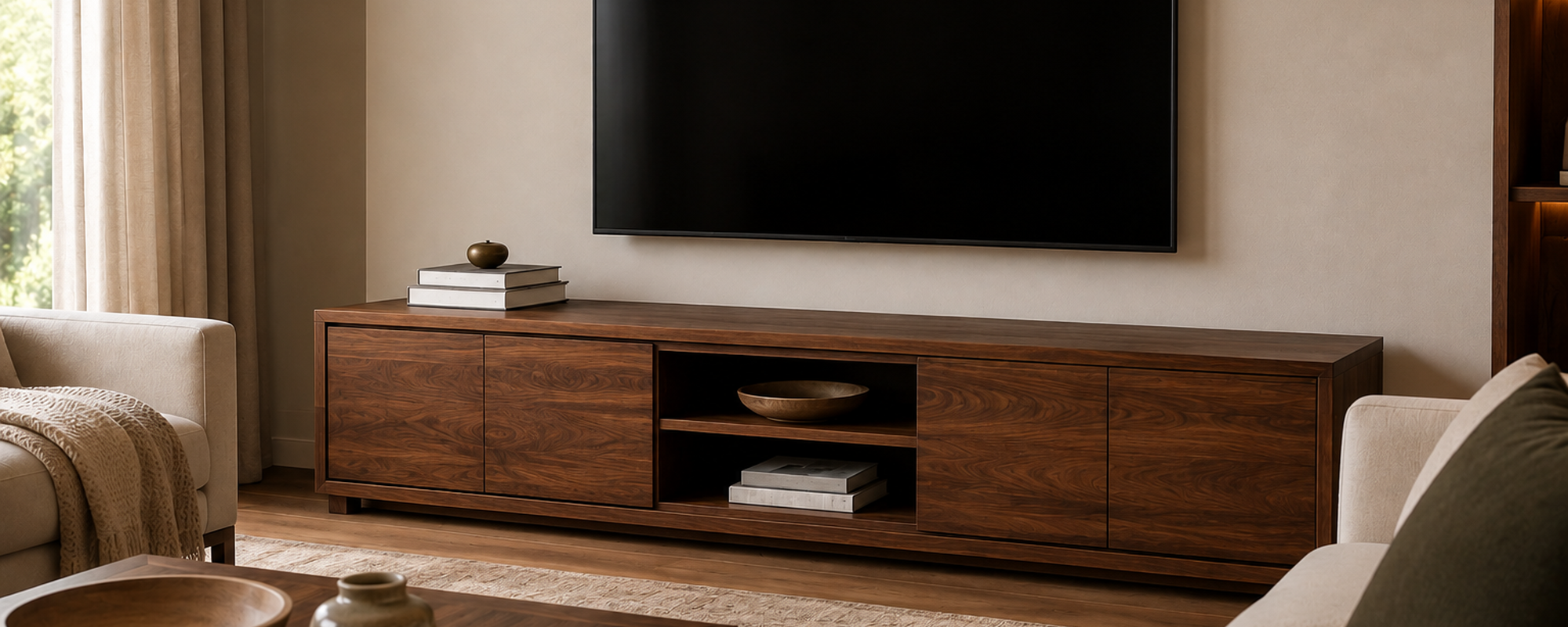
How to Decorate a TV Stand: Styling Ideas That Feel Balanced