

Walk into any furniture showroom and you'll see two tables sitting side by side They look almost identical. They might even carry similar price tags. But one will look the same in twenty years. The other won't make it to ten.
The difference? One is solid hardwood. The other is engineered wood. And most shoppers - even experienced ones - can't tell them apart until it's too late.
This guide is your definitive reference. Before you spend a single dollar on any piece of furniture, read this. Whether you're shopping for a solid wood dining table a wooden bed frame or a sideboard for your living room - knowing the difference will save you years of regret and thousands of dollars.
In Indian homes, where heat, humidity, and even termite exposure can affect furniture over time, choosing the right material isn’t just about looks - it directly impacts how long your furniture will last.
"The most expensive piece of furniture you'll ever own is the one you have to replace three times. Buy right once."
What Is Hardwood?
Hardwood comes from deciduous trees - trees that lose their leaves seasonally. The most common hardwood species used in furniture are oak, walnut, maple, cherry, teak, and mango. These trees grow slowly, which is exactly what gives their wood its density, strength, and beautiful grain character.
When furniture is described as "solid hardwood," it means every structural component - the legs, the frame, the tabletop - is cut directly from natural timber. No fillers, no bonding agents, no composite cores. What you see is what the tree grew.
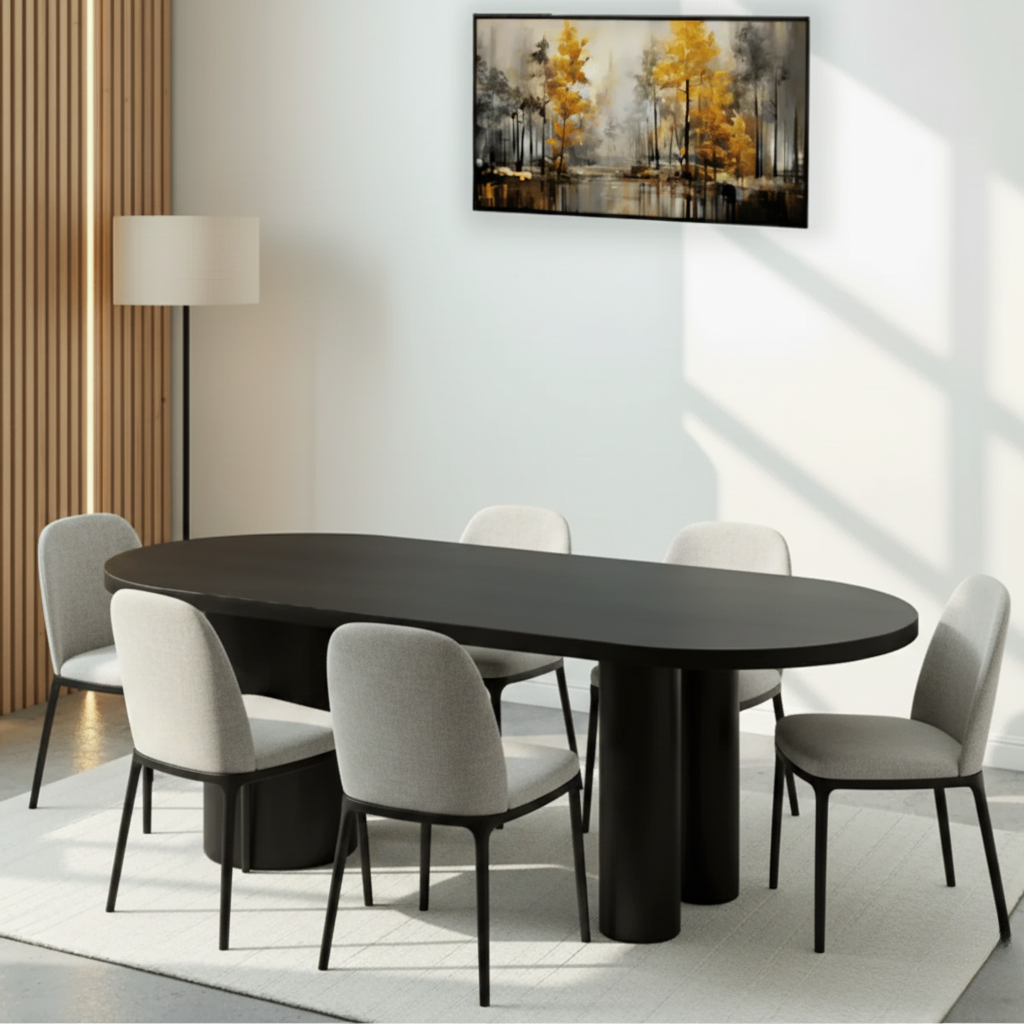
At Oak & Loom, every piece in our dining room furniture collection is built from 100% solid hardwood - mango, acacia, and teak, chosen for their density and distinctive grain.
Why Hardwood Gets Better With Age
This is the characteristic that defines hardwood furniture and sets it apart from everything else: it improves over time. The surface develops a patina - a warm, subtle deepening of color and sheen that comes from years of natural oxidation and use. A solid oak dining table used daily for twenty years doesn't look tired. It looks seasoned.
Hardwood can also be sanded, refinished, and restored. A scratch that would end the life of an engineered piece is, on a solid wood surface, simply an opportunity to refinish. This repairability is one of the most underappreciated qualities of genuine wood furniture.
What Is Engineered Wood?
Engineered wood is a manufactured material created by binding wood fibers, particles, or veneers together using adhesives and heat. The most common types are MDF (Medium Density Fiberboard), particleboard, and plywood.
In most cases, engineered wood furniture uses a thin layer sometimes as thin as 0.5mm of real wood veneer applied over a composite core. This veneer gives the piece its wood-like appearance. Beneath the surface, however, the material is entirely manufactured.
The Types of Engineered Wood
-
MDF (Medium Density Fiberboard) Fine wood fibers compressed with resin. Very smooth surface, but extremely susceptible to moisture and heavy weight.
-
Particleboard Coarser wood chips bound with adhesive. Cheapest option, most prone to swelling and deterioration.
-
Plywood Layers of thin veneer glued in alternating grain directions. Strongest of the engineered options.
-
Veneer A thin slice of real wood applied over any of the above cores to simulate the appearance of solid wood.
Why Engineered Wood Is So Common
Engineered wood is significantly cheaper to produce than solid timber. For furniture brands operating on volume and margin, it's the obvious choice. In some cases - particularly with high-quality plywood - it can also offer better dimensional stability in environments with fluctuating humidity. For the buyer, however, the long-term economics look very different.
Side-by-Side Comparison
|
Feature |
Solid Wood |
Engineered Wood |
|
Lifespan |
20–100+ years |
5–15 years |
|
Material |
Natural timber |
Fibers + glue |
|
Durability |
Very high |
Moderate |
|
Repair |
Can refinish |
Cannot repair |
The Real Lifetime Cost
This is where most buyers make their biggest mistake. They compare the upfront price of an engineered wood piece ($400) to a solid wood equivalent ($1,200) and choose the cheaper option. What they don't account for is what happens next.
The average engineered wood dining table lasts 5 to 8 years before it visibly deteriorates and often less in Indian conditions, where humidity, daily wear, and temperature changes accelerate swelling, loosening joints, and veneer damage. Over twenty years, replacing a $400 table three times costs $1,200 with nothing to show for it.
A solid hardwood dining table purchased for $1,200 like any piece from our solid wood dining table collection maintained correctly, will still be standing in twenty years, often looking better than day one.
"The cheapest furniture is never the cheapest furniture. What you save at purchase, you spend in replacement."

How to Tell the Difference When Shopping
Five practical ways to identify solid hardwood vs. engineered wood:
-
Check the weight - Solid wood is significantly heavier. A solid hardwood dining chair feels noticeably dense when you lift it.
-
Look at the grain on all surfaces - Solid wood grain runs continuously. Veneered pieces have an identical pattern on every panel - it came from the same sheet.
-
Inspect the edges - Solid wood grain runs through the edge. Engineered wood often reveals a flat uniform color or a separate veneer strip.
-
Check underneath - Solid wood shows natural grain on all surfaces. Engineered pieces reveal particleboard or MDF cores underneath.
-
Read product descriptions carefully - "Solid wood construction" means solid throughout. "Wood veneer," "wood-look," or simply "wood" without qualification should raise questions.
What Oak & Loom Uses And Why
Every piece in the Oak & Loom collection - whether a solid wood dining table, a wooden bed frame, a sideboard, or a coffee table - is built from 100% solid wood. No exceptions.
We use mango, acacia, and teak depending on the collection, chosen for their density, sustainability credentials, and unique grain character.
We don't use MDF in any structural component. We don't use particleboard. We don't use composite cores with veneer surfaces. Every leg, every rail, every tabletop is the same material all the way through - because the joinery techniques we use (mortise-and-tenon, dovetail) only work reliably in solid wood.

The Sustainability Difference
Solid hardwood, when sourced responsibly, is one of the most sustainable materials available for furniture. Engineered wood is often manufactured using adhesives that may release low levels of VOCs over time - particularly in lower-quality products. While higher-grade options reduce this, they remain difficult to recycle at end of life.
At Oak & Loom, our wood is sustainably sourced and our finishes are water-based wherever possible. If sustainability matters in your home decisions, explore our full living room furniture collection and bedroom furniture collection - every piece built on the same principle.
Quick Summary
-
Solid wood = long-term durability (20–100+ years)
- Engineered wood = more affordable, but shorter lifespan
-
For daily-use furniture (dining tables, beds, sofas) → solid wood is the better investment
Which One Should You Buy?
Choose Solid Hardwood if:
-
You are furnishing a room you intend to keep for many years
-
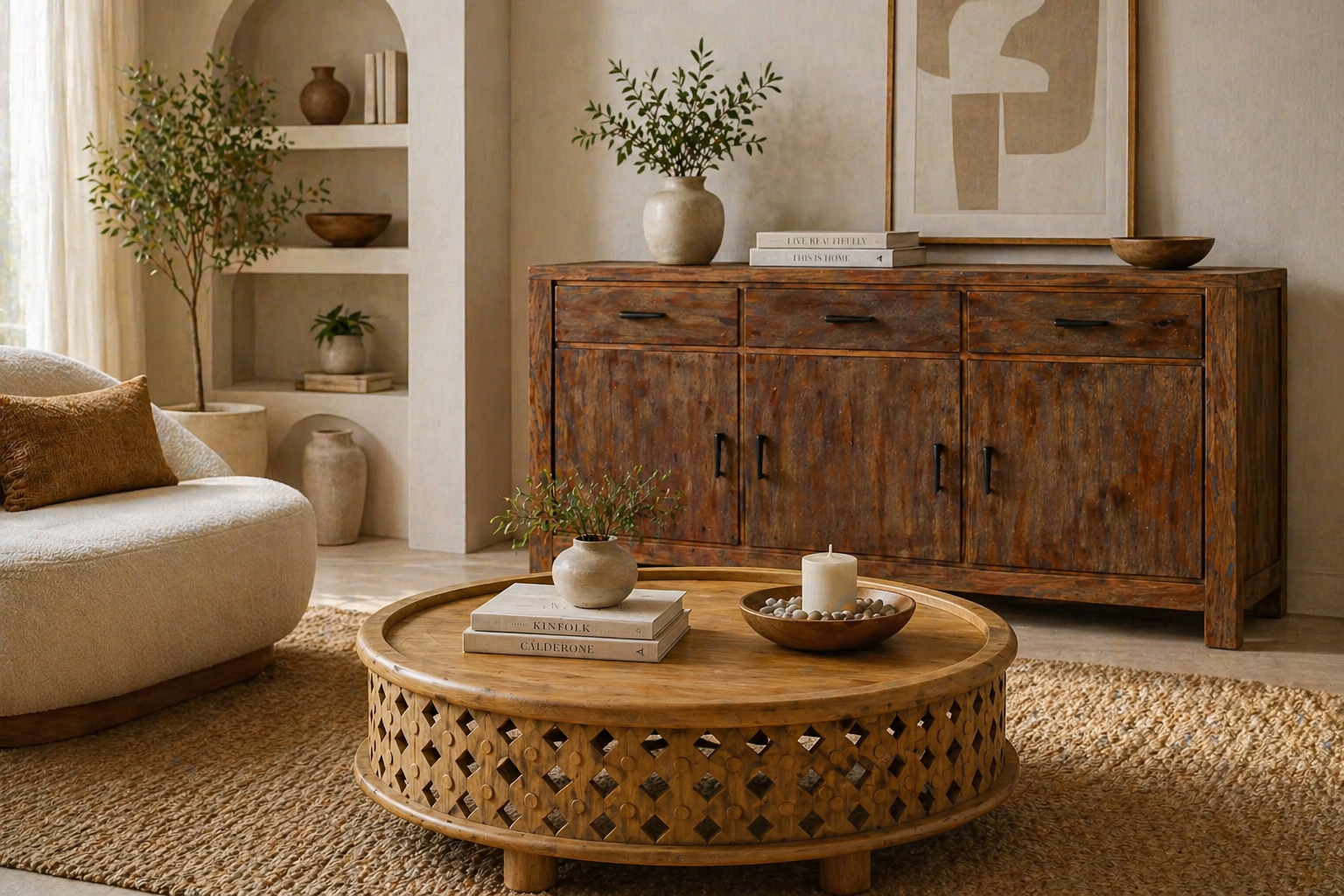
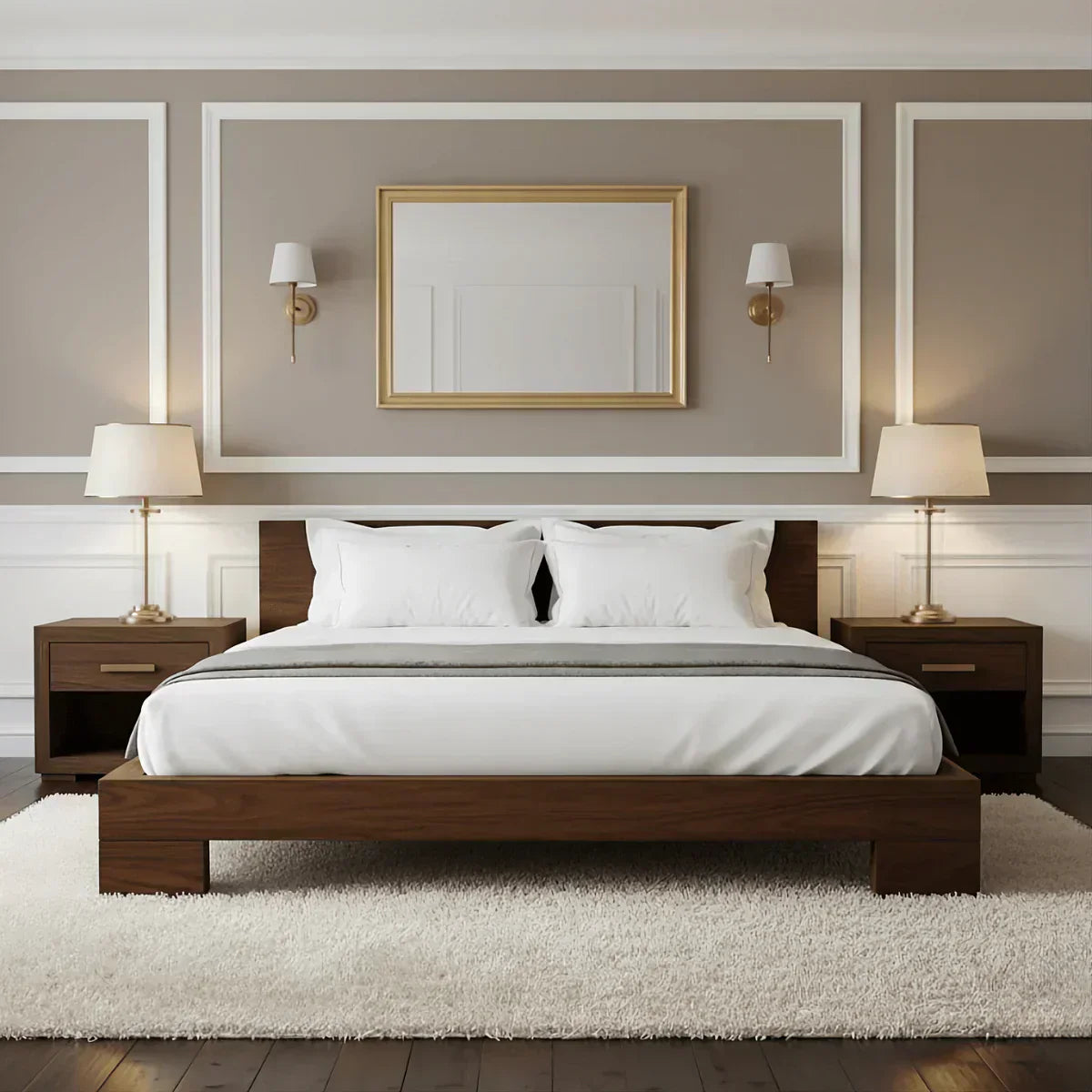
The piece is a structural anchor - dining table, bed frame, sideboard, coffee table
-
You value natural beauty, grain character, and the ability to refinish
-
Sustainability matters in your purchasing decisions
Engineered Wood may be acceptable if:
-
The piece is purely functional and hidden from view
-
You are furnishing a temporary rental space
For any piece that will be seen, touched, and used daily - the choice is solid wood. Every time.
Final Thoughts
The furniture industry has done a remarkably effective job of making engineered wood look like solid wood. Better photography. More sophisticated veneer. Product descriptions that imply quality without committing to it.
But the difference still shows up - in the joint that loosens after two years. In the surface that can't be refinished. In the table you loved when you bought it and resent by the time you replace it.
Solid hardwood furniture isn’t just about luxury - it’s about longevity. It’s an investment in your home, your daily experience, and in a material that has been trusted for generations.
"Every Oak & Loom piece is 100% solid wood - no veneer, no MDF, no shortcuts. Just real wood, built to last a lifetime."
Ready to invest in furniture that lasts?
Explore Our :
Frequently Asked Questions
What is the difference between solid wood and engineered wood furniture?
Solid wood furniture is made from natural timber, making it stronger, long-lasting, and repairable. Engineered wood is made from wood fibers and adhesives with a veneer surface, making it more affordable but less durable.
Which is better: solid wood or engineered wood?
Solid wood is better for long-term use due to its durability and ability to be refinished. Engineered wood is suitable for short-term or budget-friendly furniture.
How long does engineered wood furniture last?
Engineered wood furniture typically lasts 5 to 10 years, depending on usage and environmental conditions, especially humidity.
Can engineered wood be repaired or refinished?
No, engineered wood cannot be sanded or refinished. Once damaged, it is difficult to restore compared to solid wood.
Is solid wood furniture worth the higher price?
Yes, solid wood furniture is a long-term investment. It lasts for decades, can be repaired, and often looks better with age.
Which wood is best for furniture in India?
Hardwoods like teak, mango, and acacia are best for Indian homes due to their durability and ability to handle heat and humidity.
Share:
10 Signs It’s Time to Invest in Real Wood Furniture
The Interior Design Trends Shaping 2026 (And What Will Outlast Them)