
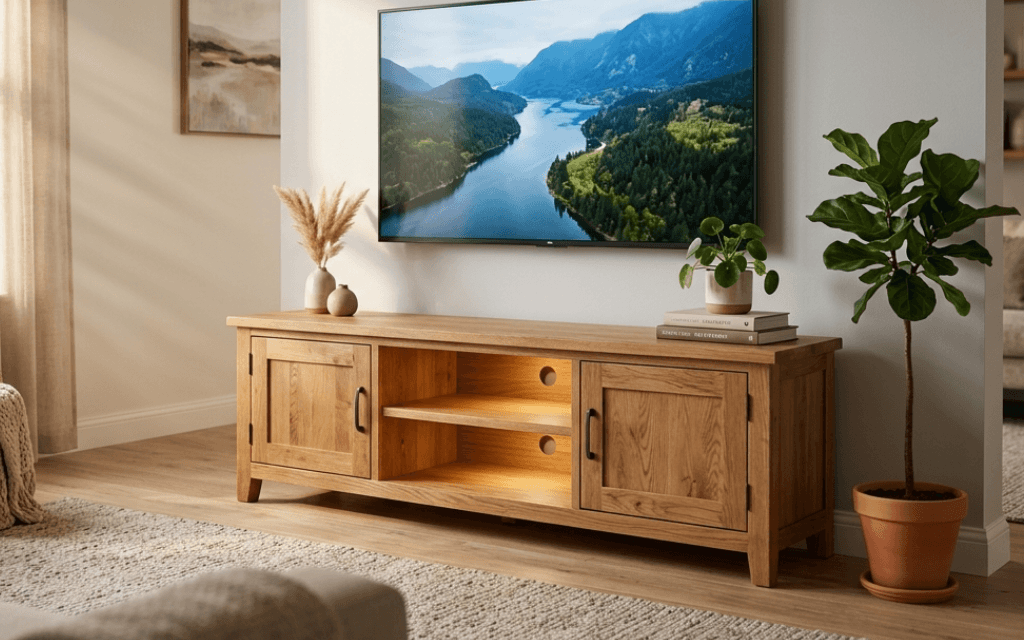
You'd think buying a TV stand would be simple. It's just a piece of furniture that holds a screen, right?
Not quite.
The wrong wooden TV stand can throw off your entire living room - it makes the TV look awkwardly perched, leaves cables in a tangled mess, or gives you zero storage when you actually needed three shelves and a drawer. The right one, on the other hand, pulls the whole room together. It becomes the anchor of your living space.
In this guide, you'll learn how to choose the right wooden TV stand based on your TV size, room layout, storage needs, wood type, and interior style. We'll also cover common buying mistakes and practical tips to help you invest in furniture that lasts for years.
This guide is here to make that decision easy. Whether you're shopping for a compact flat, a family home, or doing a full living room refresh, we'll walk you through everything - sizing, storage, wood types, styles, and the common traps that catch most buyers off guard.
1. Getting the Size Right: The TV Stand Size Guide You Actually Need
This is where most people go wrong first. They fall in love with a stand online, order it, and then realise it's either too wide, too narrow, or sits at a height that has them craning their neck during every film.
Here's how to get sizing right - before you buy.
The Width Rule
The general rule is straightforward: your TV stand should be at least as wide as your TV, and ideally 3–6 inches wider on each side. This isn't just about looks - it's about stability and proportion.
This recommendation aligns with guidance from major TV manufacturers such as Samsung and Sony, which advise placing televisions on a stable surface that is wider than the TV itself to improve stability and viewing comfort.

A stand that's too narrow makes the TV look like it's about to topple. Too wide and the stand dominates the room unnecessarily.
Quick reference for TV-to-stand width:
| TV Size | Recommended Stand Width | Ideal Viewing Distance |
|---|---|---|
| 43" | 40–50" | 5.5–7 ft |
| 50–55" | 50–60" | 7–8 ft |
| 65" | 60–70" | 8–10 ft |
| 75" | 70–80" | 10–12 ft |
| 85"+ | 80"+ | 10–14 ft |
Note: The recommended stand width should always be your primary consideration when choosing a TV stand. The viewing distance provided above is a general guideline and may vary depending on your TV's resolution (HD, 4K, or 8K), room layout, seating arrangement, and personal viewing preference.
Always measure the actual width of your TV (not the diagonal screen size) before shopping. A 65-inch TV is typically around 57–58 inches wide - so a 60-inch stand sits right at the lower end of acceptable.
Height Matters More Than People Think
The sweet spot for TV viewing height is having the centre of the screen at eye level when seated, which is typically around 42–48 inches from the floor for most sofas. This viewing height helps reduce neck strain and creates a more comfortable viewing experience during longer sessions. Interior design resources such as Houzz and Better Homes & Gardens also recommend positioning the centre of the screen close to seated eye level for improved comfort and ergonomics.
Most wooden TV stands sit between 18–24 inches tall, which works well when you add the height of the TV on top. If your sofa sits particularly low, opt for a stand on the taller end of that range.
One more thing worth mentioning: TV unit dimensions affect more than just the screen height. A deeper stand (front to back) gives you better ventilation for media equipment and more room to run cables neatly. Aim for at least 16–18 inches in depth if you plan to store devices.
2. Types of Wooden TV Stands - Which One Do You Need?
Not all wooden TV stands are built the same. The style and structure you choose will depend on how much storage you need, the size of your room, and the look you're going for.
Standard TV Stand
The classic. Four legs or a base, a flat top surface, and usually one or two open shelves underneath. These are great for smaller rooms or minimalist interiors where you don't want the furniture competing with the TV.
Wooden Media Console
A wooden media console (sometimes called a media console table) is longer and lower than a standard stand. Think of it like a low sideboard designed specifically for living room storage. These are popular in open-plan spaces because they fill horizontal wall space beautifully without overwhelming the room.
If you need serious storage - think board games, streaming devices, remotes, and all the odds and ends of modern living - a media console is usually the way to go. Browse our Solid Wood TV Stands Collection for a wide range of wooden media consoles in various lengths and finishes.
Wood TV Cabinet
A wood TV cabinet is more enclosed - it typically has doors, drawers, or a combination of both. The TV sits either on top or, in some designs, inside a recessed space. These are ideal if you prefer a cleaner look with less visible clutter, or if you have children who tend to fiddle with equipment.
Wall-Mounted vs Floor-Standing Units
Some people opt for wall-mounted TV units to save floor space - particularly useful in smaller rooms or modern apartments. However, floor-standing wooden TV stands have one major advantage: no drilling, no wall fixings, and complete flexibility to rearrange.
For renters, families with young kids, or anyone who likes to move things around, a freestanding solid wood TV stand almost always makes more practical sense.
3. TV Unit Storage Options: Open Shelves, Drawers, or Closed Cabinets?
Think honestly about how you use your living room before you decide on storage. Do you want everything accessible and on display? Or do you prefer things tucked away?
Open Shelves Media Console
Pros: Easy access, good airflow for media devices, visually lighter. Cons: Everything's visible - including the clutter. Requires more organisation to look intentional.
Open shelving works brilliantly if you display books, plants, or decorative objects alongside your media equipment.
Closed Cabinets with Doors
Pros: Hides everything, makes the room feel tidier instantly. Cons: Less ventilation (important if you store a games console or streaming box that runs hot). Slightly less convenient for frequently used items.
Media Console With Drawers
Drawers are underrated in a wooden TV stand. They're perfect for remote controls, cables, charging bricks, and all the small things that accumulate in a living room. If you're choosing between a stand with drawers and one without - all else being equal - go with drawers.

TV Cabinet Cable Management
This one's worth spending five minutes on. A stand with built-in cable management - whether that's a hole in the back panel, routing clips, or a small compartment - will save you an enormous amount of frustration. Visible cables are one of the quickest ways to undermine the look of a well-styled room.
If your stand doesn't have it built in, cable management boxes or adhesive clips are cheap and effective workarounds.
4. Choosing the Right Style TV Cabinet for Your Home
A wooden TV stand doesn't exist in isolation - it sits in a room with a sofa, a rug, artwork, and lighting. Getting the style right is about making sure it belongs.
Modern / Contemporary TV Cabinet
Clean lines, minimal ornamentation, and often a mix of materials - wood with metal legs or glass accents. If your home leans towards contemporary interiors, look for a wooden media console with a smooth finish, tapered legs, and simple hardware.
Rustic TV Stand
The rustic TV stand has had a serious moment over the last few years, and it's not hard to see why. Reclaimed wood, visible grain, distressed finishes, and chunky proportions give it a warmth that modern furniture sometimes lacks. These work especially well in country-style homes or rooms with exposed brick and natural textiles.
A rustic TV stand tends to be a statement piece - let it be one.
Minimalist TV Stand
Less is more. A minimalist wooden TV stand typically has no visible hardware, floating-style legs, and a restrained profile. These work particularly well in smaller rooms because they don't visually crowd the space.
Traditional TV Stand
More ornate detailing, raised panel doors, turned legs, and darker wood finishes. Traditional styles suit period homes or rooms with classic furniture, rich fabrics, and warm colour palettes.
Matching Your Living Room Decor
A few quick principles that always hold:
- Match your wood tones - if you have oak floorboards, an oak TV stand living room setup will feel cohesive rather than assembled.
- Mix textures, not chaos - pairing a wooden media console with a woven rug, linen cushions, and a metal floor lamp creates interest without visual noise.
- Scale matters - a delicate, minimalist stand in a large room with bulky furniture will look lost. Proportion is everything.
You might also find it useful to read our piece on Buffet Cabinet vs Console Table if you're trying to decide whether a dedicated TV stand or a more versatile piece makes more sense for your space.
5. Best Wood Types for Solid Wood TV Stands
Not all wood is equal. The species, grade, and finish affect both the look and the longevity of your furniture.
Why a Solid Wood TV Stand is Worth the Investment
A solid wood TV stand is made from actual timber throughout - not veneered particleboard or MDF with a wood-effect print. It's heavier, more durable, and significantly better at handling the weight of a large television plus all the equipment that lives around it.
More importantly, solid wood ages well. A well-made solid wood TV stand won't warp, peel, or delaminate after a few years the way cheaper alternatives often do. It also takes scratches more graciously - and many can be sanded and refinished if needed.
At Oak & Loom, our handcrafted TV stands are made using carefully selected solid hardwoods, including sustainably sourced mango wood, chosen for their durability, distinctive grain patterns, and long-term performance. Every design is created to combine practical storage with timeless craftsmanship, helping homeowners invest in furniture that's built to last.
Oak
Oak is arguably the gold standard for living room furniture in the UK and across much of Europe. An oak TV stand living room setup brings warmth, texture, and longevity. Oak's open grain pattern means it takes stains and oils beautifully, so you have flexibility in finish - from light natural to deep walnut tones.
Oak is also exceptionally hard, which matters when you're placing heavy equipment on top of it.
Other Popular Species
- Pine: Softer, lighter, and more affordable. Works well for rustic or country styles. More prone to dents but has a lovely natural character.
- Walnut: Rich, dark, and luxurious. Often used in premium or mid-century modern furniture.
- Mango Wood: Increasingly popular, highly sustainable, and features dramatic grain variation. Excellent value for a solid wood product.
- Acacia: Dense, durable, and striking grain patterns. Great for rustic or artisan-style interiors.
| Wood | Durability | Grain Pattern | Maintenance | Best For |
|---|---|---|---|---|
| Oak | ★★★★★ | Straight grain | Low | Family living rooms |
| Walnut | ★★★★★ | Rich dark grain | Low | Luxury interiors |
| Mango | ★★★★☆ | Natural variation | Low | Modern homes |
| Acacia | ★★★★★ | Bold grain | Low | Rustic interiors |
| Pine | ★★★☆☆ | Soft grain | Medium | Budget furniture |
A Note on Engineered Wood
MDF and particleboard products aren't inherently bad - they're stable, affordable, and widely used. But they don't have the longevity or character of solid or real wood alternatives. If you're buying something you want to last ten years or more, lean toward solid wood or real wood veneer over MDF.
6. Placement & Styling Tips
You've chosen the stand. Now let's make it look intentional.
Wall Alignment
Ideally, your wooden TV stand should sit against a wall with the TV roughly centred within that wall. If you're working with an asymmetric room, aligning the stand with a window or fireplace can create a visual anchor.
Avoid placing TV furniture in direct sunlight - it fades wood finishes over time and creates glare on screens.
Height and Viewing Angle
As mentioned earlier, aim for the screen centre at seated eye level. If your stand feels too low, a low-profile TV unit combined with a VESA wall bracket on the stand can add a few inches without much fuss.
Styling the Surface
The top surface of your wooden media console isn't just for the TV. Use it wisely:
- A small plant or trailing pothos adds life
- A pair of candles or a table lamp on either side creates balance
- A decorative tray corrals remotes and small objects
- Framed photos or small sculptures add personality
The shelf below the TV is also worth styling - a mix of books, baskets, and objects at varying heights looks considered rather than haphazard.
Lighting
An LED strip behind the TV (bias lighting) reduces eye strain and gives the space a cosy, cinematic feel. It's inexpensive and easy to set up, and it makes any wooden TV stand look more deliberate.
Best Solid Wood TV Stands - Our Top Picks
When choosing a solid wood TV stand, the key criteria are: surface width relative to your TV size, the number of shelves and doors for equipment storage, the finish compatibility with your room, and the quality of cable management provisions. Here is what to look for by room style:
| Room Style | Recommended TV Stand Style |
| Modern / minimalist rooms | Look for flat-panel doors, minimal hardware, and a light oak or natural wood finish. A media console on slender legs creates visual airiness. Ideal dimensions: 60–72 inches wide for a 55–65 inch TV. |
| Rustic / farmhouse rooms | Distressed or wire-brushed oak with iron hardware and open shelving works beautifully. A wider, lower profile (70–80 inches) allows decorative objects alongside the TV. |
| Mid-century modern rooms | Tapered legs, walnut or teak tones, simple door fronts. Brass or brushed gold hardware pulls tie the look together. |
| Traditional / classic rooms | Raised-panel doors, darker wood stains (mahogany, dark oak), more decorative hardware. Height of 28–32 inches is more proportional in taller, more formal rooms. |
Brass and Metal-Accented Media Consoles - A Style Guide
Brass-accented furniture has moved firmly into the mainstream of interior design, and media consoles are no exception. The combination of warm solid wood and brushed or polished brass hardware creates a sophisticated, timeless look that works across a wide range of interior styles - particularly mid-century, contemporary, and transitional aesthetics.
What to look for in a brass media console:
- Hardware quality: real brass hardware (not brass-colored plastic) develops a beautiful patina over time. Check that pulls and handles are solid brass or brass-plated metal, not brass-painted polymer.
- Wood and brass pairing: brass pairs most naturally with warmer wood tones - honey oak, natural walnut, teak, and mid-tone acacia. It can work with darker woods but requires careful balance with the room's other elements.
- Door mechanism: brass-handled solid wood doors look best when they swing cleanly and close firmly. Check for soft-close hinges, which prevent the jarring 'slam' that quickly wears on quality hardware.
- Proportions: brass hardware should be proportional to the piece - oversized pulls on a delicate frame look incongruous. Look for consistency between hardware scale and the overall visual weight of the console.

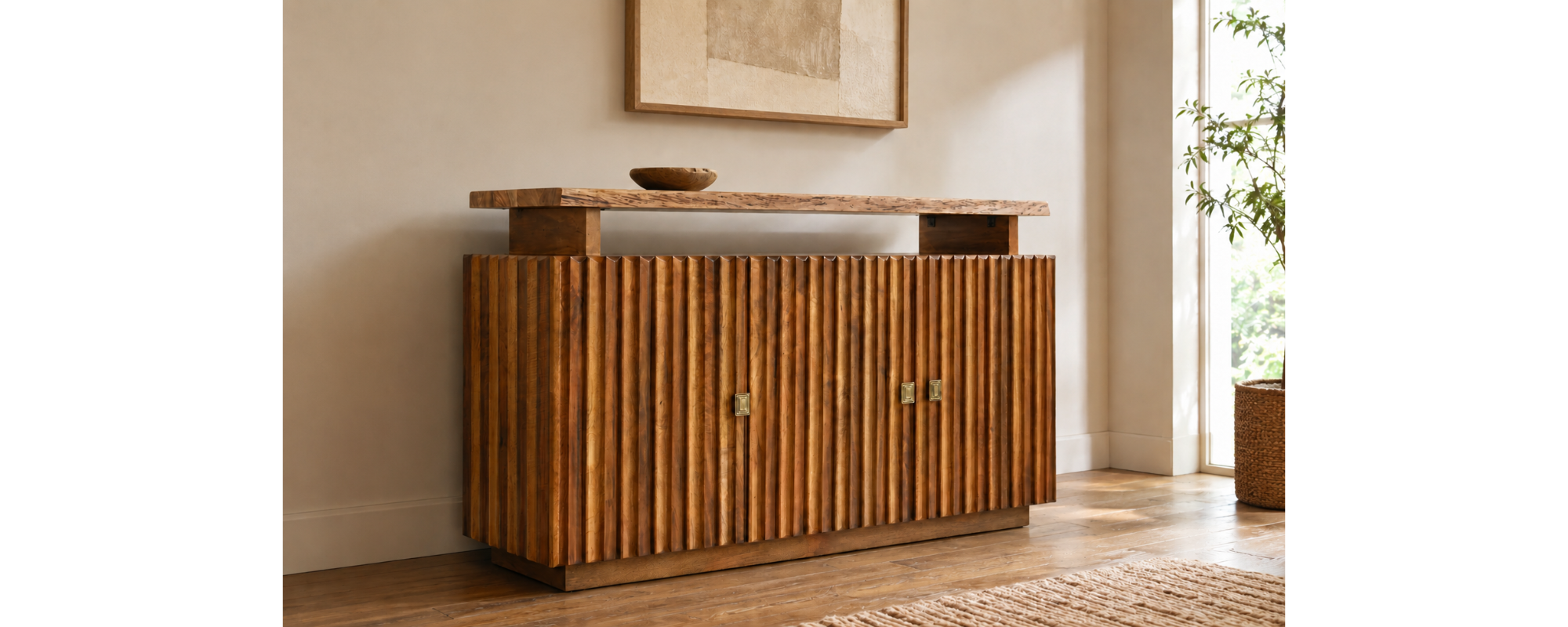
Recommended Product: Olympia Brass 4-Door Media Console is a standout example of this aesthetic done well: four-door solid wood construction with quality brass hardware, providing both style and substantial storage capacity for AV equipment.
Why we recommend it:
• Crafted from solid mango wood for long-lasting durability.
• Four-door cabinet design provides generous concealed storage for media accessories and everyday essentials.
• Premium brass hardware complements modern, mid-century, and transitional interiors.
• Combines practical storage with handcrafted solid wood construction for everyday use.
TV Stand Size Guide: Match Your Stand to Your Screen
A common mistake is buying a stand that is the right height but the wrong width for the TV. Here is the practical guide:
| TV Screen Size | Recommended Stand Width |
| Up to 43-inch TV | Stand: 40-50 inches wide minimum. The TV base or mounting bracket should not overhang the stand surface. |
| 50–55-inch TV | Stand: 50-60 inches wide. Most popular TV size; a 55-inch stand is the minimum, 60 inches gives better visual balance. |
| 65-inch TV | Stand: 60-70 inches wide. A 65-inch TV on a 55-inch stand looks top-heavy and creates a safety concern. |
| 75-inch TV | Stand: 70-80 inches wide. At this TV size, a wide media console (rather than a narrow stand) usually looks better proportionally. |
| 85-inch TV or larger | Stand: 80 inches or wider, or wall-mount the TV above a console. A very large TV on a freestanding stand requires a very stable, heavy base. |
Height guidance: The ideal viewing position places the centre of the screen at seated eye level-typically around 40–45 inches from the floor for most sofas. Most TV stands are between 18–24 inches high, which generally positions the TV comfortably when paired with modern flat-screen televisions.
How to Measure Your Space Before Buying a TV Stand
Before ordering, take a few minutes to measure:
- Wall width
- Actual TV width (not just the diagonal screen size)
- Leave 3–6 inches of clearance on each side of the TV stand
- Doorway and hallway width for delivery
- Ventilation space behind the stand for electronics
- Power socket and cable outlet locations
- Skirting board depth if the stand will sit flush against the wall
Common Buying Mistakes to Avoid
Even with all the right information, it's easy to make a few classic errors. Here's what to watch for:
- Buying without measuring first. Always measure your wall space, your TV, and your doorways (yes, doorways - furniture has to get into the room somehow).
- Ignoring weight capacity. A large TV, a games console, a soundbar, and a cable box add up. Check the weight rating on any stand you're considering, especially if it's a lighter build.
- Choosing style over function. A beautiful stand that doesn't hold everything you need will frustrate you daily. Storage should come first, style second.
- Forgetting about ventilation. Electronics generate heat. Enclosed cabinets without ventilation gaps can cause overheating. Look for stands with back cutouts or ventilation holes if you're storing equipment.
- Underestimating the visual weight. A very dark, very large stand in a small room can make the space feel claustrophobic. When in doubt, go lighter in finish and lower in height.
Conclusion: Choosing a Wooden TV Stand Worth Keeping
A good wooden TV stand isn't just functional - it's a daily-use piece of furniture that shapes how your living room feels. Get the size right and everything else falls into place more easily. Choose the right wood and it'll outlast several sofas. Pick the right style and it becomes part of the room's identity rather than just something the TV sits on.
The best advice? Start with size, narrow down by storage needs, then let style guide the final decision.
Whether you're furnishing a compact apartment or a spacious family living room, choosing the right solid wood TV stand comes down to balancing size, storage, durability, and style. Taking the time to measure your space and invest in quality materials will reward you with furniture that lasts for years. Explore Oak & Loom's handcrafted TV stands, media consoles, and living room furniture collections to find a design that complements your home beautifully.
And if you're still figuring out how your TV unit fits into the bigger picture of your living room layout, our Coffee Table guide and Sideboards collection are worth a read - because the best rooms are the ones where every piece was chosen with a little thought.
Frequently Asked Questions
Q. What size TV stand do I need for a 65-inch TV?
For a 65-inch TV, look for a stand at least 60 inches wide - ideally 65–70 inches for comfortable visual balance. The TV's base or mounting feet should sit fully on the stand surface with a few inches to spare on each side. A stand that is too narrow for the TV looks precarious and creates a real tipping risk. Height-wise, aim for a stand that positions the TV so the screen center is approximately 40–45 inches from the floor when you are seated on your sofa.
Q. Is solid wood better than MDF for a TV stand?
Yes, for a long-term investment. Solid wood TV stands handle the practical demands of media furniture better: they resist the minor heat from AV equipment, hold the weight of heavy components without sagging, maintain the grip of cable management hardware over years of use, and can be refinished if the surface gets scratched. MDF TV stands are lighter and often cheaper, but they are vulnerable to moisture (basements, humid living rooms), cannot be sanded if damaged, and the joints tend to loosen faster under the weight and vibration of modern AV setups.
Q. What is the difference between a media console and a TV stand?
A TV stand is a narrower, more compact piece specifically designed to hold a TV - often with just one or two shelves for a cable box and streamer. A media console is a wider, lower, cabinet-style piece with enclosed storage (doors, drawers) for a full AV setup - receivers, game consoles, Blu-ray players, speaker equipment, and media collections. Media consoles are typically 60-80 inches wide versus a TV stand's 36-50 inches. For living rooms with a complete home cinema setup, a media console provides far more organised, concealed storage.
Q. Are brass TV stands and media consoles durable?
The durability of brass-accented furniture depends entirely on the hardware quality. Real brass hardware - whether solid brass or brass-plated metal - is extremely durable and develops an attractive patina over time. Brass-colored polymer hardware (common on budget pieces) will chip, tarnish unevenly, and look cheap within a few years. The wood construction is the main structural determinant of durability; solid wood with brass hardware will outlast MDF with brass hardware significantly. When evaluating a brass media console, check the weight of the hardware - quality brass feels noticeably heavier than plastic imitations.
Q. How do I manage cables in a solid wood TV stand?
Most quality solid wood media consoles include a cable cutout at the back of each shelf - a circular or rectangular hole that allows cables to pass between compartments and out to the wall. If your stand does not have one, a spade bit can drill a clean 2-inch hole in the back panel. Within the stand, cable ties or velcro straps keep bundles organised. For a cleaner front appearance, route all cables behind the stand to a single power strip positioned at the back, then run one cable to the wall socket. Raceway covers - plastic channels that adhere to the wall - can conceal wall-to-socket runs completely.
Q. How much weight can a wooden TV stand hold?
A solid wood TV stand can support substantial weight, but the exact capacity depends on its construction, dimensions, and manufacturer specifications. Always check the product's stated weight limit before placing large televisions or heavy AV equipment on it.
Q. Can I use a sideboard as a TV stand?
Yes. A solid wood sideboard can work as a TV stand if its width comfortably exceeds your television and its height provides a comfortable viewing angle. Sideboards also offer additional concealed storage, making them ideal for larger living rooms.
Share:
Solid Wood Queen Bed Frame: Sizes, Styles & What to Know Before You Buy
Rustic Sideboard with Drawers: What to Look For, Top Features & Our Best Picks