
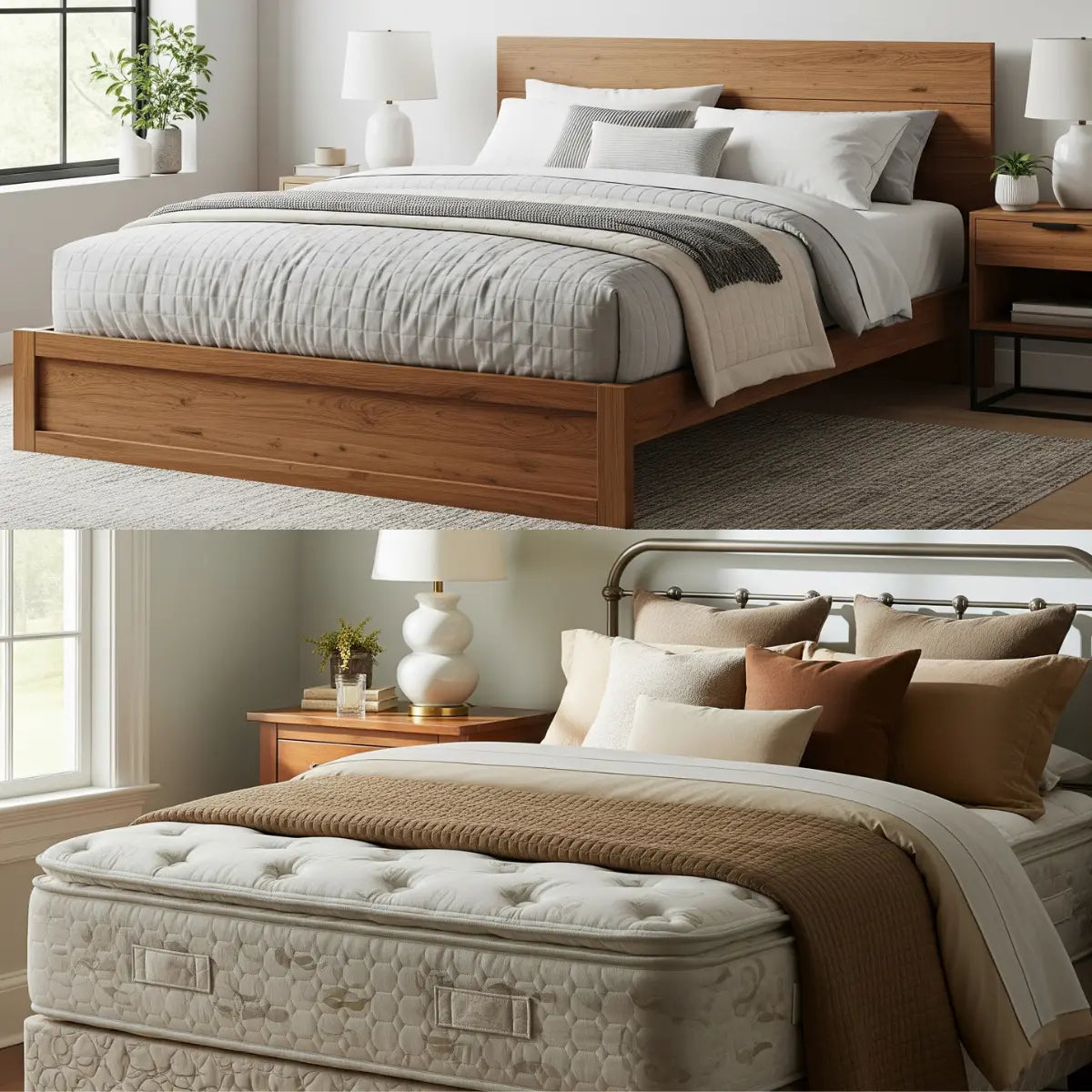
We spend a third of our lives sleeping, yet we often overlook a key factor in our sleep quality: mattress support. The right foundation can make the difference between waking up refreshed and starting the day with aches and pains. When it comes to supporting your mattress, two options dominate the market: the modern platform bed and the traditional box spring.
Choosing between a platform bed vs box spring can seem confusing. Each offers a different type of support, comfort level, and aesthetic. This guide will break down the key differences between a platform bed and a box spring, comparing their design, benefits, durability, and cost to help you make the best choice for your sleep sanctuary.
What is a Platform Bed?
A platform bed is a type of bed frame with a solid or slatted surface designed to support a mattress directly, eliminating the need for a box spring. These frames are known for their sturdy, low-profile construction and often feature a modern, minimalist aesthetic. Because they provide a firm and even base, they are considered a versatile mattress foundation compatible with most modern mattress types, including memory foam, latex, and hybrid models.
As a complete mattress support system, a no box spring bed like this simplifies your setup and can save you money. Many modern bed frame designs are platform beds, prized for their clean lines and durability.
What is a Box Spring?
A box spring is a wooden or metal frame containing coils or springs, covered in fabric. It’s designed to be placed on top of a traditional bed frame to serve as a supportive base for a mattress. The primary purpose of a box spring is to absorb shock, reduce wear on the mattress, and provide a bit of extra height.
Traditionally, box springs were paired with innerspring mattresses, as the coils in both would work together to create a supportive and slightly bouncy feel. While their popularity has waned with the rise of foam and hybrid mattresses, they remain a common type of mattress foundation for those who prefer a classic setup.
Platform Bed vs Box Spring: Key Differences
Understanding the core differences between these two bed frame types is crucial. Here’s a detailed comparison to help you weigh the pros and cons of a platform bed vs box spring.
Design & Structure
The most significant difference between a platform bed and a box spring is their fundamental design.
- Platform Bed: A platform bed is a single, integrated unit that serves as both the frame and the foundation. Its surface is either a solid piece of wood or a series of closely-spaced wooden or metal slats. This creates a sturdy, flat base. Their design is often sleek and contemporary, fitting well with modern decor.
- Box Spring: A box spring is not a standalone frame. It requires a separate metal or wooden bed frame to hold it. Its internal spring system is designed to complement innerspring mattresses, creating a cohesive support system. This two-part setup often results in a taller bed profile.
Mattress Support
The type of support each option provides directly impacts comfort and mattress longevity.
- Platform Bed: A platform bed offers firm, even, and consistent mattress support. The solid or slatted base prevents sagging and ensures the mattress performs as intended. This makes it an ideal choice for memory foam and latex mattresses, which require a rigid foundation to provide proper contouring and pressure relief.
- Box Spring: A box spring provides a more flexible, yielding support. The internal coils compress under weight, creating a “bouncy” feel that many people associate with traditional beds. This is excellent for innerspring mattresses but can be problematic for foam mattresses, as the lack of a solid surface can cause them to sag and wear out prematurely.
Durability
A bed is a long-term investment, so durability is a key consideration.
- Platform Bed: Thanks to their solid construction, platform beds are generally very durable and long-lasting. The sturdy base provides excellent stability and is less likely to break down or lose its supportive qualities over time.
- Box Spring: The springs inside a box spring can wear down, sag, or break after several years of use. This degradation can lead to uneven support, noise, and a shorter lifespan for both the box spring and the mattress on top of it.
Complete solid wood bed buyer's guide
Comfort & Sleep Quality
Your personal comfort preference will play a big role in deciding whether a platform bed or box spring is better for you.
- Platform Bed: Platform beds provide a firmer sleeping surface. If you prefer a bed that feels stable and offers robust support, or if you have a memory foam mattress designed to contour to your body, a platform bed is an excellent choice.
- Box Spring: Box springs offer a softer, more cushioned feel. The spring system absorbs movement and adds a noticeable bounce. If you enjoy this classic, springy sensation and use an innerspring mattress, a box spring will likely feel more comfortable.
Storage & Space
Functionality is another area where these two options diverge.
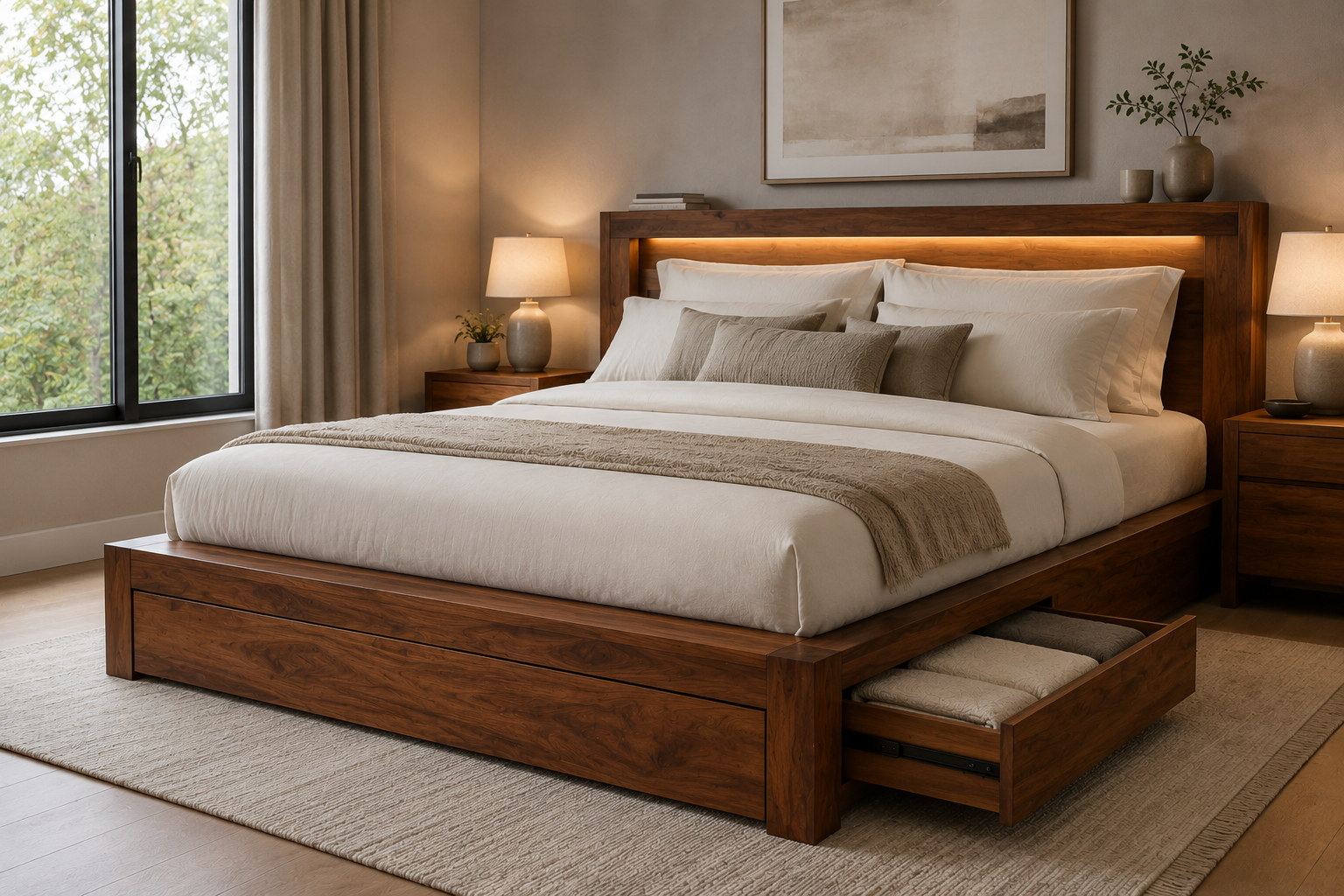
- Platform Bed: Many platform beds are designed with space-saving features. Some models come with built-in storage drawers, while others are raised high enough to allow for under-bed storage containers. Their minimalist design can also make a room feel more open.
- Box Spring: Box springs are bulky and, when paired with a traditional frame, often leave little functional space underneath. Their height can also make a room feel more crowded, especially in smaller spaces.
Cost & Value
When comparing the platform bed vs box spring, consider both the initial cost and long-term value.
- Platform Bed: A platform bed is a one-time purchase. While the initial investment might be higher than a simple metal frame, you don’t need to buy a separate box spring. This can lead to significant savings overall.
- Box Spring: A box spring is an additional cost on top of a bed frame. Because they wear out over time, you will likely need to replace your box spring every 5 to 10 years, adding to the long-term expense.
Platform Bed vs. Box Spring: 2026 Cost Comparison
Pricing has shifted since 2024. Here is what buyers should expect to pay in the US market in 2026:
| Tier | Platform Bed (2026 US) | Box Spring Setup (2026 US) |
| Budget tier | Platform bed frame only: $150–$400(metal frame or basic wood composite) | Box spring set (frame + box spring): $180–$450(metal frame + standard box spring) |
| Mid-range | Solid wood platform bed: $450–$900(quality hardwood, slatted base) | Solid wood frame + premium box spring: $550–$1,100 |
| Premium | Handcrafted solid hardwood platform: $900–$2,500+(oak, walnut, custom options) | Premium wooden frame + luxury box spring: $1,000–$2,500+ |
| Total cost note | Platform beds have lower ongoing costs — no box spring to replace (typically every 8–10 years) | Box spring setups incur replacement cost of $100–$400 every 8–10 years |
Mattress Compatibility: What Works on Each Base
| Mattress Type | Compatibility Notes |
| Memory foam / latex | Works best on a platform bed. These mattresses require firm, even support. A platform's slats or solid base provides ideal conditions. Box springs can cause uneven compression in foam mattresses over time. |
| Traditional innerspring | Traditionally designed for box springs, but works fine on a platform with slat spacing of 3 inches or less. Check your mattress manufacturer's warranty — some void it if box spring is not used. |
| Hybrid (foam + coils) | Works on both. Platform beds are generally preferred by hybrid mattress manufacturers for the firmer, even support surface. |
| Pillow-top | Generally compatible with both. Heavier pillow-top mattresses may benefit from a solid platform base rather than widely spaced slats. |
Height and Aesthetic Differences - Why It Matters More Than You Think
Platform beds sit lower to the ground - typically 7–14 inches of clearance beneath the mattress. This creates a distinctly modern, minimal aesthetic that suits contemporary, Scandi, and mid-century room styles. The lower profile also makes beds easier to get into for shorter individuals and children.
Box spring setups sit higher - typically 20–24 inches of total height from floor to mattress top. This 'traditional' height is preferred by many people for easier ingress and egress, particularly for older adults or those with joint issues who find low beds difficult to stand up from.
| Type | Height & Aesthetic |
| Platform Bed | 7–14 inch floor clearance / 18–24 inches total height (frame + mattress) |
| Box Spring Setup | 16–24 inch floor clearance / 24–30 inches total height |
| Visual effect | Platform: modern, low-slung, spacious feel. Box spring: traditional, taller, classic look |
| Practical note | Taller beds (box spring) suit people over 6ft or those with mobility considerations. Lower beds (platform) suit contemporary aesthetics and those who prefer a ground-level feel. |
Which One Should to Choose?
So, is a platform bed or a box spring the right choice for you?
Choose a platform bed if:
- You own a memory foam, latex, or hybrid mattress.
- You prefer a firm, stable feel.
- You value modern aesthetics and a low-profile design.
- You need extra storage space.
- You want a durable, all-in-one solution that offers excellent long-term value.
Choose a box spring if:
- You have a traditional innerspring mattress that requires one.
- You prefer a softer, bouncier feel.
- You already own a compatible bed frame and a relatively new box spring.
- You enjoy the classic look and height of a traditional bed setup.
Frequently Asked Questions
A: No, you do not need a box spring with a platform bed. The platform bed’s solid or slatted base is designed to provide all the support your mattress needs. Adding a box spring would be redundant and could make the bed uncomfortably high.
A: One isn’t universally “better” than the other; it depends on your mattress type and personal preference. However, platform beds are more versatile, durable, and compatible with modern mattresses like memory foam. For most people today, a platform bed is the more practical and economical choice.
A: A platform bed generally lasts much longer than a box spring. Its solid frame and sturdy base are built for longevity, while the coils in a box spring can wear out, sag, and break over time, requiring replacement.
A: It is generally not recommended to use a memory foam mattress on a box spring. Foam mattresses need a solid, flat foundation to provide proper support. A box spring’s flexible surface can cause the foam to sag and break down prematurely, potentially voiding the mattress warranty.
Q: Is a platform bed cheaper than a box spring setup in 2026?
A: In terms of upfront cost, they are comparable - both platforms and basic box spring setups start around $150–$400 for entry-level options. However, platform beds are cheaper over time because they eliminate the need for a box spring, which typically needs replacing every 8–10 years at a cost of $100–$400. Over a 15-year period, a platform bed setup can save $200–$600 compared to maintaining a box spring system.
Q: Can I use any mattress on a platform bed?
A: Most modern mattresses work well on a platform bed, particularly memory foam, latex, and hybrid mattresses. Innerspring mattresses generally also work fine as long as the slat spacing is 3 inches or less. Always check your mattress manufacturer's warranty documentation before switching to a platform base - some innerspring mattress warranties require a box spring and may be voided without one. Foam and hybrid mattress warranties typically do not require a box spring.
Q: Which lasts longer - a platform bed or a box spring?
A: A quality solid wood platform bed will last significantly longer than a box spring setup. A well-made hardwood platform bed can last 20–40+ years. A box spring typically needs replacing every 8–12 years as the internal springs compress and lose their resilience. The box spring is essentially a consumable component of the bed system, while a solid wood platform frame is a long-term investment.
Q: Are platform beds better for back support?
A: Platform beds can be better for back support, particularly for those using memory foam or latex mattresses. These mattress types are designed to work on a firm, flat surface - the even, rigid support of a platform base allows the mattress to perform as intended and provide consistent spinal alignment. A sagging or softened box spring can compromise even a high-quality mattress. That said, the most important factor for back support is the mattress quality itself, not the base choice.
Q: What is the height difference between a platform bed and a box spring setup?
A: Platform beds typically position the top of the mattress at 18–24 inches from the floor (depending on the frame height and mattress thickness). Box spring setups position the mattress at 24–30 inches or higher, as the box spring itself adds 8–12 inches before the mattress. This means box spring setups are generally 4–8 inches taller than platform configurations - a meaningful difference for those with mobility considerations or strong height preferences.
Q: Which is more popular in the US - platform bed or box spring, in 2026?
A: Platform beds have overtaken box spring setups in popularity, a trend that has accelerated as memory foam and hybrid mattresses have become dominant. These mattress types, which don't require a box spring, now account for the majority of mattress sales in the US. A 2025 industry survey found that approximately 65% of new bed purchases in the US were platform-style frames. Box springs remain common in households maintaining existing traditional innerspring setups, but new purchases lean heavily toward platform beds.
Find Your Perfect Foundation
The debate between a platform bed vs box spring ultimately comes down to your needs. While box springs serve a purpose for traditional innerspring mattresses, the platform bed has emerged as the superior choice for modern sleepers. Its durability, versatility, and sleek design offer a robust and stylish foundation that enhances the performance of today’s most popular mattresses.
Ready to upgrade your sleep? Explore our collection of platform bed frames designed for ultimate durability, comfort, and style. Find the perfect foundation to support your dreams for years to come.
Share:
Top 7 Benefits of Choosing a Solid Platform Bed Frame for Your Bedroom
Best Sideboard for a Small Dining Room? Here’s Your Guide