
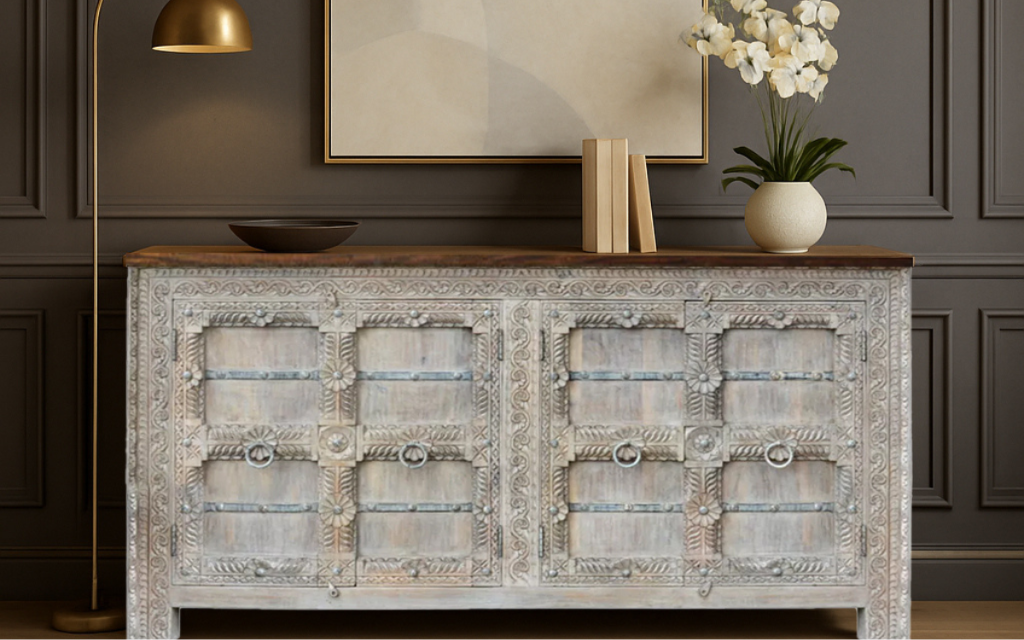
Your dining room is more than just a place to eat - it’s where families connect, conversations unfold, and memories are created. Every element in this space should feel intentional, functional, and enduring, and a handmade wooden sideboard plays a crucial role in achieving that balance. Far from being a secondary furniture piece, a well-crafted wood sideboard cabinet becomes the backbone of dining room storage and design. Whether your style leans toward rustic charm or a refined wooden sideboard modern design, choosing the right one requires an understanding of materials, construction quality, and how the piece fits into your everyday lifestyle.
In this detailed buying guide, we’ll explore how to select a durable wooden sideboard that not only complements your dining room aesthetics but also serves your household reliably for years - often generations - to come.
Why a Wooden Sideboard Is a Dining Room Essential
A handcrafted wooden sideboard is one of the most versatile furniture pieces you can invest in for your dining space. It provides organized storage for crockery, cutlery, linens, and serveware while offering a surface for décor, lighting, or even buffet-style serving during gatherings. More importantly, a solid wood sideboard anchors the dining room visually, giving the space a sense of structure and permanence that lighter or mass-produced furniture often lacks.
Unlike trend-driven furniture made from engineered boards, solid wood sideboards age gracefully. Over time, the wood develops a natural patina that enhances its character rather than diminishing it. This ability to grow more beautiful with age makes a solid wood sideboard not just a purchase, but an investment - one that blends function, emotion, and longevity into a single piece of furniture.
Choosing the Right Wood for Long-Term Durability
The durability and performance of a wood sideboard cabinet begin with the type of wood used. Solid hardwood construction is vastly superior to MDF or particleboard alternatives, both in strength and in visual depth. Hardwoods such as mango wood, acacia wood, and pine are widely used in handcrafted furniture due to their resilience and aesthetic versatility.
Mango wood has become especially popular in dining furniture because of its dense structure and striking grain patterns. It withstands daily wear while displaying warm golden and brown tones that add richness to a dining room. Each mango wood sideboard is unique, marked by natural grain variations that give the furniture individuality. Acacia wood, on the other hand, is prized for its exceptional strength and moisture resistance. Its natural oils protect against spills and humidity, making it ideal for dining spaces that see frequent use. Pine offers a lighter visual appeal and adapts beautifully to painted or distressed finishes, making it a strong candidate for transitional or modern interiors.
Choosing solid wood ensures your wooden sideboard cabinet with drawers maintains structural integrity over time, resisting sagging, warping, or surface peeling—issues common with engineered materials.
Construction Quality: What Separates Good from Exceptional
Beyond wood type, the way a sideboard is constructed determines how well it performs over decades of use. High-quality wood sideboards rely on traditional joinery methods such as dovetail joints, mortise and tenon construction, and dowel joinery. These techniques distribute weight evenly and prevent joints from loosening over time, especially in drawers and load-bearing sections.
In a wood carved cabinet, craftsmanship becomes even more critical. Hand-carved details should be integrated into the structure rather than applied superficially. This not only enhances durability but also ensures the carvings remain intact as the furniture ages. Quality hardware is another essential factor. Solid metal hinges, drawer runners, and handles provide smooth, reliable operation, while soft-close mechanisms add modern convenience without compromising strength.
Finishing techniques also play a key role. Natural or wax finishes allow the wood to breathe and age organically, while sealed finishes offer easier maintenance. Distressed finishes, when done correctly, should feel authentic—reflecting hand-finishing rather than machine-made wear.
Storage Configuration: Designing for Everyday Use
A well-designed wood sideboard cabinet balances storage capacity with accessibility. The internal layout should align with how you actually use your dining room. Drawers are ideal for organizing cutlery, napkins, placemats, and serving tools. Dovetailed wooden cabinets with drawers prevent structural failure even under frequent use or heavier loads.
Cabinet sections are typically reserved for larger items such as dinnerware sets, serving bowls, and seasonal table accessories. Adjustable shelving adds flexibility, allowing the sideboard to evolve with your needs. Some designs also incorporate open shelving, which introduces visual lightness and provides space for decorative accents or frequently used items. This mix of closed and open storage ensures functionality without sacrificing aesthetics.
How to Size a Sideboard for Your Dining Room
Getting the dimensions right is as important as getting the style right. A sideboard that is too large overwhelms the room; one that is too small looks like an afterthought. Use these guidelines:
| Dining Room Wall Width | Recommended Sideboard Width |
| Room Width (wall) | Recommended Sideboard Width |
| Under 10 ft | 48–54 inches (120–137 cm) |
| 10–13 ft | 54–66 inches (137–167 cm) |
| 13–16 ft | 66–78 inches (167–198 cm) |
| Over 16 ft | 78 inches or a pair of smaller matching sideboards |
Standard sideboard height runs 33–36 inches - roughly counter height - which looks proportional in most dining rooms. Depth of 16–18 inches is typical; deeper models (up to 22 inches) offer more internal storage but can encroach on walkway space.
Rule of thumb: your sideboard should be no more than two-thirds the length of your dining table for visual balance.
Budget Guide: What to Expect at Every Price Point
| Price Range | What You Get |
| Under $300 | MDF or particle board construction. Fine for light use, but joints and drawers may loosen within 3–5 years under daily use. Hardware is usually plastic or light zinc alloy. |
| $300–$600 | Transitional range. Some solid wood components (fronts, tops) combined with engineered wood carcasses. Soft-close hinges become common. Lifespan: 8–15 years with care. |
| $600–$1,000 | Predominantly solid wood throughout. Dovetail joints, real wood veneer backs, quality metal hardware. Expect 20+ years of use. Oak, acacia, and mango wood are common at this tier. |
| $1,000+ | Fully solid hardwood, handcrafted construction, bespoke options. Heirloom quality. Suitable as a long-term investment piece. Oak & Loom sideboards sit at the top of this range. |
Best Minimalist Sideboards - What to Look For
Minimalist sideboards have grown in popularity alongside Scandi and Japandi interior trends. They share a few defining characteristics that separate quality pieces from imitations:
- Flat, unbroken surfaces - no raised panels, routed edges, or decorative moulding
- Handleless design or slim bar handles in a single finish (matte black, brushed brass)
- Natural wood grain allowed to be the visual feature - the material does the design work
- Narrow depth profile (14–16 inches) to maintain a light, unobtrusive footprint
- Legs rather than a plinth base - exposed legs add visual airiness to a minimalist room
Key buying caution: some 'minimalist' sideboards use paper-thin veneers over MDF to achieve the clean look at a low price. Always check what is behind the facade - a solid wood construction will look equally clean and last significantly longer.
Where to Buy a Durable Sideboard in the US
The US market offers a wide range of options. Here is how the major channels compare for quality-conscious buyers:
| Channel | What to Expect |
| Specialist solid wood furniture brands (e.g., Oak & Loom) | Best for quality and longevity. Purpose-built for solid wood furniture. Usually includes warranties and dedicated customer support. Higher price but better long-term value. |
| Large furniture retailers (Wayfair, Pottery Barn, West Elm) | Wide variety; mix of quality levels. Solid wood pieces exist but require careful filtering. Read material descriptions carefully - 'wood' does not always mean solid wood. |
| Marketplace (Amazon, Etsy, eBay) | Great for budget options and unique vintage pieces. Quality is variable and hard to verify. Best used for supplementary pieces, not long-term investments. |
| Local furniture stores | Allows in-person assessment of quality. Staff can advise on dimensions and finishes. Selection is limited but confidence in the purchase is higher. |
Finding the Right Style: Traditional, Modern, or Transitional
Your wooden sideboard should complement the overall design language of your dining room while standing strong as a statement piece in its own right. Traditional and rustic wood sideboards often feature hand-carved details, rich textures, and distressed finishes that bring warmth and heritage into the space. These designs work beautifully in farmhouse, classic, and eclectic interiors.
Oak and Loom’s Calaveras Traditional Hand-Carved Wooden Small Sideboard is an excellent example of timeless craftsmanship. Its intricate carving and compact size make it ideal for smaller dining rooms where character is just as important as functionality. For larger spaces, the Manhattan Rustic Distressed Finish Handcarved Sideboard offers bold proportions and deep carving, serving as both a storage solution and an artistic focal point.
For homes leaning toward contemporary aesthetics, wooden sideboard modern designs emphasize clean lines, subtle detailing, and balanced proportions. The Evorence Traditional Solid Wood Sideboard bridges this gap beautifully, offering ample storage while maintaining a refined silhouette that works across both modern and transitional interiors.
Size, Proportion, and Placement
Selecting the correct size is essential to maintaining visual harmony and functional flow. As a general rule, your sideboard should be equal to or slightly shorter than your dining table. Standard sideboard heights range between 32 and 38 inches, making the surface comfortable for serving and display. Depth typically falls between 16 and 22 inches, with at least 36 inches of clearance between the sideboard and dining table to ensure easy movement.
Careful measurement ensures doors and drawers open fully without obstruction and that the piece doesn’t overwhelm the room.
Finish Options and Visual Impact
Finish choice dramatically affects how a wooden sideboard interacts with its surroundings. Natural finishes highlight the wood’s grain and allow it to age gracefully. Stained finishes offer tonal flexibility, from warm honey hues to deep walnut shades. Painted or distressed finishes introduce a softer, vintage-inspired aesthetic that works well in relaxed or coastal dining spaces.
Regardless of finish, quality craftsmanship ensures color consistency, durability, and ease of maintenance over time.
Sustainability, Longevity, and Value
Solid wood furniture is inherently more sustainable than disposable alternatives. Its longevity reduces the need for replacement, and it can often be refinished or repaired rather than discarded. Oak and Loom’s commitment to responsibly sourced wood and traditional craftsmanship supports skilled artisans while minimizing environmental impact.
Although a solid wood sideboard represents a higher upfront investment, its durability, timeless design, and emotional value make it far more cost-effective in the long run.
Conclusion: Choosing a Sideboard That Lasts
Choosing the right wooden sideboard for your dining room means looking beyond surface aesthetics and focusing on materials, construction, and thoughtful design. Whether you prefer the artistry of a wood carved cabinet, the practicality of a wooden cabinet with drawers, or the elegance of a wooden sideboard modern design, a well-made piece becomes part of your home’s story.
Explore Oak and Loom’s curated collection of handcrafted solid wood sideboards to find a piece that blends beauty, function, and enduring quality. Discover furniture designed to be cherished for generations at www.oakandloom.com.
Frequently Asked Questions
Q: What is the difference between a rustic and a minimalist sideboard?
A: A rustic sideboard celebrates natural imperfections - visible grain, distressed finishes, raw-edge details, and traditional hardware like cup pulls or iron handles. A minimalist sideboard does the opposite: it strips everything back to clean lines, handleless doors, and a simple, unadorned surface. Both can be made from solid wood, but a minimalist style focuses on form and restraint while a rustic style leans into character and warmth. They suit very different room aesthetics.
Q: How wide should a sideboard be for a standard dining room?
A: For a standard US dining room (12–14 ft wide), a sideboard of 54–70 inches wide is usually the right proportion. As a practical guideline, your sideboard should be no wider than two-thirds the length of your dining table, and it should leave at least 36 inches of clearance in front for comfortable movement. If your room wall is under 10 ft wide, keep the sideboard to 48–52 inches to avoid overwhelming the space.
Q: What is the difference between a sideboard and a buffet?
A: The terms are largely interchangeable in modern usage. Traditionally, a buffet was a serving piece placed in the dining room specifically for food service, while a sideboard had a broader storage role. In contemporary furniture retail, both names describe the same category: a low, long storage cabinet for the dining room. You may also see the terms 'credenza' and 'hutch' - a credenza is the same as a sideboard (often used interchangeably), while a hutch adds an upper open shelving unit on top.
Q: Can a sideboard go in a living room?
A: Absolutely. Sideboards are increasingly used as living room storage pieces. They work particularly well as media consoles beneath a TV, as a bar cabinet in a living room, or as a stylish storage solution along an empty wall. When placing a sideboard in a living room, the same sizing rules apply: aim for proportional width relative to your sofa or TV wall, and ensure the height (typically 33–36 inches) does not obstruct sightlines.
Q: What materials last longest in a sideboard?
A: Solid hardwoods - particularly oak, walnut, and acacia - are the most durable options for a sideboard. Oak is especially popular because it resists dents, handles moisture fluctuations well, and develops a patina over time rather than deteriorating. Mango and acacia are also strong choices with attractive grain patterns. MDF and particle board are the least durable - they perform adequately in dry, stable conditions but are vulnerable to moisture, joint failure over time, and do not hold screws as well as solid wood.
Q: What is a good budget for a durable sideboard in the US?
A: For a genuinely durable sideboard that will last 15–20+ years, expect to spend $500–$1,000. In that range you will find predominantly solid wood construction with quality hardware and real dovetail joinery. Pieces under $300 can be functional for light use, but MDF-heavy construction will not withstand daily use over a decade. If your budget is $300–$500, look specifically for sideboards with solid wood fronts and tops even if the carcass uses engineered wood - this gives a reasonable balance of quality and price.

Share:
The Art of Bedside Styling: Small Tables with Big Character
The Ultimate Guide to Choosing Rustic Wood Furniture for Your Home in 2026