
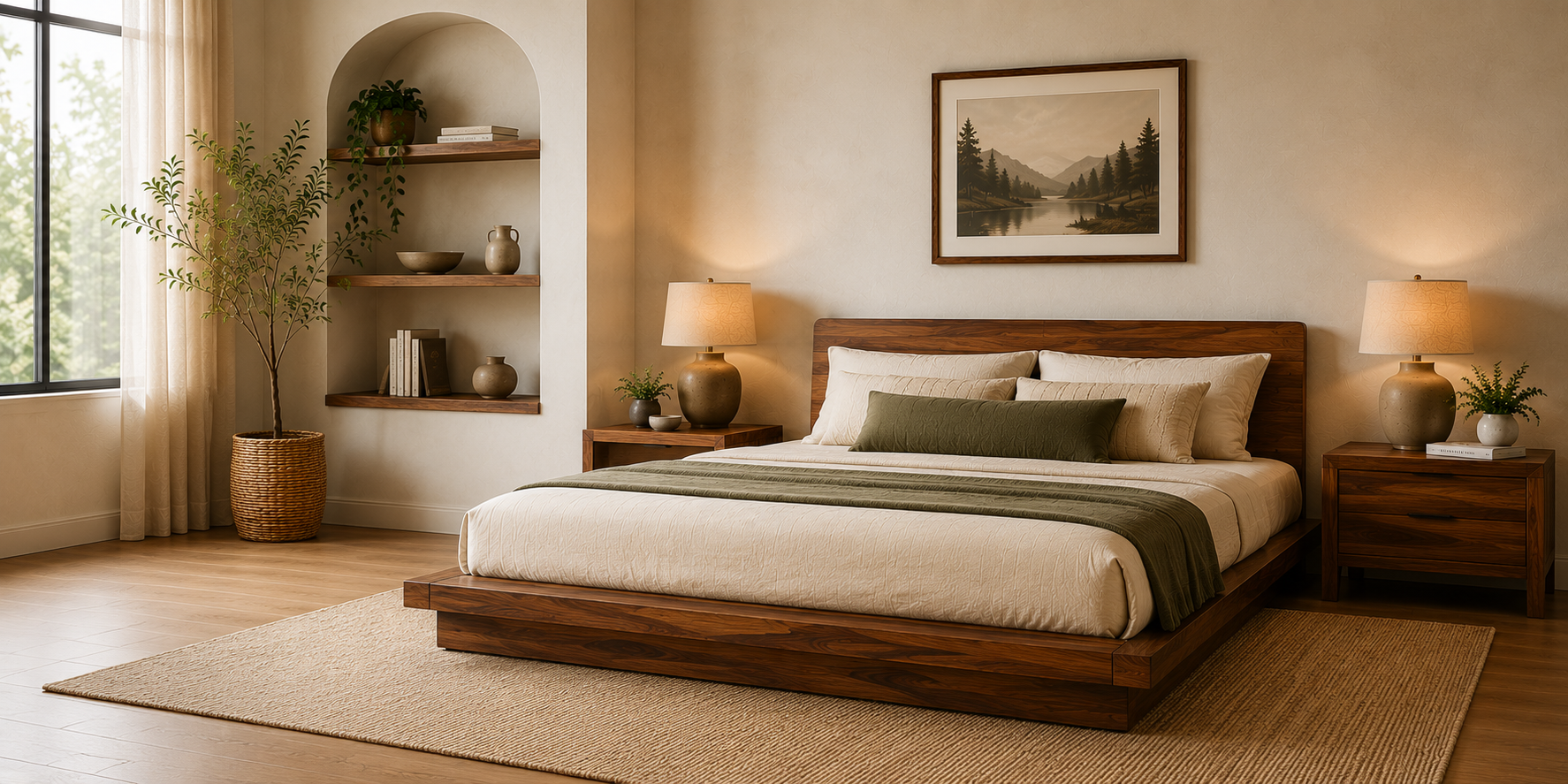
Can a Solid Wood Bed Frame Last 20+ Years? What the Research Says
Someone in your family likely owns a piece of wooden furniture that is older than you are.
A dining table from a grandparent's home. A rocking chair still in daily use. A wardrobe that has outlasted two generations of the family that bought it. You probably never think about these pieces specifically - because they never give you a reason to. They simply continue, year after year, exactly as they should.
This is not just nostalgia. It reflects the long-term durability solid hardwood furniture is known for when it is built correctly. And it is why many US homeowners ask the same question before investing in bedroom furniture: can a solid wood bed frame actually last 20 years - or longer?
In many cases, the answer is yes. A solid wood bed frame built with quality hardwood and durable joinery can last decades under normal household use. Furniture restoration records and woodworking experts regularly document solid wood pieces remaining structurally sound for 20, 30, or even 50 years with proper care.
This guide explains what affects the lifespan of a solid wood bed frame, what hardwood durability research shows, how long-term ownership costs compare with engineered alternatives, and what maintenance actually matters if you want a frame that lasts for decades.
Explore Oak & Loom's solid wood bed frames collection as you read for a closer look at the construction methods behind long-lasting hardwood furniture.
The best piece of furniture is not the most expensive one you buy this year. It is the one you never need to replace.
What the Research Actually Says About Solid Wood Bed Frame Lifespan
The lifespan of a solid wood bed frame depends largely on the materials and construction methods used to build it. Research on hardwood durability and furniture performance consistently shows that dense hardwoods resist wear, movement, and structural fatigue far better than manufactured wood alternatives over long periods of daily use.
Hardwood Density and Long-Term Durability
One of the most widely used measures of wood durability is the Janka hardness scale, which evaluates a wood species’ resistance to denting and surface wear. While hardness alone does not determine overall furniture quality, it is a useful indicator of how well a bed frame may hold up under years of regular use.
|
Wood Species |
Janka Hardness |
Typical Long-Term Durability |
|
Acacia (solid) |
1,700–2,300 lbf |
30–50+ years with proper care |
|
Teak (solid) |
1,000–1,155 lbf |
30–50+ years with proper care |
|
Red Oak (solid) |
1,290 lbf |
20–40+ years |
|
Mango (solid) |
~1,070 lbf |
20–40+ years |
|
MDF |
Lower surface durability |
Often replaced within 5–10 years |
|
Particleboard |
Lower structural durability |
Often replaced within 3–7 years |
Acacia - used in several Oak & Loom bed frames - is notably harder than red oak, which has long been considered a benchmark hardwood in furniture making. Dense hardwoods like acacia generally resist denting, surface wear, and long-term structural stress more effectively than MDF or particleboard alternatives.
How Solid Wood Changes Over Time
Solid hardwood behaves differently from manufactured materials as it ages, which is one reason high-quality wood furniture can remain functional for decades.
Surface Patina
Unlike veneer or laminate surfaces that may chip or peel over time, solid hardwood often develops a richer surface character with use. Woods such as acacia and mango can develop a natural patina that gives older furniture additional depth and warmth rather than making it look worn out.
Joint Stability
Joinery plays a major role in long-term durability. Traditional mortise-and-tenon construction is widely valued because it resists loosening under repeated movement and weight. While lower-quality bolt-and-bracket systems may gradually develop wobble or noise over time, well-constructed hardwood joints tend to remain stable for decades when properly maintained.
Dimensional Stability
As solid wood acclimates to a home's humidity levels over time, seasonal movement can become more predictable and manageable. Proper kiln-drying and stable indoor humidity levels help reduce the risk of excessive expansion, contraction, or warping.
The 3 Factors That Actually Determine How Long a Solid Wood Bed Frame Lasts
Factor 1 - Joinery Method (The Most Important Factor)
The joinery method is one of the biggest factors affecting how long a solid wood bed frame remains stable over time - often more important than the finish or even the wood species itself.
Traditional mortise-and-tenon joinery - used in Oak & Loom structural connections - creates a tightly fitted wood-to-wood connection designed to handle years of repeated movement and weight. By comparison, lower-cost furniture that relies heavily on cam locks, brackets, or basic bolt systems is generally more likely to develop looseness, wobble, or noise over time.
A well-constructed hardwood bed frame with quality joinery can remain structurally stable for decades when properly maintained. This is one reason traditional woodworking methods continue to be widely used in long-lasting furniture.
For a deeper explanation of how joinery affects furniture durability,
How to Spot Quality Furniture in 60 Seconds - The Sign Experts Look For
Factor 2 - Wood Species and Grade
The type of hardwood used also plays a major role in long-term durability. Softer woods such as pine tend to dent and show wear more easily than denser hardwoods like acacia, oak, or mango.
Wood grade matters as well. Furniture-grade hardwood is selected for better grain stability, fewer structural defects, and more consistent long-term performance. Proper kiln-drying further improves dimensional stability by reducing excess internal moisture before construction.
Oak & Loom uses furniture-grade hardwood across its solid wood bed frame collection to support long-term durability and structural consistency.
Factor 3 - Maintenance and Indoor Climate
Maintenance and indoor humidity levels also affect the lifespan of solid wood furniture. Because wood naturally absorbs and releases moisture from the surrounding air, extreme humidity fluctuations can gradually contribute to expansion, contraction, or surface stress over time.
Many woodworking experts recommend maintaining indoor relative humidity between 40% and 60% to help minimize seasonal wood movement. Within a stable indoor environment, a quality solid wood bed frame generally requires only basic maintenance such as occasional oiling, cleaning, and periodic hardware checks.
Milbridge Traditional Carved Wood Bed - Crafted from solid hardwood with traditional mortise-and-tenon joinery and a hand-applied finish, designed for long-term durability and timeless character.

What 20+ Years Actually Looks Like - Is It a Worthwhile Long-Term Investment?
The long-term value becomes much clearer when you compare what ownership actually looks like over 20 years of daily use. when you compare what long-term ownership actually looks like over 20 years of daily use.
A Solid Wood Bed Frame After 20 Years
What changes - for the better
Over time, solid hardwood develops a natural patina that adds depth and richness to the surface. The grain becomes more visually pronounced, and the piece often feels more settled and characterful within the room than it did when brand new.
What can be repaired
Minor scratches, dents, and surface wear accumulated over years of use can usually be sanded, refinished, or professionally restored. One of the biggest advantages of solid wood furniture is that its lifespan can often be extended rather than ending when cosmetic wear appears.
What typically remains
A well-built solid wood bed frame with durable joinery can remain structurally stable for decades under normal household use. Quality hardwood construction is far less likely to develop the wobble, creaking, or loosening commonly associated with lower-cost furniture over time.
A Lower-Cost Engineered Alternative After 20 Years
Lower-cost MDF or particleboard furniture is generally more vulnerable to moisture damage, surface wear, and joint loosening over long periods of use. Veneer surfaces may chip or delaminate, and damaged panels are often difficult to refinish or repair compared to solid hardwood.
Over a 20-year period, many homeowners end up replacing lower-cost furniture multiple times due to wear, instability, style changes, or moving damage. While the upfront cost may be lower, repeated replacement can gradually narrow the long-term value gap.
The Per-Year Cost Math - Does solid wood offer better long-term value?
This is the calculation most US homeowners never do before buying a bed frame. When you run the math, the answer to is a solid wood bed frame worth it becomes definitively clear:
On paper, a solid wood bed frame may cost slightly more per year than some lower-cost alternatives. The difference is that the ownership experience is often entirely different: better structural stability, reduced long-term wear, repairability, and a material that tends to age more gracefully over time.
By comparison, lower-cost engineered furniture may require replacement more frequently due to surface wear, joint loosening, moving damage, or changing aesthetics. Over decades, repeated replacement can narrow the real long-term savings difference more than many buyers initially expect.
For homeowners prioritizing durability and repairability, solid wood furniture is often considered a strong long-term investment. makes sense over time.

How to Verify a Solid Wood Bed Frame Will Actually Last Before You Buy
Knowing how long a solid wood bed frame should last is useful. Knowing how to verify you are actually buying one that will last is equally important.
Before purchasing any solid wood bed frame, here are a few practical checks worth making:
Check 1 - Ask About the Joinery Method
A brand focused on long-term durability should be able to clearly explain the joinery used in the frame. Mortise-and-tenon joinery is commonly associated with strong structural connections, while dovetail joinery is often used in higher-quality drawers.
Vague phrases such as “sturdy construction” or “reinforced joints” provide very little useful information without specifics behind them.
Check 2 - Verify the Wood Species
“Solid wood” alone is not a complete material description. Ask what wood species is being used, whether the lumber is kiln-dried, and if the brand can explain the material selection process.
Transparent brands are usually comfortable discussing these details directly.
Check 3 - Evaluate the Overall Weight and Stability
Solid wood bed frames are typically heavier and more structurally substantial than many engineered alternatives. While weight alone is not proof of quality, an unusually lightweight frame may justify asking additional questions about materials and construction.
Check 4 - Review the Structural Warranty
Warranty coverage can reveal how confidently a manufacturer stands behind its construction quality. Longer structural warranties generally indicate stronger expectations for long-term durability.
A short warranty on a premium-priced frame may be worth examining more closely before purchase.
Check 5 - Ask Whether the Frame Can Be Refinished
One of the long-term advantages of genuine solid wood is that surface wear can often be repaired through sanding and refinishing.
If refinishing is not possible, it may indicate that solid wood is only being used selectively rather than throughout the entire frame.
Over time, the difference between furniture that is simply marketed as durable and furniture that is genuinely built for decades often comes down to these construction details.
At Oak & Loom, we answer every one of these questions before purchase. Browse our full solid wood bed frame collection or contact our team for material and joinery specifics on any frame.
Georgetown Solid Wood Platform Bed- Built from solid acacia hardwood with integrated storage and kiln-dried construction for long-term durability and everyday functionality.
Conclusion
Can a solid wood bed frame last 20+ years? In many cases, yes — especially when it is built from quality hardwood, properly dried lumber, and durable joinery methods designed for long-term structural stability.
A well-constructed solid wood bed frame can remain functional for decades under normal home use. Beyond durability alone, many homeowners also value the repairability, material character, and long-term ownership experience that solid wood furniture offers over time.
Is a solid wood bed frame worth it? For buyers prioritizing longevity, stability, and furniture designed to age gracefully, many would consider it a worthwhile long-term investment. While engineered alternatives may offer lower upfront costs, replacement cycles and limited repairability can change the value equation over extended ownership periods.
Ultimately, the decision comes down to what matters most: minimizing short-term cost or investing in furniture intended to remain part of the home for years to come.
At Oak & Loom, our solid wood bed frames are built using kiln-dried hardwood and traditional joinery methods designed for long-term durability. Explore the full bedroom furniture collection or contact our team with any questions about materials, construction, or care.
“The most sustainable piece of furniture is often the one built well enough to stay in use for decades.”
→ Browse oakandloom.com/collections/wooden-beds with free US shipping at Oak & Loom Wooden Beds Collection
Frequently Asked Questions
How long does a solid wood bed frame last compared to MDF?
A well-built solid wood bed frame can last 20–50+ years under normal home use, particularly when constructed with durable hardwood and quality joinery methods. By comparison, lower-cost MDF or engineered wood frames may show wear sooner, including surface damage, joint loosening, or reduced structural stability over time.
While lifespan varies depending on construction quality, usage, and maintenance, solid wood furniture is generally designed for substantially longer ownership and greater repairability than most manufactured alternatives.
Browse Oak & Loom's solid wood bed collection for solid wood bed frames with free US shipping.
Is a solid wood bed frame worth the higher upfront price for US homeowners?
For many homeowners, the value becomes clearer when considering long-term ownership rather than upfront cost alone.
Solid wood bed frames are typically designed for decades of use, and they can often be repaired, refinished, or maintained over time instead of fully replaced. Lower-cost engineered alternatives may require replacement sooner depending on wear, moving frequency, and construction quality.
Beyond durability, many buyers also value the quieter structure, material authenticity, and aging characteristics that solid wood furniture develops over time.
What makes a solid wood bed frame last longer than lower-cost alternatives?
Several factors influence how long a bed frame lasts:
-
Joinery method: Traditional joinery methods such as mortise-and-tenon are generally associated with stronger long-term structural performance than simpler fastener-based construction.
-
Wood species and material quality: Furniture-grade hardwoods such as acacia, teak, oak, or mango wood typically offer greater durability than softer woods or manufactured materials.
-
Kiln-dried lumber: Properly dried wood is less vulnerable to movement, cracking, or warping over time.
-
Maintenance and environment: Stable indoor humidity and periodic care can help extend the lifespan of any wood furniture.
Can a solid wood bed frame be repaired to extend its lifespan?
Yes - repairability is one of the major advantages of solid wood furniture.
Surface scratches, dents, and finish wear can often be sanded and refinished. In many cases, loose joints or damaged hardware can also be repaired or replaced individually rather than requiring an entirely new frame.
Engineered wood or MDF furniture is often more limited in this regard because surface layers and structural materials may not tolerate refinishing or structural repair as effectively.
Does the wood species affect how long a solid wood bed frame lasts?
Yes - wood species can influence hardness, dent resistance, and long-term wear characteristics.
For example, harder woods such as acacia are generally more resistant to surface denting than softer alternatives. However, overall construction quality, joinery, drying methods, and maintenance practices often matter just as much as the species itself.
When properly built and maintained, many hardwood species used in quality furniture can remain functional for decades.
How do I verify a solid wood bed frame will actually last before buying?
Before purchasing a solid wood bed frame, consider asking these questions:
-
What joinery method is used structurally?
-
What wood species and material grade are used?
-
Is the wood kiln-dried?
-
What structural warranty is included?
-
Can the frame be refinished or repaired if damaged?
Brands focused on long-term construction quality are usually transparent about these details and able to explain their materials and manufacturing process clearly before purchase.
For additional questions about materials, joinery, or construction methods, contact Oak & Loom directly.

Share:
Why Your Bedroom Feels Off - And How the Right Bed Frame Fixes It
Rustic vs. Modern Solid Wood Bed Frames: How to Decide for Your Space